Showing posts with label Iraq. Show all posts

Sunday, February 08, 2009

Reinventing America's Relations With the Muslim World: An Interview With Former CIA Analyst Emile Nakhleh

Building consensus within America’s body politic and national security establishment for a new way forward with Muslims worldwide is a formidable challenge. Many Americans still don’t appreciate the complex nuances of Muslim society and remain stubbornly Islamophobic almost seven and half years after 9/11. Equally formidable is earning the goodwill of Muslims worldwide following the Iraq War as well as American atrocities perpetrated upon Islamic detainees at Guantanamo Bay and Abu Ghraib. Hopefully, President Obama’s historic election has finally opened a path for constructive conversation about how America can most effectively engage the Muslim world.

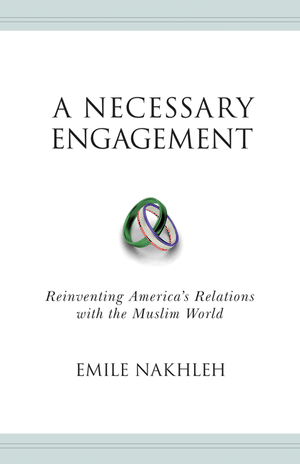
The CIA’s former point man on Islam, Emile Nakahleh, has vigorously entered this conversation with his new book, A Necessary Engagement: Reinventing America’s Relations With the Muslim World (Princeton University Press). From 1991 to 2006, Nakahleh served as the director of the Political Islam Strategic Analysis Program in the Directorate of Intelligence at the CIA. He holds a PhD in international relations and is a member of the Council on Foreign Relations.

Nakhleh’s book combines a revealing memoir with in-depth analysis and proposals for the future. Ever since his retirement from the CIA in 2006, Nakhleh has been a vociferous critic of the Bush Administration’s legacy with respect to American-Muslim relations. Indeed, in September 2006, Nakhleh told Harper’s Magazine that because of Bush’s policies,
“We've lost a generation of goodwill in the Muslim world.”
Nakhleh's proposals for improving American-Muslim relations stems from his conversations with Muslim "interlocutors" spanning three decades. These conversations include government ministers, Islamic activists, academics and radicals. Nakhleh also examined and analyzed considerable polling data of Muslims worldwide.

Overall, Nakhleh contends that the vast majority of Muslims and America have common interests and values. His blueprint includes robust dialogue with mainstream Islamic political parties as well as a tangible commitment towards democracy in the Muslim world, even if we don’t always like the short-term electoral results. His book is an accessible 160 pages and divided into four chapters: (Chapter 1) Political Islam and Islamization, (Chapter 2) Intelligence, Political Islam, and Policymakers, (Chapter 3) Public Diplomacy: Issues and Attitudes and (Chapter 4) Public Diplomacy: A Blueprint.

Nakhleh was born in Galilee, north of Nazareth in Palestine and raised a Greek Catholic. He emigrated from Israel to the United States approximately 50 years ago and attended a Benedictine university in Minnesota for his B.A., a Jesuit university in Washington, D.C., for an M.A. and was awarded a Ph.D. from the American University in Washington, D.C. Prior to joining the CIA he taught at a catholic college in Maryland for 26 years.

Nakhleh agreed to a telephone interview with me in podcast format. Among the topics we discussed was whether he believes the surge in Iraq worked, the proxy war between Saudi Arabia and Iran inside Iraq, President Obama’s new strategy in Afghanistan, Hamas and America’s role in resolving the Israeli-Palestinian conflict and his argument that American commitment to democracy in the Muslim world is imperative to our long term interests.

Some of Nakhleh’s answers and views may surprise many listeners. Our conversation was just over 47 minutes. Please refer to the flash media player below.


Either searching for the “Intrepid Liberal Journal” or “Robert Ellman” can also access this interview at no cost via the Itunes Store.

Update: I erred in the introduction in the podcast when I said Emile Nakhleh worked for the CIA between 1991-1996. I meant to say he worked with the CIA between 1991-2006. Also, my apologies for the echo sound on Emile's side. Sometimes technology has its limits.

Monday, May 26, 2008

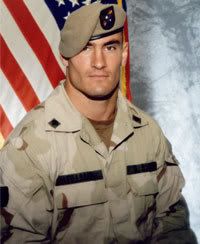
Remember Pat Tillman?

As we finish digesting our Memorial Day barbeques and close out the holiday weekend, we should remember Pat Tillman. Tillman, an NFL football player opted to give up the glamor and wealth of professional sports and serve his country following 9/11.

Many of us on the left, including myself, never trusted the Bush Administration to prosecute the war against al quaida judiciously. However, the patriotic sacrifice offered by soldiers such as Tillman deserve reverence. They've made the ultimate sacrifice while the rest of us complain about gas prices on Memorial Day weekend and barely acknowledge that we're currently occupying two countries.

As for Pat Tillman, his high profile was exploited by the Bush Administration and the circumstances surrounding his death covered up. As we know by now, Tillman's death was officially caused by "friendly fire" in Afghanistan and did not result from engaging the enemy as the Pentagon originally reported. Below is a video clip of an interview that Tillman's, mother Mary, gave to Katie Couric of CBS News on May 4th. It was MayTillman who vigorously demanded the truth and forced the Pentagon to acknowledge their egregious errors. What disappoints me about this interview is that Couric doesn't ask Mary Tillman if she suspects her son was murdered because of his opposition to the Iraq war.

Tillman had signed up to fight al quaida in Afghanistan and was a poster boy for the war on terror. What if Tillman's opposition to the Iraq war had become public during the 2004 presidential campaign? There was much speculation last year that the Pentagon was really covering up an execution. Perhaps Tillman's mother, who also opposes the Iraq war, would have refuted that theory if Couric had asked. Nevertheless, the question should have been asked.

One wonders how many Pat Tillman's are there who signed up out of a sense of patriotic duty, made the ultimate sacrifice only for the U.S. government to dishonor their memories with falsehoods about their deaths. It seems the public has largely forgotten that our fellow citizens are risking their lives as we occupy two nations.

We're all consumed by rising gas prices and the struggles of our own lives. It shouldn't require a holiday called "Memorial Day" to remember that the men and women in uniform are flesh and blood people and not disposable units. Too many lives have been discarded at the whims of immoral and inept politicians as well as an apathetic public that has tuned out the wars in Iraq and Afghanistan. But hey, I hear the reality TV show Survivor is now accepting applicants as young as eighteen. And American Idol is always fun to watch.

Sunday, May 11, 2008

Have You Called Mom Today?

The corporate media, blogs and our individual attention spans are understandably consumed by the celebrity hype of presidential politics these days. Mothers Day however offers an opportunity for all of us to reflect on our society and individual families.

Women have made remarkable gains the past forty years. Indeed when Billy Jean King defeated Bobby Riggs in their famous 1973 tennis match, women were typically denied credit cards simply for being women. Today women are CEOs, television news anchors and Nancy Pelosi is the Speaker of the House.

As my readers know, I’m not fond of Hillary Clinton but a woman coming this close to the Democratic Party’s nomination for president is a cultural milestone. Shirley Chisholm, the first black woman to serve in the United States Congress ran for president in 1972 and observed that, “I've always met more discrimination being a woman than being black.”

Our culture has certainly evolved since Chisholm ran for president. As economist Jared Bernstein pointed out to me during a podcast interview last month, women’s wages have increased dramatically in recent years while men with high school diplomas have watched their earning power disintegrate due to globalization. Yet this reality has only added to the struggles and stress of professional moms as well as working class “waitress moms.” Too many moms must lift the household in today’s treadmill economy while their husbands struggle to earn a living wage as manufacturing jobs disappear.

Working is not simply a choice for women today or a legitimate pursuit of career ambition. It’s an absolute necessity. Most families can’t survive without two incomes and the precipitous decline of male incomes have made our treadmill economy steeper. Yet moms still absorb much of the household burdens and parenting responsibilities.

Frequently, it’s mom who carries the weight in today’s treadmill economy while their husbands struggle to earn a living wage. Meanwhile, mom has to simultaneously assuage the ego and pride of those dads who earn less after the plant closed or they were laid off. Also, too many fathers abandon their responsibilities and leave mom to raise their kids without any support.

In many households mom is the CEO within the home and sets the tone for the family as a whole. If mom isn’t happy nobody in the house is happy. Mom is often the one who wakes up the kids who would rather sleep and get them to school. Through it all it’s often up to mom to smile through the adversity, manage the conflicts and controversies between siblings, help the kids with their homework and be a wife to dad. Mom has to be a disciplinarian without losing her temper due to stress. That’s tough. And sometimes mom isn’t perfect and loses her temper when she’s expected to pick up after everyone as dad watches ESPN and kids behave like kids.

And let’s not forget the repercussions for moms from our foreign policy. While most sacrifice little in our military occupations of Iraq and Afghanistan we have moms widowed and struggling, or carrying on while dads are compelled to serve multiple tours of duty due to America’s back-door draft. There are also those moms raising their kids and supporting the family while simultaneously struggling to transition their traumatized husbands back into society.

We also have mom warriors serving abroad and risking their lives while the government callously does little to help their families at home. And those mom warriors also suffer from Post Traumatic Stress Disorder and are expected to seamlessly become mom again when they return home. While were at it, for damn sure we shouldn’t forget the moms in Iraq and Afghanistan living in misogynist cultures who have needlessly lost their children and husbands due to “collateral damage” as the Pentagon likes to call it.

To their enormous credit, moms have great challenges partly because they’ve embraced them and succeeded in rising above them. And of course one person those moms can often call upon when they need a helping hand, advice or a shoulder to lean on are their own moms. Kids often know that in a pinch mom will call grandma in a time of need.

Twenty-five years ago, the most memorable moment of my Bar Mitzvah was when my mother, grandmother and great grandmother stood with me on the podium while Rabbi Katz presented the Torah. Rabbi Katz told the congregation, “We are privileged to have four generations represented up here today. Three generations of mothers who made today possible.” I sensed it was a poignant moment at the time but it wasn’t until years later I realized how much it mattered to have three generations of mothers standing with me.

Bottom line, call your mom today.

Sunday, March 02, 2008

Is This What We're Fighting For?

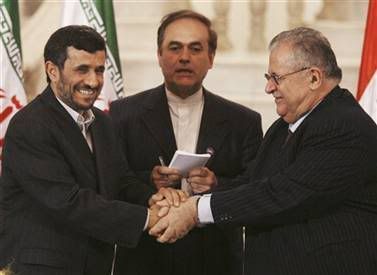
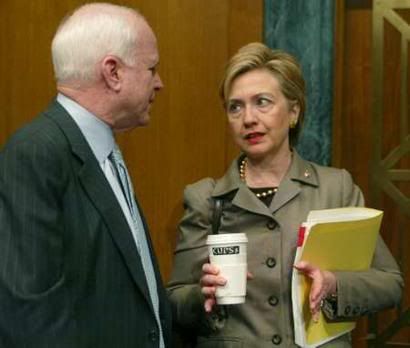
A picture is worth a thousand words. This is Iranian President Mahmoud Ahmadinejad and his Iraqi counterpart Jalal Talabani together in Baghdad, today. Americans are fighting, suffering post traumatic stress disorder, permanent injuries, dying and killing innocent civilians to help establish an Islamic Shiite fundamentalist axis in the Gulf. Likely Republican nominee John McCain promises more of the same. Hillary Clinton enabled President Bush and John McCain to pursue this strategic calamity out of sheer political expediency. Yet Clinton has the temerity to suggest she has superior credentials to be commander and chief? Both Clinton and McCain represent more of the same. It's time for a change. Enough said.

Saturday, February 09, 2008

My Fellow Democrats: Avoid Calamity and Nominate Obama

In 1996, Republican World War Two hero Senator Bob Dole challenged President Bill Clinton who sought a second term. While the political climate in 1996 was obviously quite different then it is today, like John McCain this year, Bob Dole was a heroic anachronism. Thinking about John McCain, these words from Vice President Al Gore’s speech at the 1996 Democratic National Convention come to mind:
“The president's opponent, Senator Bob Dole, is a good and decent man. We honor his service to America, and his personal courage in fighting back from injuries sustained in battle. Though we disagree with his ideas, only the unknowing would deny him the respect he deserves."
Similarly, I also give John McCain his due. How many of us would have willfully remained a prisoner of war in Vietnam rather than abandon our comrades? Furthermore, how many of us would have overcome the traumatic physical and psychological wounds inflicted upon McCain during Vietnam to achieve the stature he has? I’m not too proud to admit I likely would have accepted my captors offer to go home and become an embittered basket case afterwards. Yet this man raised seven well-adjusted children and overcame Herculean odds to emerge as the Republican nominee. There can be no denying John McCain’s intestinal fortitude.

McCain’s judgment and record however illustrate he is ill suited for the presidency. Just consider these facts recently compiled by votevets.org about McCain’s record:

Before the War
  • McCain co-sponsored the Use of Force Authorization that gave President George W. Bush the green light – and a blank check - for going to war with Iraq. [SJ Res 46, 10/3/02]
  • McCain argued Saddam was “a threat of the first order.” Senator McCain said that a policy of containing Iraq to blunt its weapons of mass destruction program is "unsustainable, ineffective, unworkable and dangerous." McCain: "I believe Iraq is a threat of the first order, and only a change of regime will make Iraq a state that does not threaten us and others, and where liberated people assume the rights and responsibilities of freedom.” [Speech to the Center for Strategic & International Studies, 2/13/03]
  • McCain echoed Bush and Cheney’s rationale for going to war. McCain: “It’s going to send the message throughout the Middle East that democracy can take hold in the Middle East.” [Fox, Hannity & Colmes, 2/21/03]
  • McCain echoed Bush and Cheney’s talking points that the U.S. would only be in Iraq for a short time. McCain: “It’s clear that the end is very much in sight. … It won’t be long…it’ll be a fairly short period of time.” [ABC, 4/9/03]
  • McCain said winning the war would be “easy.” “I know that as successful as I believe we will be, and I believe that the success will be fairly easy, we will still lose some American young men or women.” [CNN, 9/24/02]
During The War
  • Senator McCain praised Donald Rumsfeld as late as May 12, 2004, after the Abu Ghraib scandal.
  • Asked if Donald Rumsfeld can continue to be an effective secretary of defense, McCain: “Yes, today I do and I believe he's done a fine job. He's an honorable man.” [Hannity and Colmes, 5/12/04]
  • Senator McCain repeatedly supported President Bush on the Iraq War – voting with him in the Senate, defending his actions and publicly praising his leadership.
McCain Maintains the War Was A Good Idea
  • At the 2004 Republican National Convention, McCain, focusing on the war in Iraq, said that while weapons of mass destruction were not found, Saddam once had them and “he would have acquired them again.” McCain said the mission in Iraq “gave hope to people long oppressed” and it was “necessary, achievable and noble.” McCain: “For his determination to undertake it, and for his unflagging resolve to see it through to a just end, President Bush deserves not only our support, but our admiration.” [Plain Dealer, 8/31/04]
  • Senator McCain: “The war, the invasion was not a mistake. [Meet the Press, 1/6/08]
  • Asked if the war was a good idea worth the price in blood and treasure, McCain: “It was worth getting rid of Saddam Hussein. He had used weapons of mass destruction, and it's clear that he was hell-bent on acquiring them.” [Republican Debate, 1/24/08]
  • McCain defended Bush’s rationale for war. Asked if he thought the president exaggerated the case for war, McCain said, “I don’t think so.” [Fox News, 7/31/03]
  • McCain has been President Bush’s most ardent Senate supporter on Iraq. According to Michael Shank of the Foreign Policy in Focus think tank, McCain was at times Bush’s “most solid support in the Senate” on Iraq. [Foreign Policy in Focus, 1/15/08]
  • McCain voted against holding Bush accountable for his actions in the war. McCain opposed the creation of an independent commission to investigate the development and use of intelligence leading up to the war in Iraq. [S. Amdt. 1275 to H.R. 2658, Vote # 284, 7/16/03]
  • McCain praised Bush’s leadership on the war. McCain: “I think the president has led with great clarity and I think he’s done a great job leading the country…” [MSNBC, Hardball, 4/23/03]
  • Senator McCain Has Constantly Moved the Goal Posts of Progress For the War – Repeatedly Saying It Would Be Over Soon:
  • January 2003: “But the point is that, one, we will win this conflict. We will win it easily.” [MSNBC, 1/22/03]
  • March 2003: “I believe that this conflict is still going to be relatively short.” [NBC, Meet the Press, 3/30/03]
  • June 2004: “The terrorists know that this is a very critical time.” [CNN, 6/23/04]
  • December 2005: "Overall, I think a year from now, we will have a fair amount of progress [in Iraq] if we stay the course.” [The Hill, 12/8/05]
  • November 2006: “We’re either going to lose this thing or win this thing within the next several months." [NBC, Meet the Press, 11/12/06]
Senator McCain Opposed Efforts To End the Overextension of the Military That Is Having A Devastating Impact On Our Troops
  • McCain voted against requiring mandatory minimum downtime between tours of duty for troops serving in Iraq. [S. Amdt.. 2909 to S Amdt. 2011 to HR 1585, Vote 341, 9/19/07; S Amdt. 2012 to S Amdt. 2011 to HR 1585, Vote #241, 7/11/07]
  • McCain was one of only 13 senators to vote against adding $430 million for inpatient and outpatient care for veterans. [S Amdt. 3642 to HR 4939, Vote 98, 4/26/06]
  • Senator McCain has consistently opposed any plan to withdraw troops from Iraq
  • Senator McCain repeatedly voted against a timetable for withdrawing troops from Iraq. [S. Amdt. 3876 to S.Amdt. 3874 to H.R. 2764, Vote #438, 12/18/07; S.Amdt.. 3875 to S.Amdt.. 3874 to H.R. 2764, Vote # 437, 12/18/07; S.Amdt.3164 to H.R. 3222, Vote # 362, 10/3/07; S.Amdt. 2898 to S.Amdt. 2011 to H.R. 1585, Vote #346, 9/21/07; S.Amdt. 2924 to S.Amdt.. 2011 to H.R.1585, Vote #345, 9/21/07; S.Amdt.2 087 to S.Amdt. 2011 to H.R. 1585, Vote #252, 7/18/07; S.Amdt. 643 to H.R. 1591, Vote #116, 3/27/07; S.Amdt. 4320 to S. 2766, Vote #182, 6/22/06; S.Amdt. 4442 to S. 2766, Vote #181, 6/22/06; S.Amdt.. 2519 to S.1042, Vote # 322, 11/15/05]
McCain Opposes Ending the Iraqi Occupation
  • McCain: "I believe to set a date for withdrawal is to set a date for surrender.” [Charlotte Observer, 9/16/07]
  • McCain called proponents of a congressional resolution opposing the troop surge in Iraq intellectually dishonest. [Associated Press. 2/4/07]
  • Senator McCain now says he sees no end to the presence of U.S. troops in Iraq. McCain: "[M]ake it a hundred" years in Iraq and "that would be fine with me." [Derry, New Hampshire Town Hall meeting, 1/3/08]
  • McCain on how long troops may remain in Iraq: “A thousand years. A million years. Ten million years. It depends on the arrangement we have with the Iraqi government.” [Associated Press, 1/04/08]
In spite of McCain’s record of poor judgment and dangerous leadership, the corporatist media unceasingly praises him as a “maverick” while his credentials as commander and chief are deemed sacrosanct. Senator Hillary Clinton is ill equipped to challenge McCain’s credentials because her record, at least through 2005, is just as horrible as McCain’s.

Furthermore, Clinton’s lame efforts to invoke her “thirty-five” years of experience is at best a laughable contrast to McCain’s biography. McCain will easily deflect Clinton’s critique of his record as rhetoric from a disingenuous flip flopper.

Finally, Republicans are laying in the high weeds for former President Bill Clinton. Questions are sure to be raised about how Bill Clinton’s library was partly financed by Saudi Arabian money as well as the deals he’s made with Kazakhstan’s corrupt leadership. Yes it’s hypocritical for Republicans to criticize anyone about treacherous deal making that undermines America’s interests but McCain will get away with it.

Senator Barack Obama is not a perfect candidate either. The treatment he’s received from the Clintons is far gentler then the onslaught of coded racism, character assassination and Islamophobia that Republicans are certain to hit him with.

However, Obama at least offers the contrast of foresight regarding the Iraq War as well as the promise of a new direction that replaces America’s ill advised neocon delusions.


McCain vs. Clinton is yesterday vs. yesterday. Perhaps Clinton can prevail in such a campaign but she won’t earn a mandate for change. Indeed, the paradigm of America’s empire centric foreign policy will likely remain the same under another Clinton Administration only without the bellicose saber rattling George W. Bush bombast.

I therefore continue to urge my fellow Democrats to support Barack Obama for our party’s nomination. For me the slogan isn’t “yes we can” but “win we must.” Anything less will be a calamity for our country and the world.

Sunday, January 27, 2008

Holy Crap! Barack Obama Is Black!

Anybody out there ever watch the Family Guy cartoon on the American Goebell’s Network otherwise known as FOX? The only reason to watch FOX is for cartoons such as The Simpsons or The Family Guy. How ironic FOX airs cartoons with satirical commentary about America’s conservative culture.

Anyway, some years ago, an episode of the Family Guy showed imbecile father/husband Peter Griffin watching Star Trek on television. In typical Peter fashion he observed, “Holy crap! Lt. Uhura is black!” Adding to the humor was how Peter watched Star Trek regularly and only realized Uhura was black that very moment.

Watching news coverage of this year’s presidential campaign I feel like everyone from corporate media executives, field reporters and the Clintons have declared: “Holy crap! Barack Obama is black!”

Bill Clinton hoped to diminish the outcome of South Carolina by noting how Jesse Jackson (a black man!) won the primary in 1984 and 1988. In other words just a black man getting a lot of black votes in South Carolina. Black votes can’t possibly be considered as a credible bellwether of a candidate’s political viability unless they’re supporting the Clintons. The media of course fanned the flames of race to further generate hype. Hype is far easier to cover than substance anyway.

Sadly, it will only get worse as we approach Epic Tuesday on February 5th. You will read and hear more “horserace” garbage about the Clintons scheming for the woman vote and using subtle codified language to remind voters that Obama is the “black candidate.” Meanwhile, the John Edwards populist anti-corporate message will be dwarfed, as the media instead focuses on how he splits white southern voters with Hillary Clinton.

Finally, you will begin to read how important Hispanic voters are in states such as California as pundits ponder whether “brown” voters combined with women will help Clinton over Obama. A subtle backdrop to all this is how the corporatist media could never allow John Edwards to prevail because he just might implement policies that benefit wage earners at the expense of America’s corporatist pro-war plutocracy. Populism isn't sexy and doesn't fit into a narrative that reconciles with America's corporatist brain massage machine.

Please forgive me for pointing out that the stakes demand infinitely more respect than treating this election as an insipid beauty contest. For starters, the greatest threat to humanity today is global warming. Nothing else comes close. Certainly not the fear mongering canard known as "radical Islam" exploited by sniveling neo-cons.

On Thursday, U.N. Secretary-General Ban Ki-moon cited a report from Independent Alert, a London based peace organization that identified 46 countries with 2.7 billion people where climate change and water-related crises create "a high risk of violent conflict" while an additional 56 countries, with 1.2 billion people "are at high risk of violent conflict." I posted about this very topic in December 2005 and noted evidence of a growing water shortage in the American southwest.

How come we never hear any of the candidates asked about the world’s pending crisis regarding access to fresh water? All the Democratic candidates and John McCain regularly utter platitudes about global warming but have any of them even thought through the challenges ahead once global water shortage reaches critical mass? Has any journalist thought of asking them about the issue during the debates instead of their usual gotcha drivel?

And then there is the minor problem of America’s crumbling infrastructure. Typically, infrastructure and capital projects fall under the bailiwick of state and local governments. Seven years of insipid conservative rule, crony capitalism and tax cuts favoring the rich have created a fiscal calamity for municipal governments nationwide. Perhaps the candidates should be asked if they have a plan to bail out municipal governments and how they intend to pay for it.

In yesterday’s New York Times, William Yardley reported about the increasing demands for infrastructure repairs and the inability of municipal governments to meet their obligations. If you think that isn’t important I suggest talking to those Minnesota families who lost loved ones when the Interstate 35W bridge collapsed last summer. And don’t get me started on New Orleans and Hurricane Katrina.

If we're discussing race why not ask the candidates about the number one growth industry in America today: incarcerating young black men to populate our prisons? America’s prison industrial complex is as much a blight on our national soul as Guantanamo. What does Barack Obama think about that? Perhaps he should be asked that question during the debates.

Finally, I realize Americans would prefer to just ignore the world but like it or not, we’re currently occupying two countries. Regardless of whatever propaganda you read about the surge working in Iraq or progress in Afghanistan, our continuing occupation of both countries is ineffective and immoral. Yet how many interviews have you observed with the presidential candidates when they’re not asked a single question about either Iraq or Afghanistan? Why not ask the presidential candidates what they intend to do about the increased opium trade in the United States due to our occupation in Afghanistan?

There is also more to the world than America’s occupation of Iraq and Afghanistan. Rape and violence against women is used as a weapon in the Congo’s ongoing civil war. Genocide continues in Kenya and Darfur. The Bush Administration, Prime Minister Olmert’s government in Israel and Palestinian President Abbas thought they could simply inhumanely ignore the people of Gaza. As a result there is a border crisis with Egypt to further destabilize the region.

Challenges abound at home and abroad with far reaching repercussions for our society, economy, security and ecosystem. Furthermore, the American empire is disintegrating and the fall out needs to be managed with tolerance and sense. But who cares about any of that? Barack Obama is black! Holy crap!

Wednesday, December 26, 2007

Is 2008 the Year Democrats Finally Realize Iraq Is An Occupation?

Photobucket

In 2007, the Democratic Party was a self-gelding machine of ineptitude. Activists such as myself worked feverishly in 2006 to retake congress and end America’s occupation of Iraq. Instead the Bush Administration implemented a “surge” as Democrats retreated from flexing their constitutional muscle. They continued to fund military operations, never invoked the War Powers Act and impeachment was taken off the table.

Remarkable considering how unpopular both the Iraq occupation and President Bush had become. Cracks even appeared in the façade of GOP unity as their Senate Minority Leader, Mitch McConnell warned the Bush Administration that congressional Republicans would not allow Iraq to harm their electoral prospects in 2008. Indeed, on June 26th the Washington Post quoted McConnell as saying,
“I anticipate that we'll probably be going in a different direction in some way in Iraq. And it'll be interesting to see what the administration chooses to do."
McConell was anticipating the September testimony of Army General David H. Petraues. Yet as 2007 ends there is no denying that the unpopular Bush Administration successfully thwarted both the Democratic majority and the will of the people. How did this happen?

One can offer all sorts of explanations. Among them is that sixty-votes are required in the Senate and a thin Democratic majority had no real shot of making a difference. Others may prefer to scapegoat Moveon.org for their controversial “Betray Us” advertisement prior to the testimony of the highly decorated General Petraeus. Finally, some may simply contend that the surge worked and the rationale for withdrawal no longer applies.

Personally, I believe Democrats never truly wanted to end our occupation in Iraq. Iraq had sapped Bush’s popularity into oblivion, debased the Republican brand and helped fill Democratic coffers. Hence, both Reid and Pelosi were content to pursue the politics of symbolism without truly forcing the Administration’s hand.

Casting symbolic votes about timetables appeared safe and had the added advantage of keeping congressional Republicans on the defensive for supporting an unpopular war. It seemed a sure way to enhance their congressional majority as well as retake the White House but changed nothing on the ground. As a result, 2007 ends with congressional Democrats appearing impotent and unprincipled. Is it any wonder their poll ratings are so low?

Tragically, Democrats failed to realize that the American public opposed the war because we were perceived as losing rather than believing toppling Saddam’s government was wrong. Furthermore, even Americans who opposed the war from the beginning are instinctively repulsed at the notion of “losing” a war. Culturally, Americans don’t accept losing a war gracefully. Most countries don’t. For example, the Vietnam War was unpopular at the end yet liberals were easily stigmatized as weak defeatists for opposing it. Hence, once the so-called surge helped establish superficial conditions of stability, casting symbolic votes about withdrawal deadlines ceased to be effective.

It is therefore imperative that in 2008 Democrats stop referring to Iraq as a war but an occupation instead. The war in Iraq was both ill conceived and immoral. Many citizens including myself took to the streets and protested in 2002-2003. We didn’t protest because we feared losing. Rather we didn’t accept the rationale for the war and feared the occupation to follow.

The war as we all know ended when President Bush declared “Mission Accomplished.” Saddam’s regime was easily toppled and weapons of mass destruction were never found. The military did its job. The war was wrong but it happened and we won. We have been sustaining a brutal occupation since its conclusion. Occupations typically result in the wholesale deaths and torture of civilians. Maintaining an occupation is corrupting to the “victor.” Numerous people including bloggers and thinkers far more intelligent and eloquent than myself already reached that conclusion and the folly of buying into Bush’s framing the Iraq debate as a “war.”

As George Lakoff wrote on July 5, 2006,
“In an occupation, there are pragmatic issues: Are we welcome? Are we doing the Iraqis more harm than good? How badly are we being hurt? The question is not whether to withdraw, but when and how? What to say? You might prefer ‘End the occupation now’ or ‘End the occupation by the end of the year’ or ‘End the occupation within a year,’ but certainly Congress and most Americans should be able to agree on ‘End the occupation soon.’ In an occupation, not a war, should the president still have war powers? How, if at all, is the Supreme Court decision on military tribunals at Guantanamo affected if we are in an occupation, not a war? What high-handed actions by the President, if any, are ruled out if we are no longer at war?”
If Democrats at long last get their heads out of their ass the “surge” can be looked upon in its appropriate context. Yes, the surge reduced deaths of American GIs. Tactically it’s been a success. To deny that is to ignore reality. Even more significant are the Iraqi Sunnis resisting al Quaeda themselves. But what does any of that have to do with ending America’s immoral occupation, facilitating a political settlement inside Iraq and earning a measure of diplomatic good will in the Muslim world? As long as this occupation has a white Christian face we’ve condemned ourselves to walking on a toxic treadmill. The occupation is not beneficial to America or Iraq.

On December 4th, I interviewed talk radio’s Thom Hartmann, about his new book Cracking The Code: How To Win Hearts, Change Minds, and Restore America's Original Vision. Hartmann eloquently echoes Lakoff about framing Iraq as an occupation instead of a war in his book. He noted during our interview that immediately after he and Lakoff suggested the “occupation” frame in 2006, Democrats took their advice. But they soon reverted to talking about Iraq as a war. Hartmann further observed that the corporatist media finds the war frame too profitable. Writing and broadcasting about an “occupation” doesn’t sell as well or profit companies such as General Electric who have a financial stake in the media as well as military operations. The media is not going to describe Iraq as an occupation any time soon.

So it’s up to the reality based community of citizen journalists, bloggers, activists and just plain regular people to set the record straight. Many progressive bloggers reading this thread properly realized this long ago. But as we head into 2008 a reminder is in order. I for one plead guilty of too often playing into the hands of predatory conservatives and describing Iraq as a war.

So no matter what presidential candidate you’re supporting in 2008, please let their campaigns know you want Iraqi policy referred to as an “occupation” and be assertive about it. Please telephone and write your representatives in congress as well (click here and here ). And on your blogs refer to Iraq as an occupation every time you post about it. Any street protests should also reinforce the message that we're opposing an occupation. Our 2008 New Years resolution should be to once and for all shift the terms of debate about Iraq from being a “war” to an “occupation.” At stake is the blood of our GIs, innocent Iraqi civilians and ending America’s estrangement from the civilized world.

Tuesday, November 20, 2007

The Sutras of Abu Ghraib: An Interview With Conscientious Objector Aidan Delgado

In 2001, Aidan Delgado was twenty-years old and in need of a life anchor. Delgado had primarily grown up abroad in far away places such as Cairo, Egypt, Thailand and Senegal due to his father’s career as a diplomat. While attending college in Florida, Delgado felt culturally out of place and adrift. Having led an “ivory tower” existence of academia and privilege, Delgado opted to join the United States Army Reserves for a different perspective.

By sheer coincidence he signed his enlistment contract on September 11th. Those closest to him questioned the wisdom of Delgado's choice. The terrorist attacks convinced Delgado he made the correct decision as the country underwent a surge of patriotic feeling and rallying to the flag. At the time he was proud of having decided to join the United States Reserves before September 11th. Delgado didn’t know it yet but the next three years of his life would transform his entire being.

To calm his nerves prior to reporting for basic training at the end of October 2001, Delgado read about Buddhism. He concluded that Buddhism was like “coming home” and suited his outlook on life even as he prepared for war. Initially, Delgado embraced the Samurai ethos that blended Buddhism with the warrior spirit to justify his participation.

He was trained as a mechanic and assigned to the 320th Military Police Company in 2003. Initially, Delgado served in Nasiriya, the Southern Part of Iraq for several months before being redeployed with his unit to Abu Ghraib. Since Delgado knew Arabic from his adolescent years in Cairo, he was frequently utilized as a translator on missions. On these missions he witnessed horrific abuse committed by Americans against Iraq’s civilian population. He told Bob Herbert of the New York Times in 2005 that,
“Guys in my unit, particularly the younger guys, would drive by in their Humvee and shatter bottles over the heads of Iraqi civilians passing by. They'd keep a bunch of empty Coke bottles in the Humvee to break over people's heads."
That sort of gratuitous violence was a harbinger of things to come. During this period in 2003, Delgado experienced an internal crisis. The warrior ethos was not compatible with his sensibilities as a Buddhist and he opted to apply for an honorable discharge as a conscientious objector.

The army tried to persuade Delgado to apply for non-combatant status instead and still complete his duties as a mechanic. It would’ve been the path of least resistance and Delgado rejected it. As far as Delgado was concerned, applying, as a non-combatant was a half-measure and he wanted to make a moral statement.

The path Delgado chose was a long tough road of bureaucratic struggle, taunts, bullying and peer abuse. The army hoped to provoke Delgado away from pacifism, make him feel ostracized and humiliated. Many considered Delgado a coward and a traitor as he continued to fulfill his duties while the application process went forward.

Delgado’s application for conscientious objector status had not been resolved when his unit was redeployed to Abu Ghraib in November 2003. Shortly after he arrived, a prison riot against the miserable conditions there resulted in a fatal shooting of four detainees who threw stones. Delgado told Bob Herbert how he confronted a sergeant who claimed to have fired on the detainees:
"I asked him if he was proud that he had shot unarmed men behind barbed wire for throwing stones. He didn't get mad at all. He was, like, 'Well, I saw them bloody my buddy's nose, so I knelt down. I said a prayer. I stood up, and I shot them down.'"
When Delgado initially arrived at Abu Ghraib he assumed most of the detainees were hardened insurgents and terrorists. He later learned while working as a radio operator for the Abu Ghraib headquarters brigade that most detainees were either petty civilian criminals or completely innocent. Ultimately, Delgado concluded that regardless of why they were there, American behavior could not be excused.

Delgado’s unit was dismissed after it completed its duty in March 2004. He received an honorable discharge after returning to America in April 2004. Currently, he’s an antiwar activist as a member of Iraq Veterans Against the War and the Buddhist Peace Alliance. Delgado captured his spiritual journey and experience in Iraq with his recently published memoir, The Sutras of Abu Ghraib: Notes From A Conscientious Objector In Iraq (Beacon Press)

It’s not fully possible to grasp what soldiers like Delgado went through and witnessed. What does it mean to read that serving in Abu Ghraib is hell or living through mortar attacks is scary? Is it really possible for mere words to convey how soldiers such as Delgado are torn between loyalty to the uniform they wear and their humanity? How can one truly understand without having lived in the shoes of someone like Delgado himself?

Those of us who haven't been in that position can't truly understand. Nevertheless, Delgado skillfully puts the reader in the front row of his year in Iraq, the friends and antagonists he interacted with, the near death experiences he endured and the torturous battle waged within his soul about right and wrong.

Delgado agreed to a podcast interview with me over the telephone about his book, experiences inside Iraq and Abu Ghraib in particular. We also discussed how racism towards Arabs and the Muslim world helped facilitate the crimes committed against Iraqis and his spiritual journey as a Buddhist and anti-war pacifist. Our conversation is approximately fifty-six minutes and took place on Sunday, November 18th. Please refer to the media player below.


This interview can also be accessed for free by searching for "Intrepid Liberal Journal" at the Itunes Store.

Please note that Aidan Delgado only had access to a cell phone for this interview. The sound quality is quite good most of the time and the passion of his convictions comes through. Also, I made a couple errors during the podcast I would like to correct. In introducing Aidan I referred to his unit as the 320th Military Police “Academy” instead of “Company.” I also listed Kuwait among the countries Aidan lived in while growing up when in fact he only visited there.

Tuesday, October 23, 2007

Demand Serious Change

I received an important email today from J-Ro at The Seminal, a group blog that,
"presents an independent media viewpoint outside of partisan politics and corporate control. Hailing from all over the globe, our writers bring you thoughtful commentary on current events."
They've organized a national protest movement against the ongoing war in Iraq. As J-RO put it to me,
"Our blog has started a national protest movement against the Iraq war called Serious Change . Serious Change is about reclaiming the symbols of power for progressives and for the anti-war movement. We protest in professional attire to communicate that we are intelligent, we are organized, and we are seriously dissatisfied with our country’s direction. We demand Serious Change."
You can read more about it by clicking here. One of the cities they will be marching in is New York. Information on where and when to meet can be found by clicking here. Even if you can't make it yourselves, please publicize this information on your own blogs to help recruit as many people as possible.

Simply put, we're killing people we shouldn't be killing. And we're losing people we shouldn't be losing. The time has long past for Serious Change. Blogging is wonderful and the "netroots" have accomplished things. However, we will not end this war from our keyboards. Stopping a war requires marching feet and leather lungs.

Saturday, September 08, 2007

No More Bleed and Win

Political schemes are afoot as congress anticipates the report to be delivered by David Petraeus this Monday. Our pitiful and pathetic democracy has been reduced to outsourcing its national security policy to a general with a history of erroneous assessments about progress in Iraq. This is what Petraues wrote in his opening paragraph for an op-ed in the Washington Post on September 26, 2004:
“Helping organize, train and equip nearly a quarter-million of Iraq's security forces is a daunting task. Doing so in the middle of a tough insurgency increases the challenge enormously, making the mission akin to repairing an aircraft while in flight -- and while being shot at. Now, however, 18 months after entering Iraq, I see tangible progress. Iraqi security elements are being rebuilt from the ground up.”
Think about it. Three years ago he claimed tangible progress was being made inside Iraq and this very same man’s testimony is being anticipated with more reverence than Moses upon his return from Mt. Sinai.

It has come to this because nobody believes a word President Bush says anymore while the so-called opposition Democratic Party suffers from battered wife syndrome. Meanwhile, Republicans in congress are desperate for cover yet still hoping they can turn their jingoism knife into Democrats as they did after Vietnam. Hence, Bush needed a new medals wearing puppet to serve as his mouthpiece while members of congress are poised to either exploit the veneer of Petraeus’s medals or cower behind the weasel words of "bipartisanship."

It’s a sick kabuki dance. Congressional Republicans want to save face and ensure their survival in the post Bush era. If they can sign onto bipartisan legislation that establishes force reduction as a goal without a mandated target date for withdrawal, they will have the cover and save face. And later they can always turn on the Democrats with their jingoism knife when the moment is right for “losing Iraq.”

Democrats are hoping to implement a strategy of bleed and win. They oppose the war rhetorically but don’t have the nerve to follow through where it counts and cutoff funding. The Iraq war has served Democrats well, driving down Bush’s ratings and filling up party coffers. I’m not so sure they really want it to end at this point.

So after Petraeus delivers his report, enough Republicans will likely join Democrats on legislation that won’t end the war. Yes some forces will be reduced next year out of logistical necessity and the Democrats will claim they forced “a change.” But the war will go on still and more will die for no good reason. A political solution with regional input that also includes Iraq’s neighbors contributing to reconstruction is the only way to go and can’t happen with our toxic presence.

Watching this insanity I can’t help but think of Minnesota Senator Paul Wellstone. Senator Wellstone, along with his wife and daughter tragically died in a plane crash on October 25, 2002. Five years ago the political climate was very different. Yet Wellstone, with the political winds in his face during a tough re-election fight didn’t waver. Prior to voting against authorizing the use of force in Iraq, Wellstone simply said,
“I’m not making a decision I don’t believe in.”
Sadly, too many members of congress don’t possess the Wellstone standard about their decisions. Most are content to let the war go on and score political points to their advantage as best they can. They care little for the blood that is shed. Unlike Wellstone, the prestige and perks of power matter more to them. Both parties are hoping to implement a strategy of bleeding in Iraq while winning at the ballot box.

I worked my butt off to elect Democrats in 2006 but to this point they only seem to care about “bleeding and winning.” They're not inclined to make policy decisions based on what’s right like Paul Wellstone. But hopefully there are enough Democrats who can be forced to acknowledge the will of the people. Perhaps not but we still have to try.

Most Republicans of course are beholden to a crazy constituency that wouldn’t know the truth if it hit them in the face with an exploding cannon ball. Sadly, too many Republicans are feculent and completely beyond redemption. Some of their senators however may serve in states with enough blue leaning voters that they can’t simply dismiss antiwar sentiments. A few house Republicans are feeling heat too.

Click here to contact your senator and here for your representative in the House of Represenatives. Let them know you've had enough of their "bleed and win" gambits. It's time to bring the troops home.

Sunday, July 22, 2007

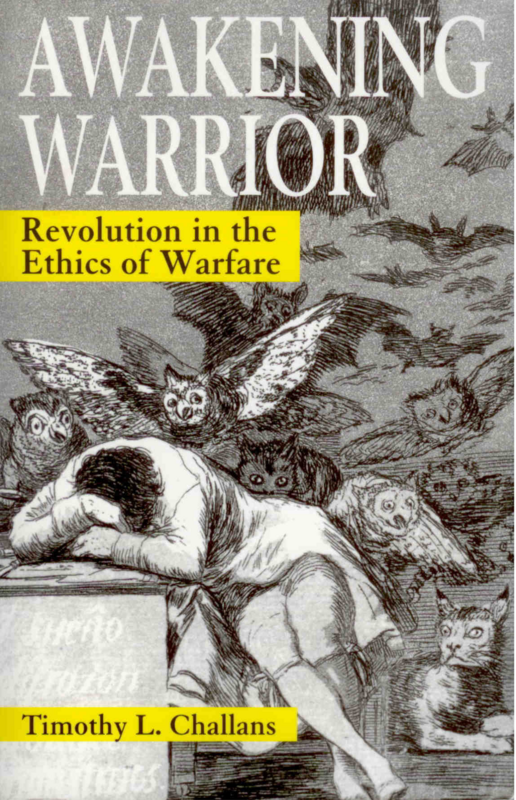
Awakening Warrior: An Interview With Author Timothy Challans

Remember the pride Americans felt in its military following the first Gulf War in 1991? Prior to that conflict we had the “Vietnam Syndrome” tainting our military with the stench of defeat and shameful atrocities such as the My Lai massacre. Supposedly, a reformed military culture debunked the legacy of Vietnam, liberated Kuwait with honor while safeguarding America’s interests in Saudi Arabia.

Among those who initially embraced that myth is Timothy Challans, who served in the Army as a career infantry officer and retired in 2002 as a lieutenant colonel. Challans writes in his new book, Awakening Warrior: A Revolution In the Ethics of Warfare (State University of New York Press) that,
“For years after Desert Storm I wanted to believe, like many Americans, that the U.S. military had completed a moral transformation. Those of us who had been duped by our own propaganda wanted to believe that the indiscriminate killing in Vietnam had been replaced by precision munitions in Desert Storm and beyond, that the repugnant crimes of war so prevalent in the degenerate destructive fighting in Indochina had been replaced by consciously clean conventional fighting in the Gulf, and also that the psychotic psychologies of a bankrupt former generation had been swept away by a reformed professional military that fought with moral clarity and certainty. But the progress that I and many others had imagined was a myth.”
Challans completed the manuscript for much of his book in the summer of 2001, before most Americans had ever heard of Osama Bin Laden or al Quaeda. Prior to the abuses of the Bush/Cheney Administration, Challans diagnosed the ills of what he describes as the “warrior ethos” and the “American War Machine” which encompasses those political and military institutions that engage the world with physical force.

In a thoughtful book that blends philosophy and history, Challans focuses on the systemic, institutional level of morality rather than bemoaning the moral shortcomings of individuals. And he poses the following questions for the American War Machine: What are the limits of an individual moral agency? What kind of responsibility do individuals have when considering institutional moral error? How is that neutral or benign moral actions performed by individuals can have such catastrophic morally negative effects from a systemic perspective?

In addressing those questions, Challans postulates that “America’s War Machine” creates more conflict than it prevents and endangers the citizens it’s supposed to protect. He therefore argues that America’s survival is contingent upon replacing the current warrior ethos with a new paradigm guided by ethics.

Challans, a native of Colorado, is a West Point graduate and earned masters and doctorate degrees in philosophy at the The Johns Hopkins University. For more than ten years he taught over a thousand military students from the rank of cadet to colonel, at West Point (USMA), the Command and General Staff College (CGSC), and the School for Advanced Military Studies (SAMS). He has spoken widely and presented numerous papers pertaining to the ethics of warfare. Challans was the principal author for the Army’s 1999 doctrinal manual leadership, FM 22-100, Army Leadership. His troop experience includes the 172nd Infantry Brigade at Ft. Richardson, Alaska and the 10th Mountain Division at Ft. Cambell, Kentucky.

Challans agreed to a telephone interview with me about his book and unique perspective. Our conversation is transcribed below.
*********************************************************************************
ILJ: Timothy, the first thing that grabbed my attention about your book was the title itself, Awakening Warrior. For the benefit of those reading this who did not read your book, why did you choose that title and what do you hope to accomplish with this book?

Challans: I was looking at Francisco De Goya’s etching entitled the “Sleep of Reason” as I was writing this book and I wanted to entitle it “The Sleep of Reason.” I thought that was a little bit too negative because while I think that we’ve been asleep in terms of our moral consciousness as we engage in conflict, I think some of us are waking up and the time is ripe for some critical evaluation of what we’ve done and where we can go.

And so I wanted to give a positive note that some warriors are waking up and are the vanguard of a revolution in the ethics of warfare for the good.

ILJ: I suspect many reading this who are like me, liberal and largely anti-war, are confused about the concept of integrating ethics and warfare. Tim is it really possible to wage the brutality of war ethically and why does that matter?

Challans: I think that’s a very good question. And whenever we do go to war that’s a huge failure when our politicians are not successful at diplomacy. We have engaged in a tremendous ethical failure. But the reality is at times we will have to fight. And so while I think that ethically fighting and war is going to have some very bad things about it … that we have two questions that people in this business think about:

The first one is, when should we go to war?
And the second one is how should we fight it once we’re in it?

And these two questions, once we think about them are important ethical questions that we have to explore in order to minimize the horror. I am not a pacifist myself although I am largely antiwar. I think we’ve been involved in far too many wars, more than we should. And that the leadership, both political and military doesn’t know how to engage in this kind of moral dialogue and we need to get a lot better at it.

ILJ: A reoccurring theme in your book is that for the military means become ends. Yet I can’t help but wonder how it could be otherwise for the military mind. Shouldn’t thinking about the bigger picture, consequences and morality be in the bailiwick of civilian leadership while the military focuses on tactics and winning?

Challans: That is the traditional division. That the politicians answer that first question, when do we go to war? And then the military is supposed to answer the second question, how should we fight it? The reality of this over the last several decades and actually the last several centuries, is that the division between political and military thought has merged.

There was a medieval distinction, that of invincible ignorance that is pretty much the idea that the soldier can go to war with a clear conscience and doesn’t have to worry about the political decisions. But the reality is our political leaders depend on our military leaders for advice and especially at the highest levels. Especially the Chairman of the Joint Chiefs. And the Chairman of the Joint Chiefs and his staff and every other headquarters and command where there is political/military interface there should be a dialogue between both groups of people: military and political as far as the morality of warfare given its gravity, potential destruction and the cost in terms of money and lives.

So, going back to your questions about means and ends, my book is primarily a challenge to the traditional structures and methods of thinking of ethics – and the way we think about means and ends, the very structure of reasoning about means and ends needs to be re-evaluated. For a very long time it has been inadequate for the military to think only about victory, winning the nation’s wars.

ILJ: In the second chapter of your book, you argue that the promotion of religion is undermining the ethics of our military and you even write that army chaplains “should get out of the ethics business in the military.” Why do you regard religion as a dangerous influence to the military’s moral compass?

Challans: If we’re looking at the three main religions in the world: Judaism, Islam and Christianity, the sacred texts for these religions really offer us very little if nothing when we go to answer these two questions,

1) When should we go to war?
2) And how should we fight it once we’re in it?

So I think the background that chaplains bring with them does not really help us in thinking about the moral questions that are at stake. And particularly the Bible is uninformative in this way. It tells us “Thou shall not kill.” OK, what do you do with that? What does the soldier do with that when he finds himself in war?

Additionally, since we’re working with the rest of the world now, I think we need some kind of ethical interoperability with the rest of the world. The rest of the world, the rest of the Western World … Europe, for example does not think of ethics in these terms. So if we’re going to be able to have a common conception of ethics, in a profession that is part of governmental structure in a democratic republic then it may be enough to think in terms that are not religious and that there are plenty of ideas out there where you don’t have to go to religion to understand respect for persons, rule of law and ethical ideas such as those.

My book also controversially challenges the Just War Tradition, the just war thinking that thinkers from Augustine to Michael Walzer defend. I believe we need a totally new conception, one reason being that our Just War Tradition has developed hand-in-hand with theological thought. For example, what good does it do to say the “legitimate authority” is a just war principle? Has there ever been a case in history when the leaders of any nation would say that they did have legitimate authority to go to war? Moral authority, especially religious moral authority, is one of the root problems of our muddled thinking about the ethics of warfare. I offer an original set of ethical principles of war, reasoned from some of the most profound ethical theories.

ILJ: Your book poses many important philosophical questions challenging what you describe as the “warrior ethos.” Yet for me, the nitty gritty of your book comes down to these two sentences in Chapter Four. You write, “The great paradox is that America goes to war against forces that it plays a large role in creating, and each war spawns new threats of largely its own creation.” That’s a harsh assessment. Do you really believe American militarism is responsible for the rise of radical Islam for example?

Challans: It may not be directly responsible if we’re thinking in the direct cause and effect relationship that you would see on a billiard table, one pool ball running into the next. But things connect up in a systemic way. And these forces are at work in ways that we really don’t sit back and reflect about.

So yes our approaches in solving problems at certain times will create the conditions for future problems. Just as in medicine today’s cures for certain diseases create tomorrow’s diseases. So, yes I do think there is this concept of blowback that the way we go about not only militarization but our economic expansion has tremendous systemic effects. An invisible hand kind of interaction where nobody is consciously intending or making something bad happen. But all these forces are at work, they’re at play in ways we don’t really think about and actually do create worse conditions making the world more dangerous year after year.

ILJ: In making your case for an ethics revolution in military culture, you challenge America’s moral standing over some of its proudest moments in history. One of them being, America’s victory over Japan in World War Two. Specifically, you accuse America of unjustifiably dropping atomic bombs on Japan when the war was essentially over. Growing up I was taught that even though the outcome was not in doubt, diehard Japanese soldiers would’ve kept fighting and taken many more American lives had President Truman not given the OK to bomb Hiroshima and Nagasaki. Couldn’t one argue that using atomic weapons was ethical because it minimized American casualties?

Challans: Here is a great example of how the military pursuit of victory – at any cost, by the way created more dangerous conditions. Our policy of unconditional surrender—an American invention in the annals of warfare beginning with Grant in the Civil War— put the Japanese Empire on notice that we were the ones who were not going to give up and accept a defeat. And here is the problem with the warrior ethos. It sounds good to us when we espouse the notion that we will never give up. But what happens when others take the same stance? It is precisely the warrior ethos existing on both sides in that war that escalated the brutality in the Pacific theater. The warrior ethos challenges the conventions of winning and losing. What does victory even mean is our enemy will never accept defeat? This is such a deep question at such a fundamental level that it does not even register in the minds of most warriors. And for a long time now it is not just the soldiery that refuses defeat but whole populations. The talk of victory in the current war against terror is nonsensical given that people won’t let another power achieve victory.

I mention in the book the irony of ending the war by attacking the Japanese population at large in order to bring about a military victory. And I juxtapose that against Japan’s entry into the war that was the attacking of an American military base in Hawaii at a time before Hawaii was a state.

That should symbolize our presence in the Pacific and our interference with Asia’s designs in their own region. So this goes back to your further question how our actions can create more dangerous situations. When we talk about setting the example for the world and then engage in wholesale destruction of a population, I think that while we may want to justify that for ourselves I don’t think we would want the rest of the world kind of picking up that example. And I’ll just mention Ramzi Yousef, the ’93 bomber of the World Trade Center who wanted to exact revenge on the World Trade Center symbolically for the destruction we brought against Japan at the end of World War Two.

Now, many sources will define terrorism as the threat or use of force against non-combatants for some kind of political objective. It’s inconsistent for us to use that definition when we want to define terrorists who are attacking us but we will not allow that definition the way we describe what we do. Now if we go so far as to say well, all of the Japanese citizens were combatants – then the problem with that is if everyone is being consistent about that, I think that’s pretty much what the attackers on 9/11 said about the occupants of the World Trade Center. Consistency is important here. And we need to think these things through very clearly.

ILJ: In fairness to President Truman though, wasn’t he being told by his military advisors we’re going to shed a lot more American blood unless we use these weapons? Occupying the Japanese mainland would’ve been a very tough proposition. And given the war weary American population at that point, did Truman really have another choice at that moment in time?

Challans: That’s a very interesting question because that’s not just a single choice at that point in time but things had degraded over time. So it’s really a series of decisions that take place over time. And so as we go back we can sympathize with Truman in terms of the choices he made on successive days. For example, why would they think atomic weapons were that much worse than the fire bombing of sixty other cities in Japan by that time? It may have seemed like a difference in degree but not a difference in kind.

In retrospect we can see that more clearly. But this should give us even greater pause in trying to think through the choices we make. As a series of decisions over time where we can potentially make thinks more dangerous than they need be.

ILJ: You also cite dropping the atomic bomb as the start of the cold war as an example of American military excess creating more conflict for it to fight. In fairness to America, Stalin brutally consolidated his Iron Curtain over Eastern Europe and since the Soviets were developing atomic weapons themselves, wasn’t the Cold War inevitable?

Challans: Well, yes. In some ways it had unfolded, maybe yes. And this goes back to my previous comment – that something like the Cold War unfolded as a result of thousands of decisions and hundreds of things that were happening. And many historians will now say we dropped the bombs more to keep Russia out of sharing a victory with us in Japan than the traditional rationale. But this may also be reason to think that we if reword McArthur’s most famous line, we should think about the role of diplomacy. Maybe its more important to say there is no substitute for diplomacy.

ILJ: Another proud moment in American history was the first Gulf War in 1991, when a supposedly new professional military liberated Kuwait, kept the Iraqis out of oil rich Saudi Arabia and conducted itself with honor – debunking the Vietnam syndrome. You reference two very serious allegations in your book however about the First Gulf War. The first is that independent satellite photos do not show the buildup of the Iraqi Army at the Saudi Arabian border before Operation Desert Shield was implemented in 1990. As a source you cite John MacArthur’s 1993 book, Second Front: Censorship and Propaganda In the Gulf War. If MacArthur’s right, why did King Fahd of Saudi Arabia allow the American military to set up shop in their country and anger Islamic radicals such as Osama Bin Laden? It doesn’t make any sense.

Challans: We’ve been involved in Saudi Arabia since the late thirties. There was certainly much more of an American military presence throughout the eighties in the Middle East. So the entry and the buildup of American forces in Saudi Arabia I think is a natural consequence of this relationship we’ve had with certain countries in the Middle East. Yes the buildup I think was exaggerated and this may help explain why the war only took 100 hours … that the forces that were reported to be there may not have actually been there. Now this is a serious allegation and I would love to see more exploration here but I really doubt the military is going to open itself up for this kind of investigation.

ILJ: Is there anything that civilians can do to explore these allegations, pressure politicians, especially in light of the past six years? Maybe people will want to dig further back into the history of our entire involvement in the Gulf.

Challans: I think that’s a great suggestion. The two conflicts are not separate. There needs to be some exploration and some interpretations that include Dessert Storm and Operation Iraqi Freedom. And I think that would be a fascinating topic to look at the whole thing rather than just the first part and the second part separately.

ILJ: The second allegation you reference is against Major General Barry McCaffrey. McCaffrey would later serve as President Clinton’s drug czar and he’s been a television commentator for NBC in recent years. You write that two days after the shooting stopped in March 1991, McCaffrey had his 24th Division completely destroy an entire Iraqi Republican Guard Unit after falsely claiming he responded to an antimissile attack – and you cite the reporting of Seymour Hersch, a credible reporter as a source – he’s very credible in my opinion. Do you believe McCaffrey acted looking for glory? Or was he cooperating with higher ups that wanted a pretext to wipe out another a division of Saddamn’s elite Republican Guards?

Challans: I would go with A. That this was primarily McCaffrey’s action. I think that from General Schzwartkopf and higher that the action was pretty much over. This was a cease fire. Cease fires have very technical legal strictures which are greater than say armistices. So this is a much more serious incident … and it’s an incident we let go because of McCaffrey’s stature and later political appointment — I think this was kind of ignored. But this would be part of that overall story that I think we need to go back and look at more seriously.

ILJ: I’d like to get your thoughts on two recent developments. One, what do you make of the federal appeals court in Washington that on Friday, ordered the government to turn over all information on Guantanamo detainees who are challenging their detention?

Challans: I think this is a move in a positive direction because I have never thought that any of the talk of detention and talk of tribunals had anything to do with bringing anybody to trial but that it always had everything to do with interrogation and getting information.

There was never any procedural or substantive law that had been developed to deal with the detainees, especially in this bogus category of enemy combatants. We are operating somewhere in limbo between a war paradigm and a crime paradigm, legally. And I think this is a case of the courts imposing itself to force the White House to show its hand. There are virtually no substantive charges against the vast majority of detainees. The one they stick on everybody, which is really a false charge, is that of conspiracy. Conspiracy while a crime in terms of criminal law is not a war crime.

So to try to charge all these detainees with the war crime of conspiracy is just not going to work. I think this is part of the oversight that the judicial system should have over the executive branch. And this really is good news in my view. It’s democracy at work.

ILJ: Do you think it might cause chaos if all these detainees are able to challenge their detention?

Challans: I think it will be chaotic. And there may not be any good answers once all this is exposed. Even so I don’t think the potential chaos is a reason not to do it. Nor would it be a reason to justify what’s been done. It may be that we have to face the very painful consequence of exposing something that is really bad news for America. It’s bad news because we used bad reasoning in terms of means and ends, using questionable means to achieve certain ends.

ILJ: And what do you think about the White House announcing on Friday that it had given the CIA approval to resume its use of some severe interrogation methods for questioning terrorism suspects in secret prisons overseas?

Challans: This is the executive branch trying to flex its muscle back at the judicial system. I think that is not a good idea. All of those heavy-handed measures have turned out to backfire in the past. For a long time I didn’t understand why the White House would be acting this way. But I’ve come to understand that there is a school of law out there, the John Yoo and Alberto Gonzales school of law which is to push the limits, to do something that is perhaps illegal. And if that sticks then they’ve actually succeeded in changing the law. And I really think that’s what they’re up to. This is particularly troubling to me for public servants take an oath to support and defend the Constitution. It is an outright contradiction to violate the very document that public officials have taken an oath to preserve.

ILJ: Timothy your book largely deals with reforming the ethics of the institutions of what you call America’s “war machine.” However, increasingly operations of America’s war machine are outsourced to private contractors such as Blackwater who essentially have their own army in Iraq and are not beholden to any government standards. Is it possible to have an ethical war machine if private contractors aren’t reformed as well and how can that be done if they’re not under the chain of command?

Challans: This is a huge problem and perhaps the greatest challenge that we’ll have in the future. As Smedley Butler, the Marine back in the early 20th century told us: “war is a racket,” war is business. And there are business forces at work that if the average American understood how profits are made off of people being killed I think they would be appalled. The rise of Blackwater, and the contractor force being the second largest army in the Middle East right now, is a tremendously problematic, not only because they can operate outside the law but they also operate outside of any consciousness of morality or ethical code that a military would have. So I think this issue of contractors on the battlefield is one we need to rethink seriously about.

ILJ: Do you think it’s possible assuming the military can reform its own ethical standards they can then mandate if you want to get any contract work from us, this what you have to adhere to? Is that a reasonable objective?

Challans: That could be a way to help solve the immediate problem. I think that’s a good idea actually. But it’s a world that’s really hard to control, unaccountable. Far more so then the blackest operation in our black ops world.

ILJ: Timothy you’ve been very generous with your time, a final question if I may. What sort of feedback, if any, have you received from the military establishment about your ideas in this book?

Challans: The feedback has been positive, from students and colleagues. Nobody has approached me to challenge me on anything I've said. I think the time is right for a moral dialogue of the sort I'm trying to carry out, one that can be critical enough to help us better understand where we've been, what we're doing, and where we're going.
Wednesday, July 18, 2007

Fear Mongering 4.0

I originally intended to post this on Sunday, July 15th but my DSL service through Verizon has been erratic lately. Thankfully, this evening it’s working in my corner of Brooklyn uninterrupted.

Anyway, I thought Frank Rich had the most incisive comment among the punditocracy in the New York Times on Sunday when he wrote:
“So what if the al Quaeda that’s operating with impunity out of Pakistan, North Africa and other non-Iraq havens actually is the most pressing threat to America? This president is never one to let facts get in the way of a political agenda. That agenda is to avoid taking responsibility for losing a war, no matter how many more Americans are tossed into its carnage. From here on in, you can be sure that whomever we’re fighting in Iraq on any given day will be no more than one degree of separation from bin Laden.”
Rich is right of course, as the Bush Administration has managed to simultaneously exaggerate and ignore threats to America’s national security from their first days in power. Now the Bush Administration is attempting to roll out Fear Mongering 4.0 by acknowledging their ineffectiveness at taking on al Quaeda in Pakistan that has only prospered from our folly in Iraq.

Fear Mongering 4.0 is an insipid program that rationalizes wide latitude for the executive branch in the “war on terror” because of al Quaeda’s resurgence. In other words, “we screwed up but trust us to protect you anyway.”

Extricating ourselves from Iraq and addressing genuine national security threats requires a sober recalibration of our geopolitical strategy. Sadly, the final eighteen months of the Bush Administration will likely produce more bumper sticker fear mongering as our blood, treasure and moral authority continues to erode in Iraq.

Congress must assert itself over the next year and half. Otherwise, the next president, whoever it is, will be consumed by dosing the kerosene fire Bush has dumped on the planet while radical Islam continues to metastasize.

Ultimately it comes down to two questions?

1. Does the GOP have the patriotism to consider the good of the country above saving face for their party?

2. Will Democrats have the spine to follow through on their convictions instead of simply looking to bleed the GOP with political showmanship?

This past week of late night debates in the Senate gives me little hope.

Sunday, June 10, 2007

Making Amends In Iraq: A Podcast Interview With Marine Captain Jeremy Joseph

Is there anything the American military can do at this point to win the hearts and minds of the Iraqi people? Personally, I, as well as many Americans and Iraqis don’t believe any reservoir of good will remains. As far as I’m concerned, this war of choice was immoral and ill conceived from the start and I don’t believe the current escalation in troops can accomplish any good.

However, I’ve never served in the military or been to Iraq. Jeremy Joseph has. He is currently a captain in the U.S. Marine Corps Reserves and a student at Washington’s Georgetown University Law Center. While in Iraq he was part of the active duty force.

Joseph postulates in his article, “Winning Hearts and Minds in Iraq Through Mediated Condolence Payments,” (subscription required) that establishing a reconciliation protocol following accidental deaths of non-combatants can help dilute an insurgency’s intensity. As a model, he cites the Dalkon Shield arbitrations and the September 11th Victim Compensation Fund hearings.

The International Institute For Conflict Prevention & Resolution (CPR) published Joseph’s article in the May 2007 issue of Alternatives. A longer version of the article shared the 2006 CPR Institute student articles’ Award for Excellence. It’s also scheduled to be published during the summer by the Harvard Law School Program in Negotiation Journal.

As Joseph notes in his article, since 2004, whenever an Iraqi non-combatant civilian is inadvertently killed in the crossfire between the American military and hostile forces, a victim’s family may apply for a condolence payment – a sum up to $2,500 when his article was first published. Yet this approach is both condescending and insulting to the victim’s families.

How can a monetary token of sympathy assuage a mother’s grief, satisfy a wife who lost her family’s breadwinner or heal the pain of a child who lost their parent from a stray bullet? Indeed, this detached approach can’t help but fuel anti-American sentiment among the Iraqi population.

As Joseph writes,
“The current condolence payment program fails to achieve its potential because it misses the opportunity for dialogue between the aggrieved Iraqi family and the United States Military (USM). This failure does not reflect callous individual soldiers or Marines, but a policy failure of too few troops to implement any meaningful process and a doctrinal failure that undervalued the winning of hearts and minds.

Consider the situation of a family whose father and sole breadwinner is killed inadvertently by a stray bullet from an insurgent-USM firefight. That family has questions to ask the U.S. soldiers:
  • Who killed our husband and father?
  • What happened and why?
  • What is the USM trying to accomplish in our town?
  • Do the USM troops actually feel sorry for the loss they have caused us? Do they even know?
  • How are we to support ourselves now that our bread-winning father is dead?”
Joseph argues that how the military responds to these individual families serves as a tipping point to Iraqi public opinion. He therefore asks if an Iraqi family who suffered a loss will continue to support U.S. troops or instead provide aid and comfort to insurgents “who look more like freedom fighters and heroes?”

Joseph further asks if the eldest children of families the American military inadvertently killed will “pick up weapons and join the insurgency in their fight – now this family’s fight – against the USM.”

My first reaction upon reading Joseph’s article was to wonder why these questions weren’t asked four years ago. I also can’t help but wonder if Joseph’s strategy of utilizing trained mediators to facilitate reconciliation between aggrieved Iraqi families and the U.S. military is too little too late.

There is also the reality that far more personnel would be required for this program to be implemented on a large enough scale to have any significant impact. Meanwhile, it appears increasingly likely a policy of withdrawal from Iraq will gain momentum with both parties in September. But even if Republicans join Democrats in pushing for a withdrawal timeline, a substantial American military presence in Iraq will likely remain at least until the early months of 2008.

Joseph believes that with the current surge, we have sufficient numbers to at least attempt a pilot condolences program in Baghdad. He makes a compelling case that doing so is both morally right and sensible.

Overall, I thought Joseph’s article was thoughtful and believe he is sincere. More troops on the ground from the beginning combined with this reconciliation approach might have helped four years ago. Perhaps it can still make a difference in Afghanistan where a growing sentiment exists to reconcile with the Taliban in order to avoid more deaths among the civilian population. It might also merit consideration for future military engagements.

Joseph agreed to a podcast interview with me and we discussed his experience with the Iraqi civilian population, the legalities behind his program and the potential strategic benefits. I also asked Joseph if private contractors such as Blackwater could be mandated to participate in a condolences payment program and whether liberal critics of the war like myself undermined the morale of our troops in Iraq.

His answers to those and other questions were compelling and thought provoking. Please refer to the media player below.


This interview can also be accessed at Itunes by searching for “Intrepid Liberal Journal.”

Saturday, June 02, 2007

No More Honeymoon

Election night 2006 was a satisfying result after the calamity of one party reactionary rule. On a personal level, I juggled my day job and after hours phone banking to help in the effort. Many other activists did the same out of patriotism and desire to establish a bulwark against the corporate theocrats in Washington. It feels like another lifetime and as The Nation duly noted in their latest edition, “The Honeymoon Is Over”:
“As Congress left town for its Memorial Day recess, the euphoria cast by the 2006 election victories was gone. Disappointed by the Democrats' inability to force a withdrawal timeline into the war-funding bill, angered by a trade deal hatched in secret, dismayed at backsliding on cleaning up Capitol Hill, progressives were faced with the unpleasant reality of the new Congress, warts and all.

The slim Democratic majority in both Houses is not a progressive majority. Just as distressing as the cave-in on war funding was the continued power of the bipartisan money party. Beyond ending the war, Democrats were elected because of popular rejection of corporate trade policies and the stench of corruption in Washington. Tom DeLay is gone, but the corporate lobbies just reloaded with Democrats. When the House leadership announced a trade accord that the Chamber of Commerce celebrated as a model for giving Bush renewed fast-track authority, hopes for a new economic course were punctured. Then, House Democrats wouldn't support even a two-year hiatus that would slow the revolving door between Congress and the lobby world. (‘That's our retirement plan,’ complained anonymous legislators.)”
I largely agree with that assessment about the Democratic majority’s corporatist leanings and sympathy for the K-Street industry. As for the war, even before Democrats assumed control, I advocated on this blog for either invoking the War Powers Act or cutting off funding. Timid and feckless, the Democrats were more concerned with implementing a political strategy of bleed and win. While the ongoing war continued to bleed Bush and the GOP, the Democrats were content to pass bills that scored political points and accomplished very little. The so-called benchmarks the Bush Administration agreed to is window dressing.

Ultimately, the plug will be pulled on this war by the GOP in September. Republican Senate Minority Leader Mitch McConnell has said his party doesn’t want another election campaign about Iraq. All that remains is for some more soldiers to “die for a mistake” as the young John Kerry once put it, while the Iraqis continue to kill each other. Bush had hoped to hand off the war to his successor so defeat would not happen on his watch. How ironic that Bush's fellow Republicans who enabled him to pursue this immoral and diastrous war of choice, will have their fingerprints on our withdrawal.

But the overall problem of combating radical Islam with a foreign policy based on international cooperation and strategic logic remains. We're losing Afghanistan and getting little value from our support of Musharaff in Pakistan. Democrats deliver platitudes about sending more troops to Afghanistan after we leave Iraq. Yet they don't explain why an escalation in Afghanistan would be any more successful than the current surge in Iraq.

Meanwhile, an economic policy guided by corporatism at the expense of working people struggling to keep up with the cost of living is not being reversed. Why don’t they pass a bill overturning the hideous Bankruptcy Abuse Prevention and Consumer Protection Act of 2005 passed by the Republican majority? Or make a push for reforming healthcare?

Granted, President Bush remains an obstacle to enacting a progressive program and more can be accomplished if the right person is elected to the White House next year. But that is no excuse for not maximizing their majority platform today to build public support and educate the citizenry. Congressional Democrats have wasted five months. Precious time that could’ve been used to aggressively advocate for replacing this insipid era of deranged privatization and cronyism, with bold initiatives designed to lift the working poor, nurture a vibrant middle class and yes provide healthcare for all.

However, the elections of 2006 were simply a first step in a long journey. Expecting a progressive reformation after one midterm election cycle was never realistic. Progressive activists, bloggers and citizens nationwide need to put their cynicism aside and remain engaged. The Nation put it best in their editorial’s closing paragraph:
“Democratic majorities have provided us with relatively progressive leaders in both houses of Congress and several aggressive committee chairs who are beginning to unearth the hidden horrors of this rogue Administration. But we still don't have the progressive strength in Congress or the leadership in the White House that can change this country's course. The serial disappointments of recent weeks are but a reminder that we've got work to do.”
We’ve only begun to fight for what is right.