Showing posts with label Muslims. Show all posts

Sunday, February 08, 2009

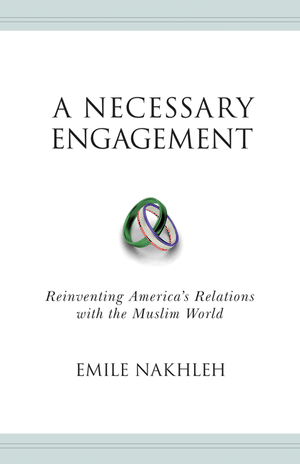
Reinventing America's Relations With the Muslim World: An Interview With Former CIA Analyst Emile Nakhleh

Building consensus within America’s body politic and national security establishment for a new way forward with Muslims worldwide is a formidable challenge. Many Americans still don’t appreciate the complex nuances of Muslim society and remain stubbornly Islamophobic almost seven and half years after 9/11. Equally formidable is earning the goodwill of Muslims worldwide following the Iraq War as well as American atrocities perpetrated upon Islamic detainees at Guantanamo Bay and Abu Ghraib. Hopefully, President Obama’s historic election has finally opened a path for constructive conversation about how America can most effectively engage the Muslim world.

The CIA’s former point man on Islam, Emile Nakahleh, has vigorously entered this conversation with his new book, A Necessary Engagement: Reinventing America’s Relations With the Muslim World (Princeton University Press). From 1991 to 2006, Nakahleh served as the director of the Political Islam Strategic Analysis Program in the Directorate of Intelligence at the CIA. He holds a PhD in international relations and is a member of the Council on Foreign Relations.

Nakhleh’s book combines a revealing memoir with in-depth analysis and proposals for the future. Ever since his retirement from the CIA in 2006, Nakhleh has been a vociferous critic of the Bush Administration’s legacy with respect to American-Muslim relations. Indeed, in September 2006, Nakhleh told Harper’s Magazine that because of Bush’s policies,
“We've lost a generation of goodwill in the Muslim world.”
Nakhleh's proposals for improving American-Muslim relations stems from his conversations with Muslim "interlocutors" spanning three decades. These conversations include government ministers, Islamic activists, academics and radicals. Nakhleh also examined and analyzed considerable polling data of Muslims worldwide.

Overall, Nakhleh contends that the vast majority of Muslims and America have common interests and values. His blueprint includes robust dialogue with mainstream Islamic political parties as well as a tangible commitment towards democracy in the Muslim world, even if we don’t always like the short-term electoral results. His book is an accessible 160 pages and divided into four chapters: (Chapter 1) Political Islam and Islamization, (Chapter 2) Intelligence, Political Islam, and Policymakers, (Chapter 3) Public Diplomacy: Issues and Attitudes and (Chapter 4) Public Diplomacy: A Blueprint.

Nakhleh was born in Galilee, north of Nazareth in Palestine and raised a Greek Catholic. He emigrated from Israel to the United States approximately 50 years ago and attended a Benedictine university in Minnesota for his B.A., a Jesuit university in Washington, D.C., for an M.A. and was awarded a Ph.D. from the American University in Washington, D.C. Prior to joining the CIA he taught at a catholic college in Maryland for 26 years.

Nakhleh agreed to a telephone interview with me in podcast format. Among the topics we discussed was whether he believes the surge in Iraq worked, the proxy war between Saudi Arabia and Iran inside Iraq, President Obama’s new strategy in Afghanistan, Hamas and America’s role in resolving the Israeli-Palestinian conflict and his argument that American commitment to democracy in the Muslim world is imperative to our long term interests.

Some of Nakhleh’s answers and views may surprise many listeners. Our conversation was just over 47 minutes. Please refer to the flash media player below.


Either searching for the “Intrepid Liberal Journal” or “Robert Ellman” can also access this interview at no cost via the Itunes Store.

Update: I erred in the introduction in the podcast when I said Emile Nakhleh worked for the CIA between 1991-1996. I meant to say he worked with the CIA between 1991-2006. Also, my apologies for the echo sound on Emile's side. Sometimes technology has its limits.

Sunday, July 08, 2007

History and Hezbollah: A Podcast Interview With Augustus Richard Norton

Trying to make sense of tribal politics in the Middle East can’t be done with simple bumper sticker slogans. The history, entangling relationships, religious dimension, shifting alliances, geography and multiple cultures are a Byzantine maze of complexity. Specifically, the Muslim world is often regarded by people in the west, especially Americans, as a large bowl of alphabet soup. As a result, policy makers who look for quick and easy fixes by force in the region overreach and miscalculate.

One tragic example of miscalculation and overreach is Lebanon. Once regarded as the “jewel” of the Middle East, Lebanon endured a brutal civil from 1975 to 1990. Surrounded by the Mediterranean Sea, Syria and Israel, this small country the size of Connecticut has flummoxed leaders in Jerusalem and Washington for two decades.

In 1982, Israel attempted to drive out the PLO from Lebanon and establish a government friendly to their interests. At the time, Yassir Arafat’s PLO had established a “state within a state” in southern Lebanon and exploited the territory as base of operations against Israel. President Ronald Reagan deployed the U.S. Marines to provide “stability” as part of a Multinational Force. A suicide bomber killed 220 marines in October 1983 and they were “redeployed’ in early 1984. Meanwhile, Israel’s occupation of Lebanon resembled America’s failure in Vietnam as well as the Soviet Union’s experience in Afghanistan and they finally withdrew in the spring of 2000.

Prior to Lebanon’s civil war ending in 1990 the country was a magnet for terrorism and kidnappings by militant Islamic groups coordinating with Iran. These activities helped contribute to the Iran-Contra scandal that plagued the final years of the Reagan Administration. Since then Lebanon has been a hotbed for proxy fights and political intrigue among Syria, Iran, Israel and the United States.

In the early eighties, a resistance movement of Shiite Muslims called Hezbollah, meaning “Party of God” was formed. With the backing of Iran as well as Syria in later years, Hezbollah helped make the price of Israel’s occupation of southern Lebanon too costly and forced their withdrawal seven years ago.

Last summer, Hezbollah infiltrated Israeli territory and kidnapped two of their soldiers - provoking a brutal war resulting in heavy civilian casualties. The kidnapping was an escalation of the tit for tat engagement that had been taking place between Israel and Hezbollah since Israel’s withdraw from southern Lebanon in 2000 otherwise known as "the rules of the game." Israel however opted to use the kidnapping as a pre-text to wipe out Hezbollah and in the process deliver a strategic blow to Iran. Afterwards, Hezbollah’s prestige was enhanced from going toe to toe with Israel.

Yet most policy makers in the United States and Israel simply regard Hezbollah as a terrorist entity and nothing more. However, Augustus Richard Norton writes in his new book, Hezbollah: A Short History (Princeton University Press) that Hezbollah is a sophisticated organization combining the functions of a militia, a social services and public works provider and a political party. He postulates that as Hezbollah’s war with Israel last summer illustrates, they’re far too entrenched in Lebanese society to disappear through the use of force.

Norton, is a Boston University professor of international relations and anthropology, as well as a member of the Council on Foreign Relations. An expert on Shiite political movements, including Hezbollah, Norton was also a military observer for the United Nations in southern Lebanon when Hezbollah and rival Shiite parties were forming there in the early 1980s. A former U.S. Army officer and West Point professor, Norton has conducted research in Lebanon for nearly thirty years. His previous book, Amal and the Shi'a: Struggle for the Soul of Lebanon is widely considered to be a classic account of the political mobilization of Lebanon’s Shiite Muslims.

Lee Hamilton, Vice Chair of the 9/11 Commission and Co-Chair of the Iraq Study Group said,
“Hezbollah is a timely and landmark work. Richard Norton draws on his extensive expertise to offer a comprehensive history that will be of interest to anyone who seeks a better understanding of Hezbollah, Lebanon, or current developments in the Middle East.”
Norton agreed to a podcast interview with me about his book, Lebanon and Hezbollah. Among the topics covered during our conversation was Lebanon’s civil war, Israel’s invasion of Lebanon in 1982, Hezbollah’s origins, their relationship with Syria and Iran, the aftermath of the 2006 war with Israel, how the Hamas takeover of Gaza will impact Hezbollah and Lebanon and the current situation with the militant group Fatah al Islam. Please refer to the media player below.


This interview can also be accessed via the Itunes store by searching for Intrepid Liberal Journal.

Sunday, March 18, 2007

Crusading For Justice & Peace: A Podcast Interview With Activist Marisa Handler

Marisa Handler lived in South Africa until she was twelve. Both her parents are Jewish liberals and they actively opposed South Africa’s racist apartheid system. Their values heavily influenced Handler during her formative years. Perhaps she was destined to become an activist as early as nine years old while attending Camps Bay Primary School in Cape Town.

One day during recess, a pre-adolescent queen bee named Joan, held court on the playground and asked several peers whom their parents were voting for in an upcoming election. One by one, the other students answered “Nats,” meaning the longtime ruling white supremacist National Party. Eventually, Joan turned her scrutiny on the self-conscious Handler who whispered “PFP.”

The PFP were the Progressive Federal Party that preached equality and represented a constituency of white liberals. Joan proceeded to interrogate Handler and asked if she really wanted to turn South Africa over to the majority blacks she called “stupid.” Fearfully, Handler held her ground and the foundation for a future activist was established: she had demonstrated the fortitude to take an unpopular stand and subject herself to ridicule.

Now thirty, Handler is a well-traveled and seasoned veteran in the pursuit of global justice and peace. Her book, Loyal to the Sky: Notes From an Activist (Berrett-Kohler Publishers, Inc.) is a stirring memoir about her personal evolution and experiences. Handler’s journey spans the playground in Cape Town, relocating with her parents to Los Angeles at the age of 12, Berkley University, Israel, Nepal, India, protesting the Free Trade Area of the Americas agreement in Miami, Ecuador, Peru, protesting the 2004 Republican National Convention in New York City and talking with soldiers in Fort Benning, Georgia.

Handler has worked as an organizer in the global justice and peace movements as well as written about socio-politics and globalization. Her work has been published in Orion Magazine, Tikkun, Salon.com, the Earth Island Journal, Alternet.org, Bitch Magazine and the San Francisco Chronicles. Currently, Handler resides in San Francisco where she is also a singer-songwriter. She plays regularly around the Bay Area and her album Dark Spoke is currently available on CD.

Handler agreed to a podcast interview with me and among the topics we covered were her book, music, work, spirituality, life experience, the Israeli-Palestinian conflict, Hindu/Muslim tensions inside India and the overall quest to achieve global justice. Please refer to the media player below.


This interview can also be accessed for free via the Itunes store by searching for Intrepid Liberal Journal.