Showing posts with label E.J. Dionne. Show all posts

Tuesday, April 01, 2008

Warning: This Is A Horserace Post

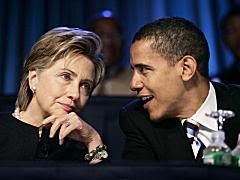
My apologies for not posting anything new these past couple weeks. As with most of you, I’ve been following the “horserace.” Typically, I prefer to let others do horserace posts and focus on policy issues or insights about our society. Besides, there are plenty of quality horserace-oriented bloggers if that’s what you’re into as well as the punditocracy. But the stakes in the Clinton/Obama horserace are enormous and progressives are understandably preoccupied with it.

Two contrasting perspectives on the campaign today come from the Washington Post’s E.J. Dionne and one of my favorite bloggers, Booman. Dionne writes,
“For all Democrats, the worst thing that has happened since January is the tarnishing of the Clinton brand. Clinton haters: Don't laugh. The truth is that when this whole thing began, the vast majority of Democrats -- including Obama supporters -- and a fair number of independents had largely positive views of Bill Clinton's record and Hillary Clinton's merits.”
In response Booman writes,
“To my way of thinking, the health and future of the Democratic Party (and, therefore, the nation) actually depends on the Clinton legacy being discredited and their brand tarnished. It's nice, and valuable, for a party to have a president in the somewhat recent past that they can point to as a positive example. For the Republicans, the cult of Ronald Reagan is more than an example; it is a recruitment strength and an ideological rallying cry. But Ronald Reagan didn't get impeached. Ronald Reagan didn't preside over huge congressional losses for his party. Ronald Reagan's presidency was validated by the election of his vice-president as a successor, not rejected in favor of a chimpanzee.

But more to the point, Obama keeps saying that he wants 'to change the mindset that got us into the war' in Iraq. A prerequisite for that, is that Democrats revise their opinion of Clinton's foreign policy. The Clintons spent the 1990's feeding us trumped up intelligence about the dangers of Saddam Hussein as a way to maintain domestic and international support for the sanctions, for an aborted coup attempt in 1996, for the Iraq Liberation Act of 1998, and for the bombing of Iraq at various points throughout the decade. The Bushies then took that falsified intelligence and used it to justify the invasion and five-year occupation of Iraq. ‘"Even the Clinton administration thought he had WMD.’

Domestic affairs are a more mixed bag. Clinton did cut through some ossified liberal dogma, but the overall effect of his New Democrat policies was to complete the destruction of the party in the South, badly weaken the party in the Plains states and Interior West, and freeze the Democratic momentum in the suburbs. The Clinton presidency was partly successful because of a booming economy and relative peace, but we should never forget that he squandered the peace dividend and kept the country on a permanent war-budget footing.”
Booman is also one of many bloggers and growing chorus of Democrats agitating for Clinton to end her campaign. I definitely agree with Booman’s assessment of the Clinton brand and their culpability on foreign policy. Furthermore, I agree with progressive bloggers such as Booman that the Clinton campaign has been a graceless and joyless exercise of bottom feeding.

Clinton’s rhetorical grenades and race baiting grates Obama supporters. Her negative tone is especially off putting because Clinton doesn’t have a realistic shot at the nomination anyway. Hell, at one point Clinton even claimed McCain was qualified to be commander and chief and implied that Obama wasn't. Is she a Democrat or John McCain’s running mate?

Nonetheless, I hope Clinton continues in the race. In my opinion, Democrats are overly skittish about blowback this November from the drama of the primaries. This has been healthy for the Democratic Party’s eventual nominee. Obama needed to weather some adversity and be tested by a win at all costs opponent.

As the cliché goes, what doesn’t kill you makes you stronger and Obama’s national standing is fine. I’m not troubled by the tightness between Obama and McCain right now. Once he becomes the official standard bearer Obama will be in a very strong position to compete with McCain for independent voters. Most independents don’t want to elect a third Republican term.

In the meantime, the Clinton-Obama race has contributed to needed party building in every region. That is an essential component to Howard Dean’s fifty-state strategy which the Obama campaign organization has embraced while the Clintonites play with an outdated and static map. Even better, Obama has been compelled to campaign for older downscale working class voters because of the upcoming Pennsylvania primary. This is a constituency he’ll need to persuade this November anyway. So, as an Obama supporter I have no problem with the contest continuing. Competition and rigorous debate is good.

My problem is that the debate has not been rigorous enough about high stakes issues such as global warming, addressing national poverty and standing up for civil liberties. Instead both candidates are wrapped up in their intense personal drama. It seems Obama wants to elevate the conversation as he did with his response to the Reverend Wright controversy. But neither the media, wealthy corporatist Democratic Party donors or Senator Clinton herself believe an elevated debate is in their interest. Too often the Obama campaign has taken Clinton's bottom feeding bait.

At this point Senator Obama should ignore Senator Clinton and not allow her campaign to debase his message. It’s counter-intuitive to ignore a rival candidate’s rhetorical bombast. But Senator Clinton has crossed the George W. Bush credibility threshold in recent days. Everything she says is viewed through the prism of suspicion and disbelief. Hence, her critique of Obama is no longer effective. Obama therefore has the luxury to tweak his general election message and avoid further alienating Clinton’s supporters.

Clinton can best serve her own legacy, the party and nation if she aims for a higher tone, pushes Obama on issues such as healthcare as she has throughout the campaign and the metastasizing credit crisis. Unfortunately, she's chosen bottom feeding over honor.

Can you just imagine what position Clinton would be in today if she had seized the moment following the Reverent Wright controversy in a positive way? Obama was struggling before delivering his tour de force and Clinton had an opportunity to fill the void. But she was cautious and let the moment pass. Then following Clinton’s own controversy about her so-called dangerous mission in Bosnia, she opted to exploit white resentment and fear. Sadly, those ends justify the means tactics is a window into the kind of president she would be. Thankfully though, Clinton has strengthened and enhanced Obama's candidacy in spite of her cynicism.

Friday, April 06, 2007

Note To My Readers and A Comment About Religious and Atheist Extremists

As some readers may have noticed, my posts haven’t been as frequent the previous two weeks. My employer has me working on an ambitious project requiring heavy overtime and the deadline is April 24th. I will post with greater frequency after that date. My plan is to at least compose essay posts on Sundays if time allows and hopefully write short commentaries during the work week about current events.

I appreciate the patience and understanding of my readers during this period. It frustrates me not being able to blog more frequently regarding the issues I'm passionate about. Alas, even we bloggers must eat and have a roof over our heads.

In the meantime, allow me to comment on E.J. Dionne’s column in today's Washington Post entitled, “Answers To Atheists.” It’s a provocative read as the liberal Dionne writes about the dogma of militant atheists and religious fundamentalists:

“The neo-atheists, like their predecessors from a century ago, are given to a sometimes-charming ferociousness in their polemics against those they see as too weak-minded to give up faith in God.

What makes them new is the moment in history in which they are rejoining the old arguments: an era of religiously motivated Islamic suicide bombers. They also protest the apparent power of traditionalist and fundamentalist versions of Christianity.

As a general proposition, I welcome the neo-atheists' challenge. The most serious believers, understanding that they need to ask themselves searching questions, have always engaged in dialogue with atheists. The Catholic writer Michael Novak's book ‘Belief and Unbelief’ is a classic in self-interrogation. ‘How does one know that one's belief is truly in God,’ he asks at one point, ‘not merely in some habitual emotion or pattern of response?’

The problem with the neo-atheists is that they seem as dogmatic as the dogmatists they condemn. They are especially frustrated with religious ‘moderates’ who don't fit their stereotypes.”

Dionne reminded me of my recent experience with “neo atheists” on the blogosphere. Some time ago I wrote a post entitled, “Wanted: An Atheist Candidate For President” and received hate email from atheists! As it is I regularly receive hate emails from conservatives. Since I started blogging Christian fundamentalists have been especially hateful in their emails.

But receiving hate email from atheists at the time really stunned me. One of these insipid people actually wrote I was being too “respectful” of religious people and was no better than Pat Robertson! Meanwhile, Pat Robertson thinks secular liberal Jews like me have a one-way ticket to hell. Sadly, both extremes feed off each other and faciliate even more hatred.

Friday, March 09, 2007

"Hyperpartisanship"

Partisanship in politics is healthy. Robust and rigorous debate is the engine of democracy. There is a line however between principled partisan and "hyperpartisanship” which seeks to avoid competition and destroy any political opposition.

E.J. Dionne of the Washington Post adroitly explains the distinction in his column today:

“Hand-wringing over extreme partisanship has become a popular cause among learned analysts. They operate from Olympian heights and strain for evenhandedness by issuing tut-tuts to all sides, Democrats and Republicans, liberals and conservatives.

But the evidence of recent days should settle the case: This administration has operated on the basis of a hyperpartisanship not seen in decades. Worse, the destroy-the-opposition, our-team-vs.-their-team approach has infected large parts of the conservative movement and the Republican Party. That's a shame, since there are plenty of good people in both. Still, the tendency to subordinate principles to win short-term victories and cover up for the administration is, alas, rampant on the right.”
At one time the American conservative movement was based upon principled partisanship and the engagement of ideas. No ideology should go unchecked and both the New Deal and Great Society programs deserved criticism for overreach and excesses. That’s fine. Criticism is how we improve and the public is best served when our politics is an intense competition in the market place of ideas.

As Dionne notes in his column however, Republicans have taken partisanship to another level. Truthfully, the GOP engaged in hyperpartisanship long before George W. Bush was on the scene. Their power was contingent upon destroying America’s faith in government to legitimize crony capitalism under the guise of privatization. They successfully exploited racial divisions and persuaded working class whites to vote against their economic interests for a generation.

In recent years, conservatives issued dire warnings about the “homosexual agenda” and “secularists” as their instrument of fear and diversion. And for good measure, questioned the patriotism of anyone who disagreed with their failed national security policies.

Meanwhile, the hyperpartisans in the Republican Party were empowered by “bipartisan” Democrats such as Joe Lieberman who legitimized their corporatist war mongering. Has the bough finally broken on the era of conservative hyperpartisanship?

Democrats will use congressional hearings to expose how the Justice Department terminated six United States Attorneys for not aggressively prosecuting cases in line with Republican Party interests. The scandal appears to be gaining traction in the mainstream media and even some Republican legislators have expressed outrage about the Justice Department’s conduct. Perhaps President Bush will even sacrifice Attorney General Alberto Gonzalez the same way Defense Secretary Donald Rumsfeld was shown the door following the November elections.

My guess however is that right wing hyperpartisans will merely be temporarily slowed. The zealots in the Republican Party remind me of the Bolsheviks. Vladimir Lenin surrendered territory to the Germans with the “Brest Peace” in 1918 to purchase breathing room and space. But he hadn’t given up on exporting revolution.

Similarly, Gonzalez will be sacrificed to buy time. But the neocons and conservative hyperpartisans will never give up on their quest to destroy unions, consumer protections and the fabric of social justice. Greed and hate is simply too much a part of their DNA.

Thursday, January 25, 2007

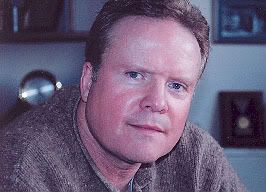
Senator James Webb: A Tough Liberal

E.J. Dionne wrote a terrific column about newly elected Virginia Senator James Webb in today’s Washington Post. It was Webb who delivered the Democrat’s pugnacious response to President Bush’s State of the Union address Tuesday night. I hope the mealy mouthed Hillary Clinton took copious notes during Webb’s speech. As Dionne wrote,

“Webb's performance was a salutary sign that Democrats just might be getting over the battered party syndrome that has left so many of them terrified of saying exactly what's on their minds. Then again, maybe Webb was just speaking for himself. Having lived on the Republican side of politics during the Democrats' most traumatic years, he may have escaped the traumas associated with defeat.”


Indeed, Webb pulled no punches about Bush’s reckless war in Iraq which timid wrong-headed Democrats like Hillary supported. Webb also didn’t hold back about the class warfare waged against working people struggling to make ends meat.

Webb is not a corporatist nor is he a mealy mouthed “triangulator.” For a generation the Democratic Party was a self-gelding machine of ineptitude. Even President Clinton was unable to prevent the party’s decay. Thankfully, Democrats such as Webb doesn’t carry that baggage. And by the way, we kooky bloggers championed Webb early on because he spoke our language. It’s the language of truth over expediency and action over centrist inertia. Senator Webb, thank you for joining the Democratic Party.

Friday, January 19, 2007

Where's the Beef?

It was 1984 and a youthful looking Colorado Senator named Gary Hart was getting traction as the candidate of “new ideas.” Presumptive front-runner, former Vice President Walter Mondale appeared to be a dinosaur as Hart scored an upset in New Hampshire.

The two candidates were about the same age but the combination of Gary Hart’s hair and “new ideas” slogan propelled him to the top tier. Only fifteen at the time, I was astounded how Gary Hart succeeded while offering so little substance.

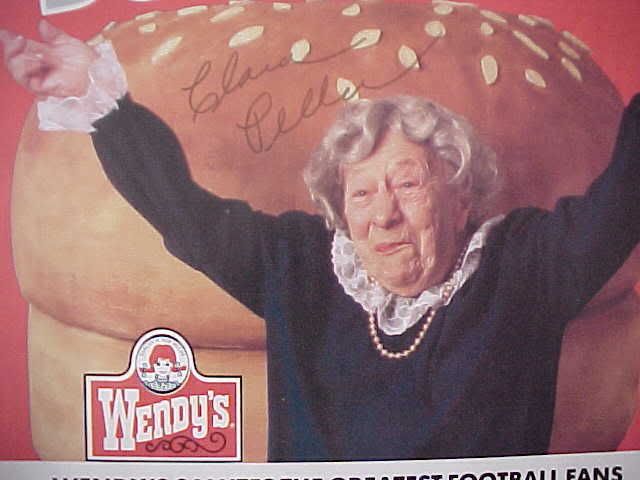
You may recall a popular television commercial for the fast food chain restaurant, Wendy’s at the time. Gray haired Actress Clara Peller stared at an unimpressive looking hamburger and asked, “Where’s the beef?” Mondale effectively neutralized Hart’s momentum by asking the same question about his rival's program.

I happen to respect Gary Hart. Our country should have heeded the report about terrorism he co-authored with former Senator Warren Rudman. This country would be far better off if we had. However, in 1984 Gary Hart was a platitude machine hiding behind the slogan of “new ideas.”

This week Barack Obama announced the formation of his exploratory committee to run for president and he noted the public wanted “something new.” Reading that I immediately thought of Gary Hart and Clara Peller. Where’s the beef?

As E.J. Dionne observed in today’s Washington Post, Democratic presidential candidate John Edwards is running on specifics. Edwards has stated his immediate priorities are not balancing the budget but addressing the nation’s investment deficit. Dionne writes:

“Most Democrats don't like to talk about it, but somebody's taxes are going to have to go up. Edwards, at least, is willing to say which taxes he would raise to keep the deficit from going through the roof. He would start by eliminating Bush's tax cuts for the top 2 percent of income earners, which he defines roughly as those earning more than $180,000 to $200,000 a year.

He wants to increase the capital gains tax for an interesting reason: In an interview this week, he argued that it's wrong to tax income from work at a higher rate than income from capital -- an extension of his long-standing theme that the country should not value ‘wealth over work.’ He also favors a windfall-profits tax on oil companies.

But since health coverage and ‘transforming the energy economy of this country’ are first on his to-do list, Edwards says he is prepared to disappoint voters who make a balanced budget their top priority.

Edwards deserves points for honesty and for stating the politically difficult truth that both fiscal and social balance demand a comprehensive health-care fix.”
My favored candidate for 2008 was Wisconsin Senator Russ Feingold but he’s not running. My next preference is former Vice President Al Gore but it doesn’t appear he has the fire in the belly anymore.

As I’ve written previously, Edwards record about the Iraq War troubles me. I believe he supported the congressional resolution supporting President Bush’s misguided venture in Iraq out of political expediency. I can’t help but wonder if his “apology” for supporting the war is also about political expediency. War requires a higher standard of leadership than he’s provided. Yes, today he’s speaking out but seventy percent of the public is with him now. We needed Edwards to speak out in 2002-2003.

Nevertheless, I appreciate the progressive campaign Edwards is waging on domestic policy and the specifics he’s offering. In 2004, I regarded Edwards as a Ken Doll and his “two Americas” campaign a mere slogan. This time it appears he’s rising above platitudes.

Do platitude machines Hillary Clinton and Barack Obama have any beef to offer? A cynic might recall how Walter Mondale was honest and specific. He told a nationally televised audience at the Democratic National Convention:

“President Reagan will raise your taxes. So will I. He won’t tell you. I just did.”
The deficit was out of control but Reagan promised not to raise taxes, won in a landslide and raised taxes for the middle class anyway, which he called “revenue enhancements.” And he got away with it.

An optimist however might note John Edwards on his worst day is far more charismatic than Walter Mondale ever was on his best day. Perhaps Edwards is just the candidate to sell a specific progressive program and earn a mandate for real change. Without either Feingold or Gore in the race I don’t know which candidate I’m going to volunteer for yet. For damn sure I want more than platitudes such as “something new” offered by Obama. I want to know where the beef is.

Friday, December 22, 2006

An Innovative Mayor

As a New Yorker I’ve regarded Mayor Michael Bloomberg with skepticism. I thought his pursuit of a new baseball stadium on Manhattan’s west side was wrongheaded. His crackdown on free speech during the 2004 Republican National Convention was despicable. Also, the Mayor has effectively gelded New York City’s Department of Investigation (DOI) from cracking down on corruption between city government and big business.

Conventional wisdom stipulates the Bloomberg Administration is less corrupt than Guiliani’s because he financed his own campaigns. True as that may be, Bloomberg’s has cut DOI's staff and diminished their ability to identify corruption within his administration. That makes me suspicious.

That said, Bloomberg is a non-ideological technocrat who isn’t afraid to try fresh approaches. As Washington Post columnist E.J. Dionne writes in his most recent column,

“In New York this week, Bloomberg announced a new initiative to fight poverty, including a Center for Economic Opportunity and $150 million annually that would, among other things, provide incentives for the poor to stay in school, to build up their personal savings and to get preventive medical care.The mayor would also create an Office of Financial Empowerment to 'educate, empower and protect workers with low incomes so they can make the best use of their financial resources.' The poor often get ripped off by the unscrupulous.

The fund includes $25 million raised privately -- a signature approach for Bloomberg, a billionaire and a major private philanthropist -- which will give the program more room to experiment.”
I hope Bloomberg’s innovations succeed and can be replicated statewide. Perhaps other municipal and state governments will review these programs and adapt them for their own needs. It’s often said that city and state governments are laboratories of innovation. I’ll happily give Bloomberg credit if his new ideas lift citizens from poverty and help lower income workers learn to get the most from their resources. It would help however, if Mayor Bloomberg realized even educated professionals like myself are also struggling to remain fiscally sovent in this city.

Tuesday, December 19, 2006

E.J. Dionne Writes About the "Real America"

The first time I read E.J. Dionne Jr. was during my freshman year of college when he covered politics for the New York Times as a journalist. His dispatches from Iowa and New Hampshire during the '88 presidential campaign were far more incisive than the standard beltway drivel. Almost twenty years later his op-ed columns in the Washington Post are a must read. In his most recent column Dionne writes,

"When a nation alters its philosophical direction and changes its assumptions, there is no press release to announce the shift, no news conference where The People declare that they have decided to move down a different path." Yet 2006 is looking more and more like one of history's hinge years, a moment when old ideas are cast aside, new leaders emerge and old leaders decide to speak in new ways. The changes in politics and culture are visible in the many sudden and outright reversals of the conventional wisdom.

Nowhere is the evidence of change more striking than among the young, whose attitudes and behavior are usually leading indicators of social transformation."
CLICK HERE TO READ THE REST OF DIONNE'S COLUMN.

I concur there is something percolating in America. Truth and hope are empowering and the public senses it is receiving neither from today's political class. Our current leadership has either provided fear saturation, shameless lies on an epic scale and crony capitalism or been too cowardly to stand up to them. The end result is a corporatist plutocracy, apathy and collective sense of vulnerability. This I believe explains the hysteria for iconic figures such as Guiliani and Obama. Sadly, Guiliani is another corporatist fear merchant and we just don't know about Obama yet.