Listening to conservatives whine that America is a "center-right" country in spite of the recent election has me reflecting about Ronald Reagan as well as pondering what makes a transformative presidency. During the Reagan era, liberals like me frequently complained that America really wasn't that conservative. We cited polls that illustrated the American people really preferred the Democrat's policies on issues ranging from healthcare to nuclear weapons and only supported Reagan because of his "personality."
Yet Reagan got his way, America moved to the right and his presidency is regarded as transformative. Reagan was a transformative president because he laid the foundation in which America's center of political gravity remained to the right for a quarter century with respect to economic, social and foreign policy. Even two terms of a Democratic Bill Clinton presidency did not alter America's conservative course regarding de-regulation and raging privatization.
Transformative presidencies with broad popular support like Reagan's are rare. The Reagan model was to nurture an above partisanship veneer while aggressively waging partisan warfare and exploiting racial cultural subtexts. Presidents that successfully thread the needle between partisanship and statesmanship achieve an exceptional leadership nexus and transform the center of political gravity as Reagan did. In achieving this leadership nexus, Reagan was able to prosecute class warfare from the top and still enjoy popular support from America's middle class.
A more positive example of this transformative leadership model is liberal Franklin Roosevelt. Both Roosevelt and Reagan enjoyed the support of key core constituencies that strongly identified each with their respective parties. Yet both Roosevelt and Reagan were also perceived as being far above the body politic while their administrations ruthlessly engaged in partisan combat. As we liberals note with fondness and gratitude, Roosevelt shifted the center of political gravity in a manner that grew and nutured the middle class. Even two terms of a Republican Dwight Eisenhower presidency did not alter the body politic's support for Roosevelt's New Deal. Remarkably, both Roosevelt and Reagan retained the support of white working class blue collar voters.
From the earliest days of his presidential campaign, Barack Obama has assidiously laid the foundation to become a transformative figure. One who retains the enthusiasm of his core supporters while simultaenously appearing inclusive and respectful to the entire body politic. I must admit that following Bill Clinton's triangulation and George W. Bush's partisan reign of indecency, I saw little benefit to this approach.
Hence, my initial preference for John Edwards who adopted the Theodore Roosevelt model: progressive change by aggressively taking on the entrenched forces of America's kleptocracy. Before the Iowa caucuses (remember that?!?) the Edwards approach made far more sense to me than Obama's fight fire with water persona or rewarding Hillary Clinton's efforts to be the custodian of her husband's pro-corporatist/pro-war political machine. Ultimately, Edwards was unable to compete against the celebrity power of Clinton or Obama and as it turned out his personal failings would have doomed his candidacy anyway.
Nearly a year after Iowa, as I observe Obama during the transition I can envision the potential for a transformative presidency. Reagan appointed political figures that were reassuring to the establishment and upset his core supporters such as his Chief of Staff James Baker. Similarly, Obama has picked some figures for his inner circle that don't thrill me such as Rahm Emanuel, Timothy Geitner and ironically, Hillary Clinton.
Yet as we analyze the policy direction we're likely to see in the coming years, dramatic progressive domestic change will take place. Obama has signaled his committment to invest heavily in infrastructure and tackle global warming with his "green team." His nomination of Tom Daschle as Secretary of Health and Human Services also suggests a committment to healtchare reform as a component of a comprehensive economic recovery plan.
With respect to foreign policy, Obama's national security team of Hillary Clinton at the State Department, National Security Advisor James Jones and the retention of Robert Gates at the Pentagon concerns me greatly. Hopefully, this team will give Obama the political cover he needs to leverage Israel to the bargaining table and nuture a foreign policy that transitions America from its imperial ambitions of empire and instead forms sensible coalitions. If it turns out Clinton, Gates and Jones enable Obama to preside over a shift in our geopolitical paradigm then a liberal transformative presidency is not out of reach.
Sadly, the cascading global economic crisis, the ticking time bomb of global warming and weak national governments such as Israel, India and Pakistan that preside in powder keg regions means anything less than a transformative presidency will result in more calamity, destitution and turmoil. Of course greatness does not stem from times of tranquility.
Showing posts with label Robert Gates. Show all posts
Showing posts with label Robert Gates. Show all posts
Saturday, December 13, 2008


Sunday, December 10, 2006
Memo To Incoming Congress: Save Our Country
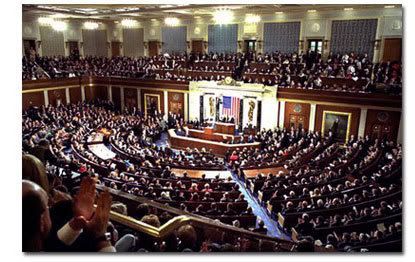 Typically, I believe in setting ambitious progressive goals and pursuing them with patient deliberation. There is an ebb and flow to public perception, debate and popular will. The ideal approach is to build coalitions and let policy ideas percolate through the prism of debate. We don’t have that luxury now.
Iraq continues to burn, the Taliban is resurgent in Afghanistan and America is perceived as a rudderless giant. Under the Bush regime America is weak and immoral. That is a recipe for calamity. Triangulation and splitting hairs is not an option. Our national security is under the command and control of a sixty-year old adolescent (Bush), a feculent viceroy (Dick Cheney), an inept bureaucrat (Condi Rice) and a scandalous Washington retread (Robert Gates on December 18th).
Ten members of the Washington elite establishment known as the Iraq Study Group released their highly anticipated report. Their language was blunt in casting blame on the Bush Administration and dispelled the notion we’re winning in Iraq. It didn’t however go far enough in setting a timetable for withdrawal because they wanted to maintain a bipartisan veneer and not be rejected by Bush. Well Bush’s honor does not merit consideration and he’s essentially rejected the report anyway. The beltway chattering class is having a collective orgasm over the report but so what?
Like a lot of bipartisan reports crafted by insiders this document is destined to collect dust. The 9/11 Commission report is currently collecting dust without any effective implementation of its recommendations. And does anybody remember the bipartisan report on terrorism authored by Warren Rudman and Gary Hart prior to 9/11?
I readily acknowledge the report’s symbolism but the content is under-whelming. Soon enough it will become irrelevant when reviews from the Pentagon and State Department are utilized by the Bush Administration to justify the continued pursuit of “victory” whatever the hell that means. Prior to Christmas we’ve been promised yet another Bush plan will be rolled out and the “bipartisan” Baker-Hamilton report will disappear into the ether.
The only bipartisanship I’m interested in is for congressional Democrats to stiffen their spines and hopefully a few congressional Republicans will develop a soul. If congressional Republicans don’t develop a soul than perhaps fear of the ballot box will concentrate their feckless minds. Either way, congress has only three options.
******************************************************************************
1) Impeachment – I suppose one might call this the nuclear option. I’ve been opposed to impeachment. At most I was a supporter of impeaching Cheney. A year ago I wrote,
“Impeaching Bush is tantamount to indicting Kermit the Frog when everyone knows it's really Miss Piggy who wears the pants.”My rationale until recently was simply that Bush is gone in two years anyway and pursuing such a course would undermine the political viability of the Democratic Party. I agreed with intense oversight and investigations but otherwise thought it best for Democrats to build a record of accomplishment and use their congressional majority as a platform to educate the public about why the country is better off with them in charge.
My worry was impeachment would distract Democrats from educating the public about global warming, health care, globalization and putting forward policies designed to enhance economic and social justice. I also didn’t want the Democrats to be perceived as hungering for revenge heading into 2008.
I’ve changed my mind. In retrospect I’ve been too slow to catch on. Congressional Democrats have ruled out cutting off funding for the troops. That doesn’t leave them much recourse or leverage to push Bush in the right direction. Meanwhile we’re losing in Afghanistan, Islamic radicalism is metastasizing because of our policies and homeland security remains pathetic. They wanted a Pearl Harbor and 9/11 was just the pretext they needed to prosecute a war of imperialism and rape the Constitution over civil liberties.
I don’t advocate for impeachment lightly. The aftershocks upon our system will be turbulent especially with armed forces engaged in combat. I wish to hell it wasn’t necessary. But impeaching and removing both Bush and Cheney is the only way to restore competence and rationality to the executive branch. This administration will not change the status quo, initiate any redeployment or initiate diplomatic initiatives because Jim Baker recommends it.
They’re more concerned with saving face and establishing a justified pretext to preserve Bush’s legacy. And that translates into more bloodshed and further isolation for America. It’s not only radicals and terrorists who are opposed to us. The civilized world has no faith in our judgment or competence. That must not be allowed to continue. Even a weakened Bush can do plenty of damage in the remaining two years of his final term.
Republicans may already be seeing the handwriting on the wall. Senator Gordon Smith used the word “criminal” in describing the Iraq war. I don’t believe congressional Republicans are about to develop a conscience. But political expediency may compel them to reach an accommodation with congressional Democrats. Incompetence in the White House has its charms when it merely results in deregulation and no bid contracts for corporatist supporters. However, after awhile quagmires cease to be profitable and result in the hemorrhaging of support.
With Bush and Cheney removed the Constitution mandates the Speaker of the House is next in line for succession. Pelosi could agree to be a caretaker president dedicated to competence and salvaging America’s strategic situation. She can also form a coalition government with Republicans at key positions if they stipulate to conditions about redeployment in Iraq. That might help garner support from congressional Republicans to push the process forward and manage the country until elections in 2008.
2) Invoke the War Powers Act – If Congress doesn’t have the stones to impeach and remove this criminally insane administration from power then they’re obliged to at least force their hand on Iraq. One possible option is to invoke the War Powers Act.
Congress enacted the War Powers Act in 1973. It requires the White House to regularly consult with Congress whenever contemplating military action, written notification within 48 hours of such action and its’ estimated “scope or duration” and congressional consent through either a declaration of war or "specific statutory authorization." Once invoked, the act prohibits a president from keeping the troops deployed for more than 90 days unless congress either declares war or passes a joint resolution upholding the president's policy.
One can make a compelling argument that the War Powers Act is an egregious example of legislative overreach. Indeed, the Constitution empowers the president as commander and chief of the armed forces. Presumably, this gives the president the authority to repel sudden attacks and deploy forces as he or she sees fit to contend with perceived threats.
The act appears to encroach upon the president's authority as commander and chief. It can also be argued that this act amounts to dangerous micromanaging by the legislative branch. I’m actually more comfortable with the constitutionality of impeachment then taking this course. Invoking the War Powers Act is an extreme measure rife with risks and repercussions that we can’t possibly foresee.
Short-term considerations must prevail however. Invoking the War Powers Act will at least impose a timetable on the White House and provide leverage in our dealings with multiple factions inside Iraq once the clock starts ticking. If congress won’t remove Bush and Cheney then at least they can accelerate our disengagement from Iraq’s sectarian violence.
3) Cut Off Funding – If impeachment and invoking the War Powers Act can’t happen then congress must cut off funding for the war. Politically this is dicey and can easily be spun as “not supporting the troops.” That's why Democrats have repeatedly ruled it out. Option 1 is the best of the three. Option 2 makes me uncomfortable but is better then cutting off funding. If congress doesn’t remove Bush and Cheney from office or impose a timetable through the War Powers Act then cutting off funding is their only recourse. Oversight and investigations only go so far and controlling the purse is one of the few levers of power congress has against an imperial presidency.
*******************************************************************************
Leadership is hard. If leadership were easy everyone would be leaders. Leadership requires hard choices, accountability and courage. Democrats don’t have the luxury of simply supporting non-controversial policies such as raising the minimum wage. Meanwhile, Republicans no longer have the luxury of hiding behind empty slogans such as “global war on terror” and “victory.” Our country is in serious trouble and the time has come for grown ups to fix what is wrong.
Subscribe to:
Posts (Atom)