I’ve taken a needed break from blogging these past few days. Rather than post a topic oriented essay this evening I just have a few random thoughts rattling in my head:
President Obama used his bully pulpit today to promote credit card reform legislation currently making its way through congress. Obama’s YouTube fireside chat contained echoes of Vice President Biden’s Chief Economist Jared Bernstein. How I wish Bernstein had more influence than Tim Geithner and Larry Summers.
I concur with New York Times columnist Bob Herbert’s response to the so-called good news of “only” losing half a million jobs in April. I very much fear the corporate media and body politic will become complacent as long as the stock market continues to rally. Obama is too politically savvy to declare “mission accomplished” but his administration is kidding itself if they believe we have turned the corner.
Obama’s rhetoric is spot on but his deeds remain Wall Street centric. I have no faith in these so-called stress tests for the banks. My hunch is that the Obama administration is hoping to produce another “bubble” by restoring faith in our financial institutions with fuzzy math. Perhaps Obama is rationalizing that he would use a future bubble responsibly and invest in programs with long term returns for the public such as education, energy, health care and infrastructure. There are two risks with this approach. Risk number one is that the markets expose the fuzzy math just as they revealed the banks balance sheets as phony last year. Should that occur, as Paul Krugman noted in his recent column, Obama’s credibility will be vaporized and so will his ambitious agenda. Risk number two is that the Geithner/Summers plutocratic juggernaut successfully create their phony bubble, we become complacent and have another epic crash.
As New Yorkers know by now, Governor David Paterson and Senate Democrats finally agreed to a deal that bails out the MTA without draconian cuts in service and massive far hikes. This was achieved without any Republican votes. In the short term this good for New Yorkers struggling to keep their heads above water in this economy. Long term however there still is no viable plan to reform the MTA’s corrupt cronyism and culture of looting that New Yorkers always end up subsidizing.
As for Governor Paterson, he is sadly not ready for prime time. Paterson is reactive and constantly shifting his positions. His hapless performance is taking its toll as polls now show that voters prefer Eliot Spitzer who resigned in disgrace last year. Whereas Paterson navigates Albany’s tough terrain like a baby seal, Spitzer often seemed as if his sphincter muscle was on fire. Paterson is bullied and Spitzer tried to be a bully. Neither demonstrated leadership ability as New York 's chief executive. Hence, not enough has been accomplished since the Democrats retook the governor’s mansion in November 2006. Paterson still has time to turn things around but like most New York Democrats I’m hoping for a primary challenge. I’ve never been a fan of Attorney General Andrew Cuomo but as of now would support him over Paterson.
America owes a debt of gratitude to Supreme Court Justice David Souter for not retiring under President George W. Bush. I vividly recall when Souter was nominated by the first President Bush to replace Justice William Brennan in 1990. It was my senior year in college and one of my friends compared him to Robert Bork. Instead Souter turned out to be judicious and sensible. Conservatives chafed that Souter betrayed their cause. In my opinion, Souter presided as a traditional conservative jurist who respected precedent and didn’t overreact to the passions of the moment. Simply put, Souter didn’t betray conservatism. Conservatism’s metamorphosis to radicalism betrayed people like Souter. They wanted Souter to be a radical right wing activist and he opted to respect the Constitution instead.
I first became aware of Speaker Nancy Pelosi over a decade ago because of her diligent support of human rights in China over corporate interests. I appreciated her stolid advocacy of human rights in China and have long admired her staunch unapologetic liberalism.
Today, the Washington Post reported that a top Pelosi aide attended a briefing in 2003 in which it was made clear that waterboarding and other harsh techniques were used. In recent weeks there have been numerous leaks to the press about what Pelosi knew with respect to "enhanced interrogation" techniques or torture as decent people refer to it. The CIA has apparently targeted Pelosi for damaging leaks just as they previously went after the Bush Administration during the Valerie Plame controversy as well as the who knew what about WMDs in Iraq infighting. One has to wonder if this contributed to Pelosi’s early declaration in 2006 not to investigate the Bush administration, initiate impeachment hearings and her holding back of House Judiciary Chairman John Conyers. Obviously, the Bush administration had plenty of enablers in the Democratic Party for their crimes. If Pelosi was among them she should be held accountable along with other Democratic enablers and we liberal Democrats must insist upon it.
Many liberal activists are disillusioned by President-Elect Obama's transition. Managing the American government is complicated business and Obama has opted for experience. Experience translates into insiders from the Clinton Administration. Conceptually, this has not surprised me and I expected it.
It's only natural Obama would staff his nascent administration with people from the Clinton era. The Carter Administration was over thirty years ago. And Obama certainly can't staff his White House with people who worked in the Kennedy and Johnson administrations during the 1960s. That said, I've found certain appointments jarring. Specifically, I disapprove of Hillary Clinton's nomination to be Secretary of State. Also, even though we both went to Sarah Lawrence College, I have mixed feelings about Obama tapping Rahm Emanuel to be his Chief of Staff.
My disenchantment with certain appointments aside, I ultimately believe that Obama's administration will move America in a more sensible direction while retaining broad popular support over time. Obama has spoken repeatedly about the necessity of nurturing a "working majority" and compromise with some appointments are part of that process.
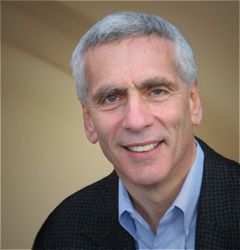
Yeserday however liberals claimed an important victory with Jared Bernstein's appointment as the chief economic adviser to Vice-President Elect Joe Biden. Bernstein has worked as a longtime economist with the liberal think tank the Economic Policy Institue. I find it especially ironic that Bernstein will advise Joe Biden who as the Senator from Delaware was an advocate for the banking and financial services industry with respect to bankruptcy legislation.
Bernstein was ahead of the curve in diagnosing what ails the economy while conservative chuckle heads chortled that the Bush-Cheney Administration were not getting sufficient credit for our "prosperity." While other economists take pride in their intellectual detachment, Bernstein is a man who understands that the lives of every day people are impacted by those in power. Indeed, when reading Bernstein's books or reviewing the two interviews I had with him, one constant theme comes across: the super wealthy in America have benefitted at the expense of the middle class because of superior access to the levers of power. Hence, in Jared Bernstein, wage earners and small business entrepreneurs finally have an advocate with a seat at the table.
By itself Bernstein's appointment is not an elixir or cureall. Bernstein is but one voice in a Washington cultural nexis that has celebrated hyper-individualism and corporatist values as being "mainstream" and "centrist." As our job losses mount and the cost of economic recovery escalates, Bernstein will have to struggle against the forces of the status quo and corporate elites who will mount a vigorous defense against any encroachment.
Yet even people like Robert Rubin and Larry Summer's have moved closer to the policy positions of liberals such as Bernstein and former Clinton Secretary of Labor, Robert Reich. Joe Biden would have never agreed to serve as Barack Obama's running mate if he wasn't guaranteed an opportunity for heavy input in Obama's decision making process. And Bernstein will be in a position to influence how Joe Biden shapes the economic debate in the new administration. That is fantastic news.
The upshot is that Bernstein's appointment represents a real victory during these perilous times as job losses continue to mount. It's why I and others liked me worked so hard over the years to achieve a majority in congress and take the White House. Jared Bernstein represents change I can believe in.
Please refer to the flash media player below to listen to the podcast interview I had with Bernstein on April 6th. Our conversation lasted approximately forty-eight minutes and among the topics we discussed at the time were the housing and credit crisis, needed regulatory reform, health-care, globalization, Social Security, America’s investment deficit and free trade.
This interview can also be accessed for free by searching for “Intrepid Liberal Journal” at the Itunes store.
How many economists have you read or watched on television in recent years that claimed the economy was performing well while you struggled to make ends meet and keep up with the cost of living? Indeed, until recently a happy talk virus had infected a cabal of conservative plutocrats who preached the virtues of limited regulation, market forces and free trade as wages declined and predatory lenders had a party. It seemed we were hearing conservative politicians and their mouthpieces at the Heritage Foundation or Fox news refer to the economy as “the greatest story never told” at every opportunity.
Now that the housing and credit crisis has metastasized, conservative apparatchiks are fighting to minimize government intervention on behalf of regular folks while preserving corporate welfare. They accuse anyone who raises a fuss of waging class warfare. Instead these agents of the status quo prefer we erroneously obsess about Social Security going bust and agree to privatize it for Wall Street's benefit.
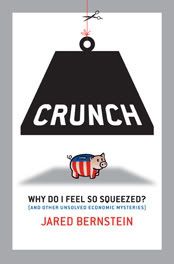
Thankfully, renowned economist and the director of the Living Standards Program for the Economic Policy Institute, Jared Bernstein is using his megaphone to fight the madness. With his new book, Crunch: Why Do I Feel So Squeezed? (And Other Economic Mysteries), Bernstein responds to dozens of questions asked by working Americans that relate to the dollars and cents concerns of real people. Bernstein who often appears as a commentator on CNBC wrote in the preface of his book that,
“I’m tired of being stuck in the studio engaging in rants with Darth Vaders with PhDs. Wouldn’t it be more useful to have an open-ended, rant-free dialogue with real, everyday people about their economic questions.”
With Crunch, Bernstein effectively validates the daily experience of working people struggling to keep up in a treadmill economy. He also adroitly writes with accessible prose and powerful anecdotes to both educate readers about economic nuances and empower them to influence politics in a more populist direction. Bernstein contends that the rich and powerful have as much influence on who benefits from the economy as the will of the market. He therefore hopes to inspire readers not to cede any more ground to the practitioners of hyper individualism at the expense of the American community.
One of the most memorable anecdotes in Bernstein’s book describes how Circuit City announced it planned to lay off 3,400 sales associates in the spring of 2007 in order to appease their shareholders. Bernstein utilized this anecdote to illustrate how corporate greed is both heartless and self-defeating:
“Talk about in-your face management. I can absolutely see why a firm whose stock was down by a third over the past year would decide to make some big changes. But unless your workforce is truly overpaid, replacing a big chunk of it with lower-paid workers is a recipe for lousier service, fewer sales, and lower profits. At the time, many predicted that after the initial jump, stock prices would sink further. We were wrong, though. They never got that initial bump, and the stock just kept sliding, down 15 percent a few months later (while the overall stock market was up strong).”
It’s that kind of prose that led former North Carolina Senator and populist presidential candidate John Edwards to issue the following praise:
“Jared Bernstein’s new book is a must read for everyone who cares about restoring economic fairness in an America with the greatest income inequality since the Great Depression. Drawing on everyday examples, Crunch is an accessible explanation of economic principles presented with equal parts of insight, humor, and stimulation. In the process, Bernstein explains how we got to where we are, what to do to fix it, and why fighting for a fair society is so important.”
An expert on issues of labor and income inequality, he frequently testifies on Capitol Hill. Bernstein is also the co-author of eight editions of The State of Working America and he posts frequently on Josh Marshall’s blog, TPM Café. Longtime readers/listeners of the Intrepid Liberal Journal may recall an interview he did for this blog after his book, All Together Now: Common Sense For A Fair Economy was published in 2006.
Bernstein agreed to a podcast interview over the telephone about his current book and the current challenges confronting the American economy. Our conversation was approximately forty-eight minutes and among the issues covered includes the housing and credit crisis, needed regulatory reform, healthcare, globalization, Social Security, America’s investment deficit and free trade. Please refer to the media player below.
This interview can also be accessed for free by searching for “Intrepid Liberal Journal” on Itunes.