Showing posts with label Eliot Spitzer. Show all posts

Saturday, May 09, 2009

Saturday Night Ramblings

I’ve taken a needed break from blogging these past few days. Rather than post a topic oriented essay this evening I just have a few random thoughts rattling in my head:
  • President Obama used his bully pulpit today to promote credit card reform legislation currently making its way through congress. Obama’s YouTube fireside chat contained echoes of Vice President Biden’s Chief Economist Jared Bernstein. How I wish Bernstein had more influence than Tim Geithner and Larry Summers.
  • I concur with New York Times columnist Bob Herbert’s response to the so-called good news of “only” losing half a million jobs in April. I very much fear the corporate media and body politic will become complacent as long as the stock market continues to rally. Obama is too politically savvy to declare “mission accomplished” but his administration is kidding itself if they believe we have turned the corner.
  • Obama’s rhetoric is spot on but his deeds remain Wall Street centric. I have no faith in these so-called stress tests for the banks. My hunch is that the Obama administration is hoping to produce another “bubble” by restoring faith in our financial institutions with fuzzy math. Perhaps Obama is rationalizing that he would use a future bubble responsibly and invest in programs with long term returns for the public such as education, energy, health care and infrastructure. There are two risks with this approach. Risk number one is that the markets expose the fuzzy math just as they revealed the banks balance sheets as phony last year. Should that occur, as Paul Krugman noted in his recent column, Obama’s credibility will be vaporized and so will his ambitious agenda. Risk number two is that the Geithner/Summers plutocratic juggernaut successfully create their phony bubble, we become complacent and have another epic crash.
  • As New Yorkers know by now, Governor David Paterson and Senate Democrats finally agreed to a deal that bails out the MTA without draconian cuts in service and massive far hikes. This was achieved without any Republican votes. In the short term this good for New Yorkers struggling to keep their heads above water in this economy. Long term however there still is no viable plan to reform the MTA’s corrupt cronyism and culture of looting that New Yorkers always end up subsidizing.
  • As for Governor Paterson, he is sadly not ready for prime time. Paterson is reactive and constantly shifting his positions. His hapless performance is taking its toll as polls now show that voters prefer Eliot Spitzer who resigned in disgrace last year. Whereas Paterson navigates Albany’s tough terrain like a baby seal, Spitzer often seemed as if his sphincter muscle was on fire. Paterson is bullied and Spitzer tried to be a bully. Neither demonstrated leadership ability as New York 's chief executive. Hence, not enough has been accomplished since the Democrats retook the governor’s mansion in November 2006. Paterson still has time to turn things around but like most New York Democrats I’m hoping for a primary challenge. I’ve never been a fan of Attorney General Andrew Cuomo but as of now would support him over Paterson.
  • America owes a debt of gratitude to Supreme Court Justice David Souter for not retiring under President George W. Bush. I vividly recall when Souter was nominated by the first President Bush to replace Justice William Brennan in 1990. It was my senior year in college and one of my friends compared him to Robert Bork. Instead Souter turned out to be judicious and sensible. Conservatives chafed that Souter betrayed their cause. In my opinion, Souter presided as a traditional conservative jurist who respected precedent and didn’t overreact to the passions of the moment. Simply put, Souter didn’t betray conservatism. Conservatism’s metamorphosis to radicalism betrayed people like Souter. They wanted Souter to be a radical right wing activist and he opted to respect the Constitution instead.
  • I first became aware of Speaker Nancy Pelosi over a decade ago because of her diligent support of human rights in China over corporate interests. I appreciated her stolid advocacy of human rights in China and have long admired her staunch unapologetic liberalism.
  • Today, the Washington Post reported that a top Pelosi aide attended a briefing in 2003 in which it was made clear that waterboarding and other harsh techniques were used. In recent weeks there have been numerous leaks to the press about what Pelosi knew with respect to "enhanced interrogation" techniques or torture as decent people refer to it. The CIA has apparently targeted Pelosi for damaging leaks just as they previously went after the Bush Administration during the Valerie Plame controversy as well as the who knew what about WMDs in Iraq infighting. One has to wonder if this contributed to Pelosi’s early declaration in 2006 not to investigate the Bush administration, initiate impeachment hearings and her holding back of House Judiciary Chairman John Conyers. Obviously, the Bush administration had plenty of enablers in the Democratic Party for their crimes. If Pelosi was among them she should be held accountable along with other Democratic enablers and we liberal Democrats must insist upon it.
  • Happy Mother's Day to all tomorrow!

Wednesday, March 12, 2008

A Statement From New York State Senator Liz Krueger

Perhaps no politician, other than Eliot Spitzer himself, has been associated with the cause of promoting ethics reform and transparency in Albany than New York State Senator Liz Krueger. It's hard to believe that early last year I interviewed Senator Krueger when our hopes were so high during the early days of Governor Spitzer's administration. The tragic demise of Governor Spitzer's political career means that change agents such as Senator Liz Krueger are more important than ever today.

Today, I received an email from her office issuing the following statement:
"Like all of my constituents, I was extremely disappointed to learn of Eliot Spitzer's behavior, which has compromised his ability to govern as the agentof ethical reform that New Yorkers elected him to be."

"I believe that due to the nature of his actions, the announcement today of his resignation was necessary in order to allow us to return our focus to the important issues facing our State."

"We are fortunate that an experienced, talented public servant like David Paterson is in a position to assume the role of Governor. I have known David for many years and I strongly believe that David will provide for a smooth transition into the Governor's seat. I look forward to working closely with him in passing the impending state budget and advancing a progressive reform agenda for New York."

Monday, March 10, 2008

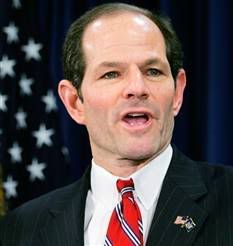
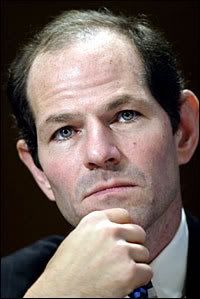
The Fall of Eliot Spitzer

Today the presidential campaign takes a back seat for my fellow New Yorkers. As I'm sure most of you know by now, it was leaked to the New York Times that Governor Eliot Spitzer has been named as a client of a prostitution ring. Click here to review the full complaint for yourselves that references Spitzer as "Client # 9." For perspectives from progressive reform minded New Yorkers I recommend reading The Albany Project.

Click here to read the transcript and access a video of his apology.

In a court of law citizens are entitled to the presumption of innocence until proven guilty. However, politics represents the court of public opinion. Within that universe, public servants who claim moral superiority live by different rules. Governor Spitzer was a crusader as New York's Attorney General against corruption on Wall Street. He utlized that platform to establish a political identity as the ultimate change agent who would clean up Albany's sesspool culture.

Hence, given that Spitzer was elected with a reformist mandate, it seems he will have no other choice but resignation. Furthemore, these allegations are not merely about an indiscreet private affair but violating the law. Even worse, one has to surmise that state resources such as transportation vehicles were potentially utilized by Governor Spitzer to facilitate his liasons with prostitutes. Ironic, as Spitzer's administration over zealously targeted Republican Senate leader Joe Bruno for his unethical use of a state helicopter last year. Another bitter irony is that while Attorney General, Spitzer's office prosecuted two prostitution rings.

As a reform minded New York liberal I'm deeply saddened by today's events. For too long, state government in New York has awarded contracts based on bribes instead of merit while decisions impacting the livelihood of millions were made in secret. In 2006, Spitzer earned a mandate from the people to tackle Albany's pervasive influence peddling culture that squanders tax dollars, mismanages the Mass Transit Authority, ignores public education and only excels at building prisons. Spitzer's fall from grace may well have set back the cause of reform in the Empire State for another fifty years. For that reason alone Governor Spitzer should resign forthwith. If it's proven that Spitzer committed a crime he should not receive any special treatment.

Saturday, March 03, 2007

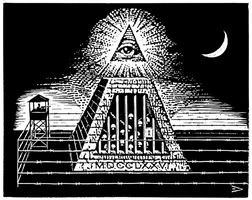
Does Anyone Care About America's Prison Industrial Complex?

Citizens across the political spectrum are preoccupied by numerous high stakes issues such as Iraq, Afghanistan, corruption, corporatist greed, genocide, global warming and healthcare to name a few. There is also the ongoing rule of an administration subverting the Constitution and undermining our democracy. As a result, some topics of importance have dropped off our radar screens. One subject meriting renewed scrutiny is the prison industrial complex.

The prison industrial complex are entities or organizations that have a stake in construction of correctional facilities, such as prison guard unions, construction companies and vendors specializing in surveillance technology. Just as sectors in the military industrial complex are more concerned with profit than national security, players inside the prison industrial complex are more concerned about making money than actually rehabilitating criminals or reducing crime rates.

It should also be noted that some prisons supply free or low cost labor for state and municipal governments as well as jobs for organized labor. The building and maintenance of America’s prison system on both the federal and state level is a multi-billion dollar industry benefiting private industry, lobbyists and politicians who have the power to award contracts.

In December 1998, Eric Schlosser wrote perhaps the definitive article on the topic for The Atlantic Monthly (subscription required) and observed,

"The prison-industrial complex is not only a set of interest groups and institutions. It is also a state of mind. The lure of big money is corrupting the nation's criminal-justice system, replacing notions of safety and public service with a drive for higher profits. The eagerness of elected officials to pass tough-on-crime legislation — combined with their unwillingness to disclose the external and social costs of these laws — has encouraged all sorts of financial improprieties."
Ultimately, the incarceration industry helped keep much of American society, especially young black men, in a cycle of despair. For example, my home state of New York operated under the Rockefeller Drug laws for over thirty plus years and incarcerated non-violent offenders of drug possession for ridiculously long sentences. Meanwhile, more violent criminals were paroled and their recidivism rates were high.

Sadly, in New York the issue remained largely un-addressed as Governor Mario Cuomo fed the correctional facilities construction beast with more money and contracts. His successor, George Pataki promised to repeal the Rockefeller laws when he took office in 1994 but he didn’t deliver until 2004.

The issue seemed to peak politically during the last years of the Clinton Administration as Schlosser’s article helped garner coverage for public figures who spoke about it such as the Reverend Jesse Jackson. Since then some organized opposition emerged. A political interest group called Critical Resistance formed to raise public awareness about moral failures in the corrections industry and,

“build an international movement to end the Prison Industrial Complex by challenging the belief that caging and controlling people makes us safe. We believe that basic necessities such as food, shelter, and freedom are what really make our communities secure.”
Two states worth watching are California and New York. On February 19th, Neal Peirce of the Hampshire Gazette profiled both states in his article, “Growth of the US Prison Industry.” His article was posted in the The Real Cost of Prisons Weblog.

Peirce reports that Governor Eliot Spitzer wants a commission to consider the merits of closing some of New York State’s dozens of prisons. This was also covered on February 5th in the New York Times (subscription required). New York's prison population peaked at 71,000 inmates in 1999 but has dropped by 8,000 the past eight years.

Crime reduction in New York City is the major cause as well as reform efforts to find treatment for non-violent offenders. No doubt the corrections industry will lobby Albany hard to maintain the status quo but Spitzer has demonstrated his fondness for picking fights.

Meanwhile, Governor Arnold Schwarzenegger is pressing for $11 billion in bonds to add 78,000 beds to California's expanding prison population. Currently, California has 173,000 inmates costing the Sunshine state $8 billion. Peirce quotes a California senior prison official warning that overcrowding and threats of riots are,

"an imminent and substantial threat to the public.''
Peirce also notes that,

“Thirty years ago California's prison system was hailed as America's best, providing education and psychotherapy for offenders.”
Critical Resistance posted the following about California on their website in January:

”Dear Friends,

Last year, we helped defeat plans to build 140,000 new prison and jail cells. While we have collectively made it very difficult for the state to build entirely new large state prisons, the Governor has responded by couching prison expansion in the guise of prison reform. But, we know that expansion is NOT reform. We know that reform lies in reducing the number of people in prison. So, we are back. This time fighting the Governor's plan to build 78,000 new prison, jail and juvenile detention beds and once again, we need you.

The more we make expansion impossible, the closer we get to real moves to reduce the number of people in prison!”
New York of course endured the shameful Attica prison riot of 1971 that resulted in the aforementioned Rockefeller drug laws. The legacy of those laws, widely replicated in other states, were expanding prison populations for possessing or selling even small amounts of narcotics.

Thankfully, Governor Spitzer appears determined to aggressively reform New York’s correction system. However, many communities have an economic interest in preserving the status quo. As State Sen. Elizabeth Little, whose Adirondacks district includes 12 prisons told the New York Times,

"There are over 5,000 corrections officers living in my district. In most of these communities, the prisons are the biggest employer.''
Left unsaid by too many legislators such as State Senator Little and other politicians, is that white constituents are benefiting from union jobs while minorities are incarcerated with punishments not appropriate to the crimes or offenses committed. This is not justice and reflects badly on our national character. One governor, even in a state as large as New York isn't enough. This issue merits activism among civil libertarians across the political spectrum. Does anybody care?
*********************************************************************************
ADDENDUM: A crossposting of the above topic made the recommended list on Daily Kos. Click here to review comments from that community. Also, my thanks to Blue Gal for linking this post in the Crooks & Liars blog roundup.

Saturday, February 17, 2007

Change Agent: A Podcast Interview With (NY) State Sen. Liz Krueger

Three-decade incumbent Republican Roy Goodman represented the 26th Senate District of New York. He was a “Rockefeller” Republican and symbol of Albany’s unchanging status quo. Goodman had delivered for this district covering Manhattan’s east side and midtown. He appeared invulnerable and his continued success helped the GOP maintain their Senate majority for decades.

Liz Krueger, a longtime advocate for tackling issues pertaining to poverty, hunger and homelessness, challenged Goodman for the State Senate in 2000. Although a liberal district, Goodman was popular, well financed and enjoyed a reservoir of good will. As a liberal on social issues Goodman remained in sync with his constituents.

Krueger mobilized an enthusiastic grass roots campaign based on reforming Albany’s corrupt and closed culture. I lived in the 26th at the time and noted Krueger’s campaign appeared more visible with high-energy volunteers patrolling the streets. Nevertheless, it never occurred to me Krueger had any chance of upsetting Goodman. Yes, he was older and might not win as comfortably as before. But I had no doubt Goodman would win convincingly. I was very wrong.

As the country fixated on the delayed outcome of Bush vs. Gore, the New York Senate’s 26th District wasn’t decided until six weeks after Election Day. Goodman won re-election by approximately 190 votes over Krueger. Krueger had a slim lead that disappeared after the count of absentee ballots.

Stunned by his near defeat, Goodman soon accepted a position in Mayor Bloomberg’s administration and a special election for the 26th was held in February 2002. She won convincingly and has steadfastly pursued a progressive/reformist agenda. Krueger’s priorities as Senator are a continuation of her work in private life. As the biography from her website notes,
“For 15 years, Senator Krueger was the Associate Director of the Community Food Resource Center (CFRC) where she was responsible for directing its efforts to expand access to government programs for low-income New Yorkers. She helped monitor and evaluate the effectiveness of Federal and State programs in New York City, identifying barriers to participation, and fighting for improvements in the effectiveness of these programs.

Prior to joining CFRC, Liz Krueger was the founding Director of the New York City Food Bank, building that organization into one that now serves over 1,100 emergency food programs, senior centers, day-care centers, and other community-based programs serving an estimated 5.4 million meals each year.”
With Eliot Spitzer’s election as Governor, the reformist winds represented by Senator Krueger may finally be blowing her way. In late January, legislative leaders adopted ethics reforms she had championed for years such as closing the “revolving door” lobbying loophole, a ban on legislators accepting honoraria as well as a gift ban for legislators and their staff.

Senator Krueger is the ranking Democratic member of the Senate Standing Committee on Housing, Construction and Community Development. She is also a member of five other committees: Banking, Consumer Protection, Finance, Higher Education, and Rules.

For the previous two election cycles, Senator Krueger served as the Chair of the Democratic Senate Campaign Committee (DSCC). Democrats have gained under her leadership and following the recent special election of Craig Johnson in Nassau County, the Republican majority is a mere two seats.

In recent weeks there have been persistent rumors two Republicans may switch parties and deliver the Senate to Democrats. Ironic, because in 2002, New York City Mayor Mike Bloomberg said casting a vote for Krueger was a waste due to the Republicans entrenched majority. Instead, Krueger’s efforts have the Democrats poised to assume one party rule in the state’s capitol. In five years the onetime outsider has increased her influence and remained an agent of change.

Senator Krueger agreed to a podcast interview with me and among the topics covered were: her experience as a reformist outsider and campaign leader of Senate Democrats; the possibility of future gerrymandering favoring Democrats in New York State; Governor Spitzer’s adversarial relationship with the legislature; the Governor’s proposed budget and whether New York might move up their presidential primary date to help the campaigns of Hillary Clinton and Rudolph Guiliani. Please refer to the media player below.


This interview can also be accessed for free via the Itunes story by searching for "Intrepid Liberal Journal."

Wednesday, February 14, 2007

Albany's Winter Heat

The New York Times today reported about the backlash New York state legislators are experiencing for their support of new Comptroller, Thomas DiNapoli. This is largely a new experience for most of these people who are unaccustomed to true democracy in action. Constituents are making their displeasure felt in telephone calls and E-Mails.

I must admit, the intensity from the public has surprised me. Recently, I wrote a post entitled, “Eliot Spitzer Takes On New York’s Nomenklatura” but didn’t believe he would receive this much support. Instead, I assumed the polls would largely support Spitzer even as the public remained loyal to their incumbent legislators.

So, what does this mean for the future? Will Spitzer’s tactics result in the legislature endorsing his new budget proposal and reform agenda? Critics are portraying Spitzer as a bully with a temper. I don’t know if Spitzer’s tactics will succeed but he shouldn’t be underestimated. I suspect the threat of Spitzer’s populist hammer will be followed up with soothing enticements. Fear and reward are an effective combination in life and politics. Sort of like letting the children know they can't watch television if they misbehave but there is plenty of ice cream waiting for them in the freezer.

Friday, February 09, 2007

Eliot Spitzer Takes On New York's Nomenklatura

Is New York’s Eliot Spitzer for real? Is it possible my home state elected a governor who knows what he means and means what he says? Politicians promising reform and boasting about their prowess as culture breakers is nothing new. Spitzer’s predecessor, George Pataki also promised to reform Albany’s corrupt culture and he proceeded to embrace it. Mario Cuomo didn’t embrace Albany’s inside game like Pataki but he didn’t confront it either.

To this point, Spitzer reinforces my belief that the Democratic Party’s best hopes for the future reside in state capitals where governors are tackling vital issues such as healthcare, global warming and public corruption. Brian Schweitzer of Montana is a sterling example of this new breed. Smart, innovative, tough and unafraid of picking fights with entrenched power to advance progressive ideals. They present quite a contrast to Washington Democrats who even after defeating Republicans convincingly this past November, govern as if they’re afraid of their own shadow.

In only the second month of the Spitzer Era, his administration is on a collision course with Albany’s nomenklatura. The spectacle is fascinating to watch. For readers not familiar with New York State politics, Washington D.C. is a beacon of rectitude compared to Albany.

New York State Comptroller, Alan Hevesi was forced to resign shortly after being re-elected because of scandal. Hevesi pled guilty to a minor felony charge for using state employees as drivers for his ailing wife. Click here and here to read more about Alan Hevesi and the scandal that forced him from office.

As you can discern from the links I provided, Hevesi’s fall from grace was hardly the worst scandal in the world. We’ve seen far worse in New York. Indeed, I rather admired Hevesi’s career both as Mayor Rudi Guilani’s fiscal watchdog when he was New York City Comptroller and his recent stint in Albany. Hevesi also courageously opposed the death penalty as an Assemblyman from Queens. I supported Hevesi’s failed efforts to become the Democratic Party’s nominee for Governor in 1998 and Mayor of New York City in 2001.

Nevertheless, what Hevesi did was wrong and Spitzer opted to withdraw his endorsement of the Comptroller prior to Election Day. Afterwards, there was speculation Spitzer would not encourage Hevesi’s prosecution. To his credit, Spitzer helped push Hevesi out. Spitzer's critics believed he should've publicly pressured Hevesi to resign before the election.

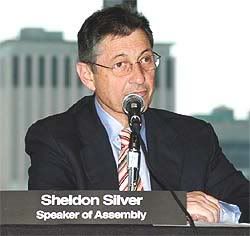
According to New York State’s constitution, Hevesi’s successor must be approved by the state legislature. Spitzer’s fellow Democrats controls the Assembly and have far superior numbers than the Republican controlled Senate. Hence, Spitzer had to deal with Assembly Majority Leader Sheldon Silver.

Silver is the embodiment of Albany’s establishment and for over a decade has wielded power as one of “three men in a room” governing New York State. The caucus led by Silver has seen governors preaching reform come and go, as they remained entrenched. Their districts are gerrymandered to their favor as special interests curry their favor. This is not a group easily intimidated by a new governor’s high approval ratings, even if he is a member of their own party.

Spitzer and Silver agreed that a new comptroller would be selected from a list of qualified candidates put forward by an independent screening committee. The Assembly favored one of their own, Thomas P. DiNapoli and went along with Spitzer’s plan because they believed he would be among the finalists. He wasn’t and the Assembly opted to renege on the agreement.

DiNapoli, a Democrat is well liked among legislators from both parties because of his work to help bail out financially strapped Nassau County. His efforts garnered appreciation from suburban Republicans as well as Democrats and represent the consensus choice inside Albany’s clubhouse.

Spitzer has responded with characteristic bluntness. While promoting his new budget in Syracuse, he denounced local Assemblyman and fellow Democrat Bill Magnarelli:

“Bill Magnarelli is one of those unfortunate Assembly members who just raises his hand when he’s told to do so, and didn’t even bother to stand up and say, ‘Whose interests am I representing?’"
Governor Spitzer also canceled an introductory lunch with Assembly Democrats next Monday, as well as a $10,000 a plate fundraiser for the Democratic Assembly Campaign Committee. Escalating the conflict even further, Spitzer’s aides have let it be known he would criticize the votes of Assembly Democrats in swing districts where Republicans could make inroads.

One can’t help but admire Spitzer’s pugnacious tenacity on behalf of principle. He used the same approach as State Attorney General when he prosecuted corrupt brokerage houses on Wall Street ripping off the middle class. Spitzer’s unwavering pursuit of corruption propelled him to the governor’s mansion. However, being governor is far different then serving as the king of your own fiefdom as New York’s top lawyer.

Governing is about achievement. Achievement requires consensus. New York’s legislature appropriates funds and their cooperation will be required to pass budgets on time and enact Spitzer’s agenda for health care reform, education investment and restructuring New York’s finances.

Also, Spitzer’s budget calls for unpopular cuts with New York’s hospitals and making the tough calls can’t help but diminish his popularity. Albany’s nomenklatura will likely play a game of rope-a-dope and wait for Spitzer’s popularity to dissipate so they can cut deals from strength. Gridlock appears unavoidable unless Spitzer adopts a more conciliatory tone.

Spitzer however appears determined to make an omelet by breaking eggs. Can he pull it off? William Cunningham who served former Governors Hugh Carey and Mario Cuomo and most recently Mayor Mike Bloomberg, compared Spitzer’s style with former New York Governor Theodore Roosevelt:

“Roosevelt came in saying he was going to be a reform governor. He immediately got into a fight with Senator Platt, the head of the Republicans, a powerful political boss in the state. History remembers Teddy Roosevelt. You have to be a knucklehead like me to remember Boss Platt."
Perhaps we New Yorkers have a ringside seat to history. Hopefully, we’ll also have a better state when Spitzer leaves office.

Monday, January 01, 2007

The New Breeze From Albany

Understandably much of our nation’s focus regarding politics is on Washington as Democrats take control and the Bush Administration continues to prosecute their failed war in Iraq. Will Democrats take a stand or remain subservient? How will Democrats utilize their power for oversight and investigation? And numerous personalities inside the beltway from both parties are already jostling for position in the 2008 presidential election.

Just as important however are the newly elected Democratic governors and state legislators across the nation. In recent years state capitals have outflanked Washington regarding important issues such as global warming, minimum wage and health care. The New York Times reports today that state capitals are also outflanking Washington regarding changes to ethics and lobbying reform.

As a New Yorker I’m especially enthusiastic about incoming governor Eliot Spitzer (click here to read the text of Spitzer's inaugural address). In terms of corruption and pay to play politics, Albany has made Washington D.C. look like a beacon of rectitude in comparison. Another negative of Albany's culture has been governance by “three men in a room” as outgoing Governor George Pataki, Democratic Assembly Speaker Sheldon Silver and the Senate’s Republican Majority Leader Joseph Bruno made all the important policy decisions. Joining them in their room for a decade was a cabal of special interests and lobbyists while the public was ripped off.

Presently, both parties are back on their heels in Albany regarding ethics as Democratic State Comptroller Alan Hevesi resigned after pleading to a felony and the Republican’s Joseph Bruno recently revealed federal authorities were investigating his outside consulting work. Spitzer to his credit pushed political ally Alan Hevesi out the door after election-day and appears ready to spend his political capital on an ambitious reform agenda.

Today Spitzer signed five executive orders pertaining to procurement and the agencies his office has unilateral control over. He’s also imposing on his staff strict guidelines regarding bans on gifts and prohibiting any part of the executive branch from lobbying his office two years after they leave their posts.

The real challenge of course will be how much and how fast he can push Albany’s lethargic state legislature to accept in reforming state government as a whole. At the moment Spitzer dwarfs representatives from both parties but his popularity will inevitably decline as he makes tough calls regarding Albany's budget deficit.

In spite of the political challenges confronting Spitzer, one can feel a new breeze blowing from the state capital. Blair Horner, the legislative director of the New York Public Interest Research Group told the New York Times,

“He has talked about redistricting reform, he’s talked about campaign finance reform, he’s talked about ending pay to play and he’s talked overall about a transparent and accountable state government. If he accomplishes all of that, that’s probably more reform that we’ve seen in New York for the last 200 years.”
The previous Democratic governor Mario Cuomo talked a good game and his rhetorical gifts made him the darling of the national Democratic Party for years. Truthfully, Cuomo didn’t accomplish much as governor and the record suggests his greatest impact was constructing prisons that served the jail industrial complex. George Pataki defeated Mario Cuomo in 1994 partly by claiming to be a reformer and proceeded to govern as a lethargic corporatist. Let’s hope Spitzer turns out to be the real deal.