Showing posts with label Mario Cuomo. Show all posts

Sunday, October 28, 2007

Albany's Mayor For Life: An Interview With Erastus Corning Biographer Paul Grondahl

Erastus Corning 2nd was elected mayor of Albany, New York eleven times, serving forty-two consecutive years, an unsurpassed tenure in American political history. Even before birth, Corning’s destiny as Albany’s “mayor for life” was scripted. As pillars of the WASP establishment, Corning men were expected to attend Groton and Yale and assume positions of leadership in industry and politics. One could say that the Corning family was noblesse oblige on steroids: an assumption that with wealth, power and prestige come social responsibilities. Yet the noblesse oblige represented by the Cornings had a dark side as their class established an oligarchy in Albany to preserve their status and power.

In the 1920s, the financial, institutional and industrial strength represented by the Corning dynasty forged an omnipotent alliance led by a salty tongued Irish working class political boss named Dan O’Connell. This unlikely union of the well bred Corning family and the O’Connell clan of Irish saloonkeepers initially bonded through cock fighting! Eratus’s father Edwin served as Lt. Governor in the late ‘20s and collaborated with O’Connell until poor health forced him to step away from politics.

When Edwin Corning died in 1934, Dan O’Connell became a surrogate father for the future mayor. As Albany’s political boss, O’Connell paved the way for Corning to assume the reins and become mayor at the age of thirty-two in 1941. Corning served until he died in 1983. Ironically, this powerful man who battled Thomas Dewey, sparred with Nelson Rockefeller and mentored Mario Cuomo, never enjoyed the power of self-determination.

A complex and lonely soul, Corning presided over a fiefdom of cronyism, corruption and stability. He mingled easily with the working class that the O’Connell-Corning machine kept obedient while enjoying the exclusive privileges of men in his social class. As other cities peaked with post war development and endured social turbulence in the 1960s, Albany remained virtually unchanged. And the citizens of Albany continued to return Corning to power.

Paul Grondahl, an award winning journalist with the Albany Times Union skillfully captured the “shadow" and “light” of Corning’s rule, as well as his convoluted private life in his book, Mayor Erastus Corning: Albany Icon, Albany Enigma. Originally published in 1997, Grondahl’s biography about Corning was just released in paperback by the State University of New York Press.

William Kennedy, the Pulitzer Prize winning author of Ironweed, writes in the introduction that,
“This is an important book for Albany, for anyone interested in political power. It widens our vision (with a view from inside City Hall) of the O’Connell Democratic organization, which controlled Albany from 1921 until the Mayor died in 1983, making it the longest-running boss machine in American political history.”
Grondahl agreed to a podcast interview with me over the telephone about his book and Erastus Corning. Our conversation lasted forty-five minutes as we discussed the public figure, the political machine he served and his private life. Please refer to the media player below.


This interview can also be accessed via the Itunes store at no cost by searching for “Intrepid Liberal Journal.”

Sunday, April 08, 2007

Memo To Conservatives: George W. Bush Is Not An Aberration

Conservatives want you to believe the presidency of George W. Bush is an aberration. Those of us in the reality-based community understand the Bush Administration can’t be separated from conservative ideology. The blowback of the Bush years is in fact the collective legacy of Barry Goldwater, Richard Nixon, Gerald Ford, Ronald Reagan, George Herbert Walker Bush, Newt Gingrich, Bob Dole, Trent Lott, Dick Cheney, Tom DeLay, Dick Hastert, John McCain, Pat Robertson, Jerry Falwell the American Enterprise Institute, the Heritage Foundation and the rest of the feculent conservative cabal.

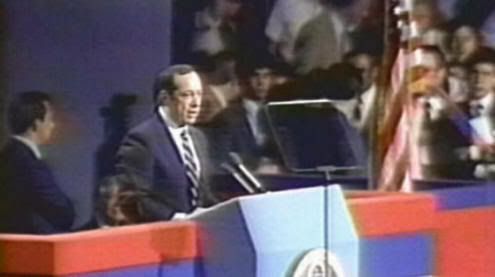
Take a moment to read the text of New York Governor Mario Cuomo’s keynote address to the 1984 Democratic National Convention below or click here to listen to it. Whether you read or listen to Cuomo’s words from twenty-three years ago, it’s remarkable how relevant his speech is today. His repudiation of Ronald Reagan echoes across time as conservatives have eviscerated our infrastructure, debased public education, disintegrated the middle class, neglected veterans, sacrificed universal healthcare to profit industry raped our Constitution, exploited fear and pursued recklessly immoral foreign policies. Hopefully, 2008 will not simply be a slight changing of the pendulum but signal a new era of sense, compassion, and progress. The direction Mario Cuomo spoke of in 1984.

“Thank you very much.

On behalf of the great Empire State and the whole family of New York, let me thank you for the great privilege of being able to address this convention. Please allow me to skip the stories and the poetry and the temptation to deal in nice but vague rhetoric. Let me instead use this valuable opportunity to deal immediately with the questions that should determine this election and that we all know are vital to the American people.

Ten days ago, President Reagan admitted that although some people in this country seemed to be doing well nowadays, others were unhappy, even worried, about themselves, their families, and their futures. The President said that he didn't understand that fear. He said, "Why, this country is a shining city on a hill." And the President is right. In many ways we are a shining city on a hill.

But the hard truth is that not everyone is sharing in this city's splendor and glory. A shining city is perhaps all the President sees from the portico of the White House and the veranda of his ranch, where everyone seems to be doing well. But there's another city; there's another part to the shining the city; the part where some people can't pay their mortgages, and most young people can't afford one; where students can't afford the education they need, and middle-class parents watch the dreams they hold for their children evaporate.

In this part of the city there are more poor than ever, more families in trouble, more and more people who need help but can't find it. Even worse: There are elderly people who tremble in the basements of the houses there. And there are people who sleep in the city streets, in the gutter, where the glitter doesn't show. There are ghettos where thousands of young people, without a job or an education, give their lives away to drug dealers every day. There is despair, Mr. President, in the faces that you don't see, in the places that you don't visit in your shining city.

In fact, Mr. President, this is a nation -- Mr. President you ought to know that this nation is more a 'Tale of Two Cities' than it is just a 'Shining City on a Hill.'

Maybe, maybe, Mr. President, if you visited some more places; maybe if you went to Appalachia where some people still live in sheds; maybe if you went to Lackawanna where thousands of unemployed steel workers wonder why we subsidized foreign steel. Maybe -- Maybe, Mr. President, if you stopped in at a shelter in Chicago and spoke to the homeless there; maybe, Mr. President, if you asked a woman who had been denied the help she needed to feed her children because you said you needed the money for a tax break for a millionaire or for a missile we couldn't afford to use.

Maybe -- Maybe, Mr. President. But I'm afraid not. Because the truth is, ladies and gentlemen, that this is how we were warned it would be. President Reagan told us from the very beginning that he believed in a kind of social Darwinism. Survival of the fittest. "Government can't do everything," we were told, so it should settle for taking care of the strong and hope that economic ambition and charity will do the rest. Make the rich richer, and what falls from the table will be enough for the middle class and those who are trying desperately to work their way into the middle class.

You know, the Republicans called it "trickle-down" when Hoover tried it. Now they call it "supply side." But it's the same shining city for those relative few who are lucky enough to live in its good neighborhoods. But for the people who are excluded, for the people who are locked out, all they can do is stare from a distance at that city's glimmering towers.

It's an old story. It's as old as our history. The difference between Democrats and Republicans has always been measured in courage and confidence. The Republicans -- The Republicans believe that the wagon train will not make it to the frontier unless some of the old, some of the young, some of the weak are left behind by the side of the trail. "The strong" -- 'The strong,' they tell us, 'will inherit the land.'

We Democrats believe in something else. We democrats believe that we can make it all the way with the whole family intact, and we have more than once. Ever since Franklin Roosevelt lifted himself from his wheelchair to lift this nation from its knees -- wagon train after wagon train -- to new frontiers of education, housing, peace; the whole family aboard, constantly reaching out to extend and enlarge that family; lifting them up into the wagon on the way; blacks and Hispanics, and people of every ethnic group, and native Americans -- all those struggling to build their families and claim some small share of America. For nearly 50 years we carried them all to new levels of comfort, and security, and dignity, even affluence. And remember this, some of us in this room today are here only because this nation had that kind of confidence. And it would be wrong to forget that.

So, here we are at this convention to remind ourselves where we come from and to claim the future for ourselves and for our children. Today our great Democratic Party, which has saved this nation from depression, from fascism, from racism, from corruption, is called upon to do it again -- this time to save the nation from confusion and division, from the threat of eventual fiscal disaster, and most of all from the fear of a nuclear holocaust.

That's not going to be easy. Mo Udall is exactly right -- it won't be easy. And in order to succeed, we must answer our opponent's polished and appealing rhetoric with a more telling reasonableness and rationality.

We must win this case on the merits. We must get the American public to look past the glitter, beyond the showmanship to the reality, the hard substance of things. And we'll do it not so much with speeches that sound good as with speeches that are good and sound; not so much with speeches that will bring people to their feet as with speeches that will bring people to their senses. We must make -- We must make the American people hear our "Tale of Two Cities." We must convince them that we don't have to settle for two cities, that we can have one city, indivisible, shining for all of its people.

Now, we will have no chance to do that if what comes out of this convention is a babel of arguing voices. If that's what's heard throughout the campaign, dissident sounds from all sides, we will have no chance to tell our message. To succeed we will have to surrender some small parts of our individual interests, to build a platform that we can all stand on, at once, and comfortably -- proudly singing out. We need -- We need a platform we can all agree to so that we can sing out the truth for the nation to hear, in chorus, its logic so clear and commanding that no slick Madison Avenue commercial, no amount of geniality, no martial music will be able to muffle the sound of the truth.

And we Democrats must unite. We Democrats must unite so that the entire nation can unite, because surely the Republicans won't bring this country together. Their policies divide the nation into the lucky and the left-out, into the royalty and the rabble. The Republicans are willing to treat that division as victory. They would cut this nation in half, into those temporarily better off and those worse off than before, and they would call that division recovery.

Now, we should not -- we should not be embarrassed or dismayed or chagrined if the process of unifying is difficult, even wrenching at times. Remember that, unlike any other Party, we embrace men and women of every color, every creed, every orientation, every economic class. In our family are gathered everyone from the abject poor of Essex County in New York, to the enlightened affluent of the gold coasts at both ends of the nation. And in between is the heart of our constituency -- the middle class, the people not rich enough to be worry-free, but not poor enough to be on welfare; the middle class -- those people who work for a living because they have to, not because some psychiatrist told them it was a convenient way to fill the interval between birth and eternity. White collar and blue collar. Young professionals. Men and women in small business desperate for the capital and contracts that they need to prove their worth.

We speak for the minorities who have not yet entered the mainstream. We speak for ethnics who want to add their culture to the magnificent mosaic that is America. We speak -- We speak for women who are indignant that this nation refuses to etch into its governmental commandments the simple rule "thou shalt not sin against equality," a rule so simple -- I was going to say, and I perhaps dare not but I will. It's a commandment so simple it can be spelled in three letters: E.R.A.

We speak -- We speak for young people demanding an education and a future. We speak for senior citizens. We speak for senior citizens who are terrorized by the idea that their only security, their Social Security, is being threatened. We speak for millions of reasoning people fighting to preserve our environment from greed and from stupidity. And we speak for reasonable people who are fighting to preserve our very existence from a macho intransigence that refuses to make intelligent attempts to discuss the possibility of nuclear holocaust with our enemy. They refuse. They refuse, because they believe we can pile missiles so high that they will pierce the clouds and the sight of them will frighten our enemies into submission.

Now we're proud of this diversity as Democrats. We're grateful for it. We don't have to manufacture it the way the Republicans will next month in Dallas, by propping up mannequin delegates on the convention floor. But we, while we're proud of this diversity, we pay a price for it. The different people that we represent have different points of view. And sometimes they compete and even debate, and even argue. That's what our primaries were all about. But now the primaries are over and it is time, when we pick our candidates and our platform here, to lock arms and move into this campaign together.

If you need any more inspiration to put some small part of your own difference aside to create this consensus, then all you need to do is to reflect on what the Republican policy of divide and cajole has done to this land since 1980. Now the President has asked the American people to judge him on whether or not he's fulfilled the promises he made four years ago. I believe, as Democrats, we ought to accept that challenge. And just for a moment let us consider what he has said and what he's done.

Inflation -- Inflation is down since 1980, but not because of the supply-side miracle promised to us by the President. Inflation was reduced the old-fashioned way: with a recession, the worst since 1932. Now how did we -- We could have brought inflation down that way. How did he do it? 55,000 bankruptcies; two years of massive unemployment; 200,000 farmers and ranchers forced off the land; more homeless -- more homeless than at any time since the Great Depression in 1932; more hungry, in this world of enormous affluence, the United States of America, more hungry; more poor, most of them women. And -- And he paid one other thing, a nearly 200 billion dollar deficit threatening our future.

Now, we must make the American people understand this deficit because they don't. The President's deficit is a direct and dramatic repudiation of his promise in 1980 to balance the budget by 1983. How large is it? The deficit is the largest in the history of the universe. It -- President Carter's last budget had a deficit less than one-third of this deficit. It is a deficit that, according to the President's own fiscal adviser, may grow to as much 300 billion dollars a year for "as far as the eye can see." And, ladies and gentlemen, it is a debt so large -- that is almost one-half of the money we collect from the personal income tax each year goes just to pay the interest. It is a mortgage on our children's future that can be paid only in pain and that could bring this nation to its knees.

Now don't take my word for it -- I'm a Democrat. Ask the Republican investment bankers on Wall Street what they think the chances of this recovery being permanent are. You see, if they're not too embarrassed to tell you the truth, they'll say that they're appalled and frightened by the President's deficit. Ask them what they think of our economy, now that it's been driven by the distorted value of the dollar back to its colonial condition. Now we're exporting agricultural products and importing manufactured ones. Ask those Republican investment bankers what they expect the rate of interest to be a year from now. And ask them -- if they dare tell you the truth -- you'll learn from them, what they predict for the inflation rate a year from now, because of the deficit.

Now, how important is this question of the deficit. Think about it practically: What chance would the Republican candidate have had in 1980 if he had told the American people that he intended to pay for his so-called economic recovery with bankruptcies, unemployment, more homeless, more hungry, and the largest government debt known to humankind? If he had told the voters in 1980 that truth, would American voters have signed the loan certificate for him on Election Day? Of course not! That was an election won under false pretenses. It was won with smoke and mirrors and illusions. And that's the kind of recovery we have now as well.

But what about foreign policy? They said that they would make us and the whole world safer. They say they have. By creating the largest defense budget in history, one that even they now admit is excessive -- by escalating to a frenzy the nuclear arms race; by incendiary rhetoric; by refusing to discuss peace with our enemies; by the loss of 279 young Americans in Lebanon in pursuit of a plan and a policy that no one can find or describe.

We give money to Latin American governments that murder nuns, and then we lie about it. We have been less than zealous in support of our only real friend -- it seems to me, in the Middle East -- the one democracy there, our flesh and blood ally, the state of Israel. Our -- Our policy -- Our foreign policy drifts with no real direction, other than an hysterical commitment to an arms race that leads nowhere -- if we're lucky. And if we're not, it could lead us into bankruptcy or war.

Of course we must have a strong defense! Of course Democrats are for a strong defense. Of course Democrats believe that there are times that we must stand and fight. And we have. Thousands of us have paid for freedom with our lives. But always -- when this country has been at its best -- our purposes were clear. Now they're not. Now our allies are as confused as our enemies. Now we have no real commitment to our friends or to our ideals -- not to human rights, not to the refuseniks, not to Sakharov, not to Bishop Tutu and the others struggling for freedom in South Africa.

We -- We have in the last few years spent more than we can afford. We have pounded our chests and made bold speeches. But we lost 279 young Americans in Lebanon and we live behind sand bags in Washington. How can anyone say that we are safer, stronger, or better?

That -- That is the Republican record. That its disastrous quality is not more fully understood by the American people I can only attribute to the President's amiability and the failure by some to separate the salesman from the product.
And, now -- now -- now it's up to us. Now it's up to you and to me to make the case to America. And to remind Americans that if they are not happy with all that the President has done so far, they should consider how much worse it will be if he is left to his radical proclivities for another four years unrestrained. Unrestrained.

Now, if -- if July -- if July brings back Ann Gorsuch Burford -- what can we expect of December? Where would -- Where would another four years take us? Where would four years more take us? How much larger will the deficit be? How much deeper the cuts in programs for the struggling middle class and the poor to limit that deficit? How high will the interest rates be? How much more acid rain killing our forests and fouling our lakes?

And, ladies and gentlemen, please think of this -- the nation must think of this: What kind of Supreme Court will we have?

Please. [beckons audience to settle down]

We -- We must ask ourselves what kind of court and country will be fashioned by the man who believes in having government mandate people's religion and morality; the man who believes that trees pollute the environment; the man that believes that -- that the laws against discrimination against people go too far; a man who threatens Social Security and Medicaid and help for the disabled. How high will we pile the missiles? How much deeper will the gulf be between us and our enemies? And, ladies and gentlemen, will four years more make meaner the spirit of the American people? This election will measure the record of the past four years. But more than that, it will answer the question of what kind of people we want to be.

We Democrats still have a dream. We still believe in this nation's future. And this is our answer to the question. This is our credo:

We believe in only the government we need, but we insist on all the government we need.

We believe in a government that is characterized by fairness and reasonableness, a reasonableness that goes beyond labels, that doesn't distort or promise to do things that we know we can't do.

We believe in a government strong enough to use words like "love" and 'compassion' and smart enough to convert our noblest aspirations into practical realities.

We believe in encouraging the talented, but we believe that while survival of the fittest may be a good working description of the process of evolution, a government of humans should elevate itself to a higher order.

We -- Our -- Our government -- Our government should be able to rise to the level where it can fill the gaps that are left by chance or by a wisdom we don't fully understand. We would rather have laws written by the patron of this great city, the man called the "world's most sincere Democrat," St. Francis of Assisi, than laws written by Darwin.

We believe -- We believe as Democrats, that a society as blessed as ours, the most affluent democracy in the world's history, one that can spend trillions on instruments of destruction, ought to be able to help the middle class in its struggle, ought to be able to find work for all who can do it, room at the table, shelter for the homeless, care for the elderly and infirm, and hope for the destitute. And we proclaim as loudly as we can the utter insanity of nuclear proliferation and the need for a nuclear freeze, if only to affirm the simple truth that peace is better than war because life is better than death.

We believe in firm -- We believe in firm but fair law and order.

We believe proudly in the union movement.

We believe in a -- We believe -- We believe in privacy for people, openness by government.

We believe in civil rights, and we believe in human rights.

We believe in a single -- We believe in a single fundamental idea that describes better than most textbooks and any speech that I could write what a proper government should be: the idea of family, mutuality, the sharing of benefits and burdens for the good of all, feeling one another's pain, sharing one another's blessings -- reasonably, honestly, fairly, without respect to race, or sex, or geography, or political affiliation.

We believe we must be the family of America, recognizing that at the heart of the matter we are bound one to another, that the problems of a retired school teacher in Duluth are our problems; that the future of the child -- that the future of the child in Buffalo is our future; that the struggle of a disabled man in Boston to survive and live decently is our struggle; that the hunger of a woman in Little Rock is our hunger; that the failure anywhere to provide what reasonably we might, to avoid pain, is our failure.

Now for 50 years -- for 50 years we Democrats created a better future for our children, using traditional Democratic principles as a fixed beacon, giving us direction and purpose, but constantly innovating, adapting to new realities: Roosevelt's alphabet programs; Truman's NATO and the GI Bill of Rights; Kennedy's intelligent tax incentives and the Alliance for Progress; Johnson's civil rights; Carter's human rights and the nearly miraculous Camp David Peace Accord.

Democrats did it -- Democrats did it and Democrats can do it again. We can build a future that deals with our deficit. Remember this, that 50 years of progress under our principles never cost us what the last four years of stagnation have. And we can deal with the deficit intelligently, by shared sacrifice, with all parts of the nation's family contributing, building partnerships with the private sector, providing a sound defense without depriving ourselves of what we need to feed our children and care for our people. We can have a future that provides for all the young of the present, by marrying common sense and compassion.

We know we can, because we did it for nearly 50 years before 1980. And we can do it again, if we do not forget -- if we do not forget that this entire nation has profited by these progressive principles; that they helped lift up generations to the middle class and higher; that they gave us a chance to work, to go to college, to raise a family, to own a house, to be secure in our old age and, before that, to reach heights that our own parents would not have dared dream of.

That struggle to live with dignity is the real story of the shining city. And it's a story, ladies and gentlemen, that I didn't read in a book, or learn in a classroom. I saw it and lived it, like many of you. I watched a small man with thick calluses on both his hands work 15 and 16 hours a day. I saw him once literally bleed from the bottoms of his feet, a man who came here uneducated, alone, unable to speak the language, who taught me all I needed to know about faith and hard work by the simple eloquence of his example. I learned about our kind of democracy from my father. And I learned about our obligation to each other from him and from my mother. They asked only for a chance to work and to make the world better for their children, and they -- they asked to be protected in those moments when they would not be able to protect themselves. This nation and this nation's government did that for them.

And that they were able to build a family and live in dignity and see one of their children go from behind their little grocery store in South Jamaica on the other side of the tracks where he was born, to occupy the highest seat, in the greatest State, in the greatest nation, in the only world we would know, is an ineffably beautiful tribute to the democratic process.

And -- And ladies and gentlemen, on January 20, 1985, it will happen again -- only on a much, much grander scale. We will have a new President of the United States, a Democrat born not to the blood of kings but to the blood of pioneers and immigrants. And we will have America's first woman Vice President, the child of immigrants, and she -- she -- she will open with one magnificent stroke, a whole new frontier for the United States.

Now, it will happen. It will happen if we make it happen; if you and I make it happen. And I ask you now, ladies and gentlemen, brothers and sisters, for the good of all of us, for the love of this great nation, for the family of America, for the love of God: Please, make this nation remember how futures are built.

Thank you and God bless you.”

Saturday, March 03, 2007

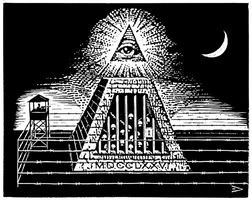
Does Anyone Care About America's Prison Industrial Complex?

Citizens across the political spectrum are preoccupied by numerous high stakes issues such as Iraq, Afghanistan, corruption, corporatist greed, genocide, global warming and healthcare to name a few. There is also the ongoing rule of an administration subverting the Constitution and undermining our democracy. As a result, some topics of importance have dropped off our radar screens. One subject meriting renewed scrutiny is the prison industrial complex.

The prison industrial complex are entities or organizations that have a stake in construction of correctional facilities, such as prison guard unions, construction companies and vendors specializing in surveillance technology. Just as sectors in the military industrial complex are more concerned with profit than national security, players inside the prison industrial complex are more concerned about making money than actually rehabilitating criminals or reducing crime rates.

It should also be noted that some prisons supply free or low cost labor for state and municipal governments as well as jobs for organized labor. The building and maintenance of America’s prison system on both the federal and state level is a multi-billion dollar industry benefiting private industry, lobbyists and politicians who have the power to award contracts.

In December 1998, Eric Schlosser wrote perhaps the definitive article on the topic for The Atlantic Monthly (subscription required) and observed,

"The prison-industrial complex is not only a set of interest groups and institutions. It is also a state of mind. The lure of big money is corrupting the nation's criminal-justice system, replacing notions of safety and public service with a drive for higher profits. The eagerness of elected officials to pass tough-on-crime legislation — combined with their unwillingness to disclose the external and social costs of these laws — has encouraged all sorts of financial improprieties."
Ultimately, the incarceration industry helped keep much of American society, especially young black men, in a cycle of despair. For example, my home state of New York operated under the Rockefeller Drug laws for over thirty plus years and incarcerated non-violent offenders of drug possession for ridiculously long sentences. Meanwhile, more violent criminals were paroled and their recidivism rates were high.

Sadly, in New York the issue remained largely un-addressed as Governor Mario Cuomo fed the correctional facilities construction beast with more money and contracts. His successor, George Pataki promised to repeal the Rockefeller laws when he took office in 1994 but he didn’t deliver until 2004.

The issue seemed to peak politically during the last years of the Clinton Administration as Schlosser’s article helped garner coverage for public figures who spoke about it such as the Reverend Jesse Jackson. Since then some organized opposition emerged. A political interest group called Critical Resistance formed to raise public awareness about moral failures in the corrections industry and,

“build an international movement to end the Prison Industrial Complex by challenging the belief that caging and controlling people makes us safe. We believe that basic necessities such as food, shelter, and freedom are what really make our communities secure.”
Two states worth watching are California and New York. On February 19th, Neal Peirce of the Hampshire Gazette profiled both states in his article, “Growth of the US Prison Industry.” His article was posted in the The Real Cost of Prisons Weblog.

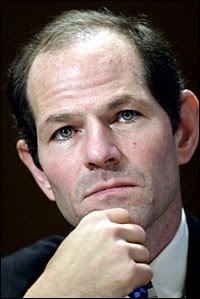
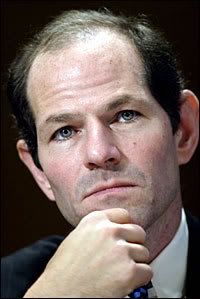
Peirce reports that Governor Eliot Spitzer wants a commission to consider the merits of closing some of New York State’s dozens of prisons. This was also covered on February 5th in the New York Times (subscription required). New York's prison population peaked at 71,000 inmates in 1999 but has dropped by 8,000 the past eight years.

Crime reduction in New York City is the major cause as well as reform efforts to find treatment for non-violent offenders. No doubt the corrections industry will lobby Albany hard to maintain the status quo but Spitzer has demonstrated his fondness for picking fights.

Meanwhile, Governor Arnold Schwarzenegger is pressing for $11 billion in bonds to add 78,000 beds to California's expanding prison population. Currently, California has 173,000 inmates costing the Sunshine state $8 billion. Peirce quotes a California senior prison official warning that overcrowding and threats of riots are,

"an imminent and substantial threat to the public.''
Peirce also notes that,

“Thirty years ago California's prison system was hailed as America's best, providing education and psychotherapy for offenders.”
Critical Resistance posted the following about California on their website in January:

”Dear Friends,

Last year, we helped defeat plans to build 140,000 new prison and jail cells. While we have collectively made it very difficult for the state to build entirely new large state prisons, the Governor has responded by couching prison expansion in the guise of prison reform. But, we know that expansion is NOT reform. We know that reform lies in reducing the number of people in prison. So, we are back. This time fighting the Governor's plan to build 78,000 new prison, jail and juvenile detention beds and once again, we need you.

The more we make expansion impossible, the closer we get to real moves to reduce the number of people in prison!”
New York of course endured the shameful Attica prison riot of 1971 that resulted in the aforementioned Rockefeller drug laws. The legacy of those laws, widely replicated in other states, were expanding prison populations for possessing or selling even small amounts of narcotics.

Thankfully, Governor Spitzer appears determined to aggressively reform New York’s correction system. However, many communities have an economic interest in preserving the status quo. As State Sen. Elizabeth Little, whose Adirondacks district includes 12 prisons told the New York Times,

"There are over 5,000 corrections officers living in my district. In most of these communities, the prisons are the biggest employer.''
Left unsaid by too many legislators such as State Senator Little and other politicians, is that white constituents are benefiting from union jobs while minorities are incarcerated with punishments not appropriate to the crimes or offenses committed. This is not justice and reflects badly on our national character. One governor, even in a state as large as New York isn't enough. This issue merits activism among civil libertarians across the political spectrum. Does anybody care?
*********************************************************************************
ADDENDUM: A crossposting of the above topic made the recommended list on Daily Kos. Click here to review comments from that community. Also, my thanks to Blue Gal for linking this post in the Crooks & Liars blog roundup.

Friday, February 09, 2007

Eliot Spitzer Takes On New York's Nomenklatura

Is New York’s Eliot Spitzer for real? Is it possible my home state elected a governor who knows what he means and means what he says? Politicians promising reform and boasting about their prowess as culture breakers is nothing new. Spitzer’s predecessor, George Pataki also promised to reform Albany’s corrupt culture and he proceeded to embrace it. Mario Cuomo didn’t embrace Albany’s inside game like Pataki but he didn’t confront it either.

To this point, Spitzer reinforces my belief that the Democratic Party’s best hopes for the future reside in state capitals where governors are tackling vital issues such as healthcare, global warming and public corruption. Brian Schweitzer of Montana is a sterling example of this new breed. Smart, innovative, tough and unafraid of picking fights with entrenched power to advance progressive ideals. They present quite a contrast to Washington Democrats who even after defeating Republicans convincingly this past November, govern as if they’re afraid of their own shadow.

In only the second month of the Spitzer Era, his administration is on a collision course with Albany’s nomenklatura. The spectacle is fascinating to watch. For readers not familiar with New York State politics, Washington D.C. is a beacon of rectitude compared to Albany.

New York State Comptroller, Alan Hevesi was forced to resign shortly after being re-elected because of scandal. Hevesi pled guilty to a minor felony charge for using state employees as drivers for his ailing wife. Click here and here to read more about Alan Hevesi and the scandal that forced him from office.

As you can discern from the links I provided, Hevesi’s fall from grace was hardly the worst scandal in the world. We’ve seen far worse in New York. Indeed, I rather admired Hevesi’s career both as Mayor Rudi Guilani’s fiscal watchdog when he was New York City Comptroller and his recent stint in Albany. Hevesi also courageously opposed the death penalty as an Assemblyman from Queens. I supported Hevesi’s failed efforts to become the Democratic Party’s nominee for Governor in 1998 and Mayor of New York City in 2001.

Nevertheless, what Hevesi did was wrong and Spitzer opted to withdraw his endorsement of the Comptroller prior to Election Day. Afterwards, there was speculation Spitzer would not encourage Hevesi’s prosecution. To his credit, Spitzer helped push Hevesi out. Spitzer's critics believed he should've publicly pressured Hevesi to resign before the election.

According to New York State’s constitution, Hevesi’s successor must be approved by the state legislature. Spitzer’s fellow Democrats controls the Assembly and have far superior numbers than the Republican controlled Senate. Hence, Spitzer had to deal with Assembly Majority Leader Sheldon Silver.

Silver is the embodiment of Albany’s establishment and for over a decade has wielded power as one of “three men in a room” governing New York State. The caucus led by Silver has seen governors preaching reform come and go, as they remained entrenched. Their districts are gerrymandered to their favor as special interests curry their favor. This is not a group easily intimidated by a new governor’s high approval ratings, even if he is a member of their own party.

Spitzer and Silver agreed that a new comptroller would be selected from a list of qualified candidates put forward by an independent screening committee. The Assembly favored one of their own, Thomas P. DiNapoli and went along with Spitzer’s plan because they believed he would be among the finalists. He wasn’t and the Assembly opted to renege on the agreement.

DiNapoli, a Democrat is well liked among legislators from both parties because of his work to help bail out financially strapped Nassau County. His efforts garnered appreciation from suburban Republicans as well as Democrats and represent the consensus choice inside Albany’s clubhouse.

Spitzer has responded with characteristic bluntness. While promoting his new budget in Syracuse, he denounced local Assemblyman and fellow Democrat Bill Magnarelli:

“Bill Magnarelli is one of those unfortunate Assembly members who just raises his hand when he’s told to do so, and didn’t even bother to stand up and say, ‘Whose interests am I representing?’"
Governor Spitzer also canceled an introductory lunch with Assembly Democrats next Monday, as well as a $10,000 a plate fundraiser for the Democratic Assembly Campaign Committee. Escalating the conflict even further, Spitzer’s aides have let it be known he would criticize the votes of Assembly Democrats in swing districts where Republicans could make inroads.

One can’t help but admire Spitzer’s pugnacious tenacity on behalf of principle. He used the same approach as State Attorney General when he prosecuted corrupt brokerage houses on Wall Street ripping off the middle class. Spitzer’s unwavering pursuit of corruption propelled him to the governor’s mansion. However, being governor is far different then serving as the king of your own fiefdom as New York’s top lawyer.

Governing is about achievement. Achievement requires consensus. New York’s legislature appropriates funds and their cooperation will be required to pass budgets on time and enact Spitzer’s agenda for health care reform, education investment and restructuring New York’s finances.

Also, Spitzer’s budget calls for unpopular cuts with New York’s hospitals and making the tough calls can’t help but diminish his popularity. Albany’s nomenklatura will likely play a game of rope-a-dope and wait for Spitzer’s popularity to dissipate so they can cut deals from strength. Gridlock appears unavoidable unless Spitzer adopts a more conciliatory tone.

Spitzer however appears determined to make an omelet by breaking eggs. Can he pull it off? William Cunningham who served former Governors Hugh Carey and Mario Cuomo and most recently Mayor Mike Bloomberg, compared Spitzer’s style with former New York Governor Theodore Roosevelt:

“Roosevelt came in saying he was going to be a reform governor. He immediately got into a fight with Senator Platt, the head of the Republicans, a powerful political boss in the state. History remembers Teddy Roosevelt. You have to be a knucklehead like me to remember Boss Platt."
Perhaps we New Yorkers have a ringside seat to history. Hopefully, we’ll also have a better state when Spitzer leaves office.

Monday, January 01, 2007

The New Breeze From Albany

Understandably much of our nation’s focus regarding politics is on Washington as Democrats take control and the Bush Administration continues to prosecute their failed war in Iraq. Will Democrats take a stand or remain subservient? How will Democrats utilize their power for oversight and investigation? And numerous personalities inside the beltway from both parties are already jostling for position in the 2008 presidential election.

Just as important however are the newly elected Democratic governors and state legislators across the nation. In recent years state capitals have outflanked Washington regarding important issues such as global warming, minimum wage and health care. The New York Times reports today that state capitals are also outflanking Washington regarding changes to ethics and lobbying reform.

As a New Yorker I’m especially enthusiastic about incoming governor Eliot Spitzer (click here to read the text of Spitzer's inaugural address). In terms of corruption and pay to play politics, Albany has made Washington D.C. look like a beacon of rectitude in comparison. Another negative of Albany's culture has been governance by “three men in a room” as outgoing Governor George Pataki, Democratic Assembly Speaker Sheldon Silver and the Senate’s Republican Majority Leader Joseph Bruno made all the important policy decisions. Joining them in their room for a decade was a cabal of special interests and lobbyists while the public was ripped off.

Presently, both parties are back on their heels in Albany regarding ethics as Democratic State Comptroller Alan Hevesi resigned after pleading to a felony and the Republican’s Joseph Bruno recently revealed federal authorities were investigating his outside consulting work. Spitzer to his credit pushed political ally Alan Hevesi out the door after election-day and appears ready to spend his political capital on an ambitious reform agenda.

Today Spitzer signed five executive orders pertaining to procurement and the agencies his office has unilateral control over. He’s also imposing on his staff strict guidelines regarding bans on gifts and prohibiting any part of the executive branch from lobbying his office two years after they leave their posts.

The real challenge of course will be how much and how fast he can push Albany’s lethargic state legislature to accept in reforming state government as a whole. At the moment Spitzer dwarfs representatives from both parties but his popularity will inevitably decline as he makes tough calls regarding Albany's budget deficit.

In spite of the political challenges confronting Spitzer, one can feel a new breeze blowing from the state capital. Blair Horner, the legislative director of the New York Public Interest Research Group told the New York Times,

“He has talked about redistricting reform, he’s talked about campaign finance reform, he’s talked about ending pay to play and he’s talked overall about a transparent and accountable state government. If he accomplishes all of that, that’s probably more reform that we’ve seen in New York for the last 200 years.”
The previous Democratic governor Mario Cuomo talked a good game and his rhetorical gifts made him the darling of the national Democratic Party for years. Truthfully, Cuomo didn’t accomplish much as governor and the record suggests his greatest impact was constructing prisons that served the jail industrial complex. George Pataki defeated Mario Cuomo in 1994 partly by claiming to be a reformer and proceeded to govern as a lethargic corporatist. Let’s hope Spitzer turns out to be the real deal.