Saturday, November 18, 2006

ILJ's One Year Anniversary

Anniversaries are personal touchstones. They allow us to reflect upon where we’ve been, where we are and what comes next. It happens that November 20th is the one-year anniversary of the Intrepid Liberal Journal.

A year ago I emerged from self-imposed apathy about politics and current events. I worked my butt off for the Kerry campaign in 2004. Kerry didn’t inspire me but I believed our national honor could only be salvaged by Bush’s defeat.

So I took bus trips to Pennsylvania and canvassed. I brushed off my telemarketing skills from the ‘90s and phone banked every night after work – even though I hated telemarketing and swore to myself I would never do it again.

The early excitement over exit polls turned to ashes in the mouths of progressive activists in November 2004. There was also the lingering suspicion that Kerry really won but the election was fixed. I angrily told people I thought what happened in the Ukraine also happened here. Nobody seemed to care. Worse I was forced to acknowledge that even if the election had been fixed – Bush enjoyed enough support to make manipulating the results possible. The same also had to be said about 2000.

My country had turned into a train wreck and if Americans were too dumb to change course I wasn’t about to invest anymore time and energy. Right or wrong that’s how I felt.

Then Hurricane Katrina happened. The callous rot of Bush’s rule was exposed and apathy was not an option. Too many of my fellow citizens in the Gulf Coast were condemned to death because they were black, poor or both. Katrina renewed debate about our direction and I wanted in.

My only familiarity with blogs was through a close personal friend. I suppose you could describe her as my blog guru. Her Corporate Ethics blog, is dedicated to exposing the corruption and crimes of Kaiser Permanente. More than a blog her site has become an information repository for standing up against an evil corporate giant.

My friend had been a Kaiser employee, was familiar with their dark underside and personally suffered because of them. I suggest reading her site to learn about her personal story. I read her blog regularly and was intrigued.

Occasionally I posted comments anonymously – when people attacked her I took it personally and still do. Among her accomplishments was a state agency in California fining Kaiser over $200,000 for exposing Medical Record Numbers of their patients on their website.

My friend has little money and since losing her job at Kaiser she’s scrapped together a living with freelance work. And yet she was making a difference and giving voice to people who had suffered at Kaiser’s hands. Her blog also intrigued me because I saw parallels between them and the Bush Administration. Out of control crony capitalism, a compliant press parroting Kaiser’s propaganda and regulatory agencies that mostly overlooked their crimes against the public. Even if she weren’t my friend her blog would’ve fascinated me. There was nobility to it and a sense of empowerment from reading it. She was fighting back.

I wanted to do the same and after Katrina my passion for the progressive cause returned. My original plan was to write about various topics in advance, investigate the world of blogging and get started in January 2006 with the material I had put together. I wanted my first post to be about civil liberties and promote the concept of liberals taking a more aggressive stand and ply libertarians away from the Republican Party.

But in November 2005 John Murtha rocked the political world and called for a redeployment of our forces in Iraq. It seemed the whole world was engaged about the merits of his position and I was on the sidelines. So, ready or not I had to jump in.

And I felt reinvigorated. How wonderful to discover a whole community of progressive bloggers standing up for peace, economic empowerment and social justice. Their vitality gave me hope as I sensed the path of renewal through the netroots.

Whenever reading about bloggers in the mainstream press I’m amazed at how we’re portrayed: “dangerous,” “extreme” and with subversive values. Recently at a Barnes & Noble I spoke with someone at the history section. Somehow the topic of liberal bloggers came up and I admitted I was one. Her response to me was, “oh you’re one of those people.” I had to laugh.

Yes I’m one of “those people” whatever that means. And who are we? True enough the blogosphere has characters I would rather not be associated with – inevitable considering its size. For the most part bloggers resemble your neighbors down the street.

If you take a look at my left sidebar, underneath “Friends of ILJ” you’ll notice Joe Irvin’s Blog. Joe was the first blog to link me. An editor of a small city newspaper for 35 years, Joe served in the U.S. Army and raised two children with his wife. Yes, I see why people might fear someone like that. Decent people with sense are dangerous.

There is also Deirdre Helfferich of Ester Republic – the second blog to link me. Deirdre is an Alaskan Green Party activist and she promotes clean government, clean air and clean energy. Yes, Deirdre is terrifying and must be stopped. Anyone who supports conservation and developing alternative sources of energy must be a terrorist. Tap her phones now!

The ubiquitous Jay Lassiter of Lassiter Space is also “one of those people.” A front pager at Blue New Jersey and Democratic Party and human rights activist who helped push Robert Menendez across the finish line in his Senate race. Jay believes gays should enjoy equal rights including marriage. His father served in Vietnam and Jay is committed to bringing our troops home as soon as possible. Jay has the temerity to believe our troops shouldn’t die in an immoral and ill-conceived war. Yes he must be stopped too.

Another “one of those people” is Bill Kavanagh of Big Bill’s Diamond Blog. Bill is a Massachusetts born New Yorker and obviously an elitist with his intelligent and cogent observations. Who the hell does he think he is? Somebody slap the cuffs on him please for his recent post about police abuse on the UCLA campus.

I look forward to the return of Bob Higgins of Worldwide Sawdust. Right now his link is dead but I understand he’ll return with his own community blog soon. Bob is a war veteran against the Iraq War from Ohio. His combination of poignancy and humor make him a very dangerous man. Bob is also “one of those people” you see. Everyday I check to see if his link is working again and can’t wait to receive an Email that he’s back in business.

If you were to put the bloggers underneath my “Friends of ILJ,” “Intrepid Voices” and members of the “Community Blogs” I list in a hotel ballroom the conversation would be lively. I suspect we would agree 90% of the time and incessantly debate over the 10% we disagreed about. That’s what progressives do. The give and take is our strength. We don’t fear debate. Debating ideas is fuel for true progressives.

Collectively, the voice of progressive blogs has become a critical mass striving for reformation and justice. We helped drive the debate and voter turnout during the recent mid-term election won by Democrats. Many bloggers such as myself either raised money, canvassed or phone banked on behalf of progressive candidates. It seems all the intellectual ideas and innovation about global warming, world peace, social justice and promoting an economy that empowers people is on our side. With progressives ascending and taking power on both the federal and state level our voice will be even more amplified.

I’m proud to be a part of it.
***********************************************************************************
ADDENDUM:
Special thanks to Nanette of the fabulous community blog Man Eegee for including me in their weekly roundup every Sunday. I'm proud to be an Eegian!

Sunday, November 12, 2006

Capitalism's Redeemer: A Podcast Interview With Author Peter Barnes

Is capitalism salvageable? Can it be a vehicle for improving the human condition? Is it possible for free markets to preserve our environment and adapt to the realities of global warming? Or is capitalism an instrument of profit for a few and nothing more? Can government regulation effectively balance the public interest with corporate power? Peter Barnes, the author of Capitalism 3.0: A Guide To Reclaiming the Commons (Berrett-Kohler Publications, Inc.) has pondered such questions for three decades. CLICK HERE to download his book for free in PDF format.

Barnes began his career as a reporter for the Lowell Sun (Massachusetts) and later wrote dozens of articles for Newsweek and The New Republic about economics. As a child he helped his father “crunch numbers” for several books he wrote about the stock market. Yet, Barnes reveals that,
“But my real economic education began in my thirties, when, after a midlife crisis, I abandoned journalism and plunged headfirst into capitalism.”
The theme of his entrepreneurial career is profit and social responsibility. In 1976, Barnes co-founded a worker-owned solar energy company in San Francisco and in 1983 he co-founded Working Assets Money Fund. Working Assets screened money market funds for investors who wanted to put their money in companies with a social conscious. He also became president of Working Assets Long Distance. In 1995, Barnes was named Socially Responsible Entrepreneur of the Year for Northern California. Currently he is a senior fellow at the The Tomales Bay Institute in Point Reyes Station, California.

Specifically, Barnes considers how modern life has diminished “the commons”: a generic term like the “market” or “state” referring to assets we inherit such as the ecosystem or the culture we create. Barnes describes the commons as assets that are gifts and shared by everyone. Air, water, ecosystems, languages, holidays and music are assets we share and haven’t earned.

Scarcity of common assets that influence our quality of life is a modern trend. The demands of working longer and earning less have debased our culture and profit at the expense of nature has contributed to an era of scarcity for people not earning top dollar. Hence, Barnes’ observation that,
“When capitalism started, nature was abundant and capital was scarce; it thus made sense to reward capital above all else. Today we’re awash in capital and literally running out of nature. We’re also losing many social arrangements that bind us together as communities and enrich our lives in monetary ways. That doesn’t mean capitalism is doomed or useless, but it does mean we have to modify it. We have to adapt it to the twenty-first century rather than the eighteenth. And that can be done.”
His book partly explains how capitalism’s past and current “operating systems” have devoured nature and he provides a blueprint to upgrade it for modern life. In devising this upgrade Barnes believes society must go beyond the antiquated paradigms of government regulation or market solutions. He contends societies should construct “trusts” that preserve the commons for future generations instead.

Ben Cohen, Co-Founder of Ben & Jerry’s said:
“Barnes shows us how to build a new economic sector that is held in trust for future generations. Ecosystems and their services would be managed for long-term benefit rather than short-term profit, and all Americans would get cash dividends.”
Robert F. Kennedy, Jr., of the Natural Resources Defense Council also praised the book:
“Using his years of experience as a successful entrepreneur, Barnes shows how capitalism can be upgraded so that it protects rather than devours our planet. Required reading for everyone who looks further than the next quarter’s results.”
Barnes agreed to an interview with me about his book and ideas for upgrading capitalism. Please refer to the media player below.


This interview can also be accessed for free via the Itunes Store by searching for "Intrepid Liberal Journal."

Wednesday, November 08, 2006

America's Democracy Has A Pulse

Just a short post this morning - instead of my typical essay format. Simply put, any governing party presiding over an immoral war, corruption and pervasive incompetence deserves to be defeated. Had Republicans prevailed it would not be possible to say our democracy is healthy. I'm still not prepared to say our democracy is completely healthy. One simply can't magically erase the previous six years and restore America's honor. However, with the House of Representatives changing hands and as of this writing perhaps the Senate as well - it can be said America's democracy has a pulse. And that gives me hope. It should give all of us hope.

Sunday, November 05, 2006

Turning On the Janes and Phone Banking

My spare time is consumed by phone banking after work and weekends. Blogging has taken a back seat – true of many progressive bloggers as the campaign winds down. I live in Brooklyn, New York and almost every office I can vote for is not in doubt. In the ‘90s I earned a living largely by telemarketing. Hence, phone banking to help get out the vote in other states is the most sensible use of my time and skills prior to Election Day.

A conversation I had with a woman from Cuyahoga County, Ohio, Friday evening especially illustrates the challenges we face in getting out the vote this Tuesday. As with numerous others I’ve spoken to in recent days she was cynical and resistant to the idea of voting at all. We’ll call her Jane.

Jane is a single woman raising two kids and a nurse. She’s living paycheck to paycheck and struggling to be a good mother. Her children are twelve and nine years of age. Jane’s job does not allow her to be home for her kids after school. She’s frustrated about not being able to attentively supervise their study habits and be more involved in their school. “I’d like to at least meet their teachers.” Everything from groceries, clothing, utilities and the phone bill is a hassle. She has no time and money is very tight.

I could hear Jane’s kids in the background as our conversation was interrupted. She alternatively disciplined them to “clean up” and “stop fighting.” Yet she stayed on the phone with me even as she seemed constantly on the verge of hanging up and I learned more details about her life.

Jane’s immediate response to my inquiries about whether she intended to vote or knew where to go was,

“I’m not waiting online all day like last time. Screwed up my whole day and my vote for Kerry didn’t count anyway. It was stolen.”
She protested that I was,

“Wasting my time with these calls. It’s fixed and the politicians never care about people like me.”
A decade of honed telemarketing skills has conditioned me to move on and make another call when I can’t make a sale. When it comes to politics however I’m stubborn and refuse to give up on a vote as long as they’re willing to talk to me and Jane wasn’t hanging up in spite of her rhetorical resistance. Every single vote is precious and my instinct is to fight. I’ll be damned if I was going to lose this vote to cynicism. It’s not only fear that’s kept Republicans in power. Cynicism from voters like Jane have also empowered their reign of indecency.

I reminded myself to listen and empathize – a technique that worked well for me when selling products or services. So I internalized Jane’s message to me, a tortured combination of pride, hurt, frustration and struggle. A husband that picked up and left her to raise two kids by herself. She's a musician forced to give up on her dreams. “But I’m still raising my kids in dignity.” Jane’s youngest enjoys music as she used to and believes "she can be something if she gets the chance.” Her oldest gets picked on when he studies because his peers “say he’s trying to be better than them.”

Jane is easy to like. She’s proud of making it on her own and meeting life’s challenges head on. But I sensed frustration at her inability to control her destiny and having absorbed too much risk. “My paycheck buys less and less” and “my health plan just plain sucks.”

Jane’s mom is elderly and forced to choose between paying for basic necessities or medication. Her dad died last year because his colon cancer wasn’t detected early enough and his health insurance issues prevented him from getting the treatment he needed.

“I’m a nurse and I could do nothing to help him. And I can’t do much for my mom either.”
Jane had two younger brothers. One died in Afghanistan in 2003 and the other was killed in Iraq in 2004 when he was forced to endure another tour of duty. The one in Afghanistan signed up shortly after 9/11 even though he had a football scholarship. Her other brother enlisted in the National Guard prior to 9/11 and had no choice about going to Iraq. She’s angry about losing both of them to “Bush’s wars.”

“My brother in Afghanistan might be alive but they don't get enough support because of Iraq. My brother in Iraq was supposed to come home.”
Ultimately we spoke for almost forty minutes and it was a losing effort for most of it. The conversation turned in my favor when I said this,

“Voting is about influencing destiny and not just accepting whatever fate dishes out. You could be passive about your kids and your life. But you get up every day, work hard and do the best you can. So why be passive about the right to vote? Why be passive when we’re fighting an immoral war and the politicians care more about stealing than you’re slice of the pie. Let them know you count. Make them care about people like you. They want you to just accept your vote won’t be counted. Participate so you can’t be ignored.”
To my relief Jane finally embraced that she had to vote on Tuesday. I've said similar things to others in recent days without success but it worked with her. The conversation ended with Jane asking for my address so she could mail me a copy of an old music demo she had done. And she promised to show up November 7th. Forty minutes well spent.

Since that conversation I’ve been thinking about Jane and cynicism possibly depressing turnout. Her cynicism is quite understandable. Let’s face it her vote may not count this year because of vote tampering. Also, Democrats are hardly a panacea and like many progressive bloggers I’ve vented about the party’s direction on issues such as war, torture and corporatism.

Should Democrats prevail this Tuesday we in the progressive netroots will have a special obligation to remain vigilant about core principals. Taking over and shaping the Democratic Party is an ongoing struggle. There will always be tension between pragmatism so Democrats remain politically viable and core progressive values.

Nevertheless, a Democratic victory in both federal and statewide elections is essential for the health of our democracy. If Republicans prevail this Tuesday then voters such as Jane will never believe the system can work. Citizens like Jane need reassurance that accountability in our democracy is real and that means Republicans being voted out on November 7th. They also need our leaders to nurture an economy that expands the middle class.

For a generation we’ve watched the GOP systematically shift the burdens of risk onto voters such as Jane while enriching the mega wealthy. Elderly people such as Jane’s parents are simply neglected by a substandard health care system that cares more about profits than patients. And her brothers were killed by feckless neocons that considered them disposable in pursuit of their imperialistic delusions.

I’m not naïve. I fully realize that Democrats prevailing this Tuesday is not an elixir. A whole lot of damage needs to be repaired and we need the White House. The first step is changing the national conversation in this country, shifting the center of political gravity and educating the public about their stake in national policy. Victory on November 7th is a start.

Let’s get as many people like Jane in Cuyahoga County, Ohio to the polls as we can. We can all do something to help make it happen. Three days to go.
*********************************************************************************
ADDENDUM:
"SusanG" rescued a cross posting of the above topic on Daily Kos. CLICK HERE to review the comments. Also, an FYI for New York residents - many Democratic candidates are also on the Working Families Party ballot. For whatever it is worth, I am going support that ballot line.

Monday, October 23, 2006

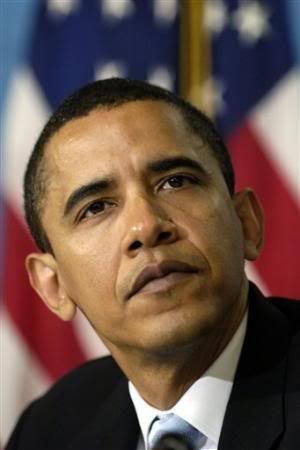
Reminiscing About the Future: Barack Obama's Inauguration Speech

Truthfully, I'm not sure how I feel about Barack Obama. His charisma, intelligence and life story definitely intrigue me. I appreciated his firm unwavering opposition to the Iraq war from the onset. Too many Democrats did not share his resoluteness. But there are moments when he sounds too willing to castigate secularists for being "hostile" to religion and ready to compromise core progressive values. It also remains to be seen whether Obama can withstand the intense scrutiny and gold fish bowl of presidential politics. So, while Obama intrigues me, I'm not ready to jump on the bandwagon just yet. But for whatever its worth, I thought I'd have some fun and try writing a hypothetical inaugural speech in his voice.

Vice President Richardson, Madam Speaker, Mr. Chief Justice, Vice President Cheney, President Bush, esteemed clergy and fellow citizens – Today we honor the majesty of our democracy. Two hundred and twenty years ago our first president, George Washington, took the same oath I have today. America was young and vulnerable. Our nation surrounded by enemies and divided. Yet we survived turbulent years of war and intense debate about our system of government.


Our first president was a humble man who believed our country partly owed its survival to divine providence. He told a joint session of Congress at that first inaugural, “No people can be bound to acknowledge and adore the Invisible Hand which conducts the affairs of men more than those of the United States.”

As I reflect upon our country’s two centuries of struggles and accomplishments I must also humbly share George Washington’s gratitude to the Almighty for America’s survival and prosperity. Civil War, the Depression, two world wars, the Cold War, the civil rights struggle and an influx of new Americans from around the globe. Through it all we remained strong, just and united.

Our continued survival and prosperity is contingent upon nurturing a community culture at home and abroad. All of God’s children are entitled to dignity and respect regardless of their race, nationality, class, gender or religion. All of God’s children share responsibility as stewards of this planet’s well being. As the world’s strongest power we’re obligated to embrace the better angels of our nature for the sake of all humanity. Now in our third century America is still young at heart but mature in soul.

Our new generation of leadership is also young at heart and mature in soul. The shouting and recriminations of the 1960s is not our anthem. The petulance and pettiness of hawk vs. dove, black vs. white, hippie vs. the establishment, Great Society vs. law and order is not the drumbeat we march too. Those struggles were important. A forty-year era of great debates helped make our country more just. Those arguments belong in the past. My friends, the culture war is over.

Our generation believes in consensus and innovation. Everyone has a stake, everyone has responsibility, everyone has something to contribute and from time to time everyone has to give someone a helping hand. Today’s successful leaders in business, government and academia don’t rule by decree or demonizing our adversaries. Our generation gets things done by accountability and coordination. Leaders must inspire or fail.

I want our friends and allies to know that my Administration is both able to lead and willing to listen. Global warming, terrorism, famine, genocide and disease are challenges to address together. America can’t impose stability, democracy or order on anyone. Nor can we protect the world by ourselves. I know that. We know that.

The community of nations also can’t police the world, save our environment and bring about peace without us. The world remains dangerous with ancient tribal hatreds, terrorists and the proliferation of horrible weapons. In this world where evil still lurks and natural resources are diminished we either cooperate or die. I extend the hand of cooperation to our allies. Let us go forward together and make the 21st century one of universal peace, prosperity and justice.

To our enemies I extend the olive branch of peace. America is strong enough to negotiate. We truly prefer peace to war and take no pleasure in shedding anyone’s blood. But don’t mistake the hand of peace for weakness. Our resolve remains firm, as does our might. Tread on our allies or us and we stand ready to defend freedom in battle.

I also extend the hand of friendship to the loyal opposition with a special acknowledgement to Senator John McCain. Senator McCain waged a spirited campaign honorably and with principle. I admire his patriotism, his distinguished service to our country and his example of citizenship.

We all have a role to play in our national conversation. Principled debate is welcome and needed to keep all of us honest. Politics must be a rigorous competition for the best ideas. We have great challenges ahead. Bridging the gap between rich and poor, expanding access to health care, ensuring that our children receive a first class education. Let us debate and hash out our differences honorably and with civility. There’s no need to question the other side’s motives. I welcome ideas from everyone.

Ultimately, the health of our national community doesn’t depend on politicians in Washington. Whether we succeed or fail is about everyone embracing the greater good of our nation. We’re all connected and we all have important roles.

To my fellow citizens I ask patience and sacrifice. We’re living in a new world. The global economy does not bend to our will. Our competitiveness and prosperity requires choices and priorities. We’re going to have to change our consumption habits if we want to save our planet from global warming. We owe this to the world as global citizens and it’s our moral responsibility to lead by example. It’s also a matter of national security. All of us must contribute to the national community by conserving energy if we want to free ourselves from the tyranny of foreign oil.

America does have enemies. I don’t expect or want citizens to live in perpetual fear. That only emboldens our enemies. But I will ask for broader sacrifice. Too many citizens from poor communities absorbed the burden of defending our freedom in recent years. This Administration will not deploy troops without just cause. But I am going to ask that all Americans contribute.

That means multimillionaire CEOs can find good paying jobs on their payrolls for soldiers returning home. If they risked their lives you can take home less pay.

Our high school and college students also must embrace responsibility to our community. Many of your neighbors are overseas shedding their blood for your freedom. You can help tutor the children of our soldiers, keep neighborhoods clean, and volunteer to help in veteran’s hospitals or take care of the elderly. Citizenship in the United States is a privilege. Many died so you may enjoy that privilege and we all have to give something back. Service breeds better citizens. And better citizens lead more productive lives.

America has prospered and achieved when its citizens have come together for the greater good. Thirteen colonies banded together to overthrow the yoke of tyranny. Rich, poor, black and white came together to defeat the Nazis and save the world from evil. Blacks and whites marched together for civil rights. A half-century of national resolve prevailed in the Cold War against communism. An America with many more colors and creeds united after 9/11 and stood tall together.

The time has come for this generation of Americans to come together in one community for causes beyond conflict and struggle. Let us aspire to the greatness of a national community that provides opportunity for all and demands responsibility from everyone.

Two centuries ago our country ushered an age of Enlightenment and self-determination for the world. May our third century ignite a worldwide reformation of peace, shared responsibility and justice. We must be bold enough to lead, humble enough to listen and courageous enough to persevere. I have faith this generation of Americans will live up to its calling.

Thank you and may God bless the United States of America.

Saturday, October 14, 2006

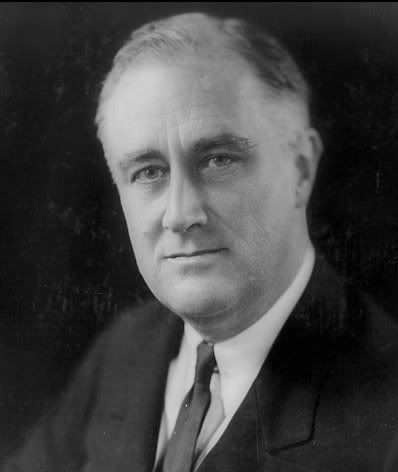
FDR and the Holocaust: A Podcast Interview With Author Robert N. Rosen

FDR was singularly responsible for defeating Nazi Germany’s brutal anti-Semitic regime. Yet sixty-one years after his death, FDR’s legacy is entwined with allegations he was anti-Semitic and not interested in the Holocaust.

As a liberal Jewish American I was always conditioned to regard FDR with an asterisk. Many times I’ve heard my predominantly liberal family say, “FDR was a great President, but …” And they proceed to indict him for being unsympathetic to European Jewry during the Holocaust. In particular, FDR’s critics cite the SS St. Louis, which arrived in Havana Harbor on May 27, 1939 with 936 European Jews seeking asylum, but were turned away. There was also FDR’s failure to fire Breckinridge Long. While serving in FDR’s State Department, Long obstructed and delayed visas, causing the deaths of Jews desperate to escape Europe.

Critics also note that anti-Semitism was common among wealthy Anglo-Saxons such as the Roosevelts during this era. Indeed, Roosevelt’s State Department was stocked with anti-Semites who opposed raising any immigration quotas to save European Jews. Roosevelt’s ambassador to England, Joe Kennedy was notoriously anti-Semitic.

Author Robert N. Rosen is challenging FDR’s critics with his book, Saving the Jews: Franklin D. Roosevelt and the Holocaust (Thunder’s Mouth Press). In the Afterward to Rosen’s book, Alan M. Dershowitz writes,
“If journalism is the first draft of history, then revisionism is the second. Typically third and fourth drafts are required to set the record straight.

The history of FDR’s role in the Holocaust is currently undergoing this process. Robert Rosen’s carefully researched and beautifully written book may well prove to be the final draft.”
But Rosen is not without his own critics. In his book, Rosen admonishes FDR’s accusers for “American bashing” when questioning the President’s motives. 55 historians from universities in the United States, Canada and Israel wrote Rosen’s publisher and protested that his,
"name-calling and invective" are "deplorable, false, and have no place in serious discussion of the Roosevelt administration's response to one of the greatest moral crises of the Twentieth Century."
Click here to read the text of their letter.

The David S. Wyman Institute has even accused him of plagiarizing 21 pages without proper attribution. For what it’s worth I believe Rosen’s book is scrupulously sourced. I don’t agree with everything he writes but Rosen has definitely challenged my preconceptions about FDR’s attitudes towards Jews and his motives during the Holocaust. The author makes a compelling case that FDR was sympathetic and engaged in saving European Jewry. According to Rosen, domestic politics and strategic imperatives handicapped FDR from doing more – not callous disinterest.

Rosen is 58, Jewish and he earns a living as a practicing lawyer in Charleston, South Carolina. He welcomes the controversy of his current book, telling the Washington Post,
“I'm glad it has generated some controversy. That was the point of it.”
Upon reading his book my immediate reaction was, “I want to talk to this guy.” The beauty of the blogosphere is not only do I get the chance to talk with him but also all of you can listen to the conversation. Please refer to the media player below.


This interview can also be accessed for free via the Itunes Store by searching for "Intrepid Liberal Journal."

Saturday, October 07, 2006

Full Circle: From Jim Wright To Dennis Hastert

Seventeen years ago Democrats jettisoned the remnants of their eroding spine and House Speaker Jim Wright went down in flames. Wright’s fall was a seminal moment for Democrats as well as our national politics. Already on the defensive following defeats in three consecutive presidential elections Democrats crawled into a fetal position and became a self-gelding machine of ineptitude. Corporate militarism and Christian radicalism bagged a trophy and were on the march.

Wright was a complicated, vain and arrogant man imbued with a sense of self-importance. In his line of work narcissism goes with the territory and Wright had plenty to spare. But there was more to him than that. Some politicians merely want to be big and others want to do big things. Born in Fort Worth, Texas in 1922 he was a product of the Depression. Wright both understood and empathized with those in poverty and was committed to policies that benefited working people and the poor. He enjoyed power and he also believed in using it for causes bigger than himself.

As Speaker Tip O’Neill’s second in command Wright stewed impatiently when Democrats failed to challenge President Reagan’s program of class warfare against working people. O’Neill did lead a Democratic rebound in the 1982 mid-term elections but Wright wanted to do more. John Barry described one scene in his brilliant 1989 book, The Ambition and the Power: The Fall of Jim Wright : A True Story of Washington in which O’Neill patted Wright on the knee and told him to wait for a Democratic president. According to Barry, O’Neill believed Democrats were fighting a “rearguard” action.

That wasn’t good enough for Wright and after O’Neill retired in 1987 he utilized the Speaker’s chair to push back against the weakened Reagan Administration. Wright smelled blood as Reagan was besieged by Iran-Contra and appeared to be an ineffective lame duck.

He asserted that congress was a “co-equal” branch on foreign policy and negotiated with Daniel Ortega of Nicaragua. Not content to merely oppose Reagan’s criminally immoral policies in Central America, Wright was determined to formulate a peace policy independent of the White House. He also attempted to override a Reagan veto regarding trade policy in 1987 and failed.

Yet even in failure Wright demonstrated toughness. He wanted to seize the initiative and was not shy about using power to achieve progressive objectives. Republicans regarded Wright as overly partisan and some Democrats such as Ways and Means Chairman Dan Rostenkowski were threatened by his vast accumulation of power. Another old bull, Energy and Commerce Committee Chairmen John Dingell also felt threatened.

Unlike O’Neill, Wright was not inclined to respect the prerorogatives of committee chairmen such as Rostenkowski’s and Dingell. He believed the interests of the Democratic Party were bigger than individual fiefdoms. Wright also preferred to concentrate power in his hands and his ruthlessness was off putting to senior colleagues.

A young Republican firebrand named Newt Gingrich also believed Wright was a threat. He speculated that if Wright wasn’t stopped he might become the most successful speaker since Henry Clay and Gingrich’s dreams of a Republican majority would wither on the vine.

Gingrich filed a complaint with the House Ethics Committee about matters that seem rather pedestrian today. Ostensibly, Wright was accused of using bulk purchases of his book, Reflections of a Public Man to earn speaking fees in excess of the allowed maximum. The report issued by the House Ethics Committee also charged that Wright’s wife, Betty, was given a job and perks to avoid the limit on gifts.

Gingrich skillfully exploited the media to stoke outrage and promote both Wright and Democrats as representing a culture of corruption. Among those who supported Gingrich’s public relations offensive against Wright was a Republican Minority Whip from Wyoming named Dick Cheney prior to becoming George Bush’s Secretary of Defense.

Democrats initially rallied to their Speaker but their resolve disintegrated and he was forced to resign on May 31, 1989. Wright’s demise was a precursor to the wipe out in 1994 that made Newt Gingrich speaker and transformed our politics. Ironically, Wright’s rival for power Dan Rostenkowski also stepped into scandal with the House post office controversy and he served time in prison.

Even with Bill Clinton in the White House Democrats fought a defensive rearguard action against a conservative iron triangle comprised of the media, think tanks and K-Street lobbyists. Republican hubris metastasized over the next decade as they impeached President Clinton for having sex with an intern and proceeded to steal two consecutive presidential elections in 2000 and 2004.

Whereas Democratic politicians exploited their offices for garden variety corruption: speaking fees, postage stamps, patronage and questionable book deals the GOP envisioned government as their personal candy store. In the past twelve years government has been stripped bare and even basic functions such as military transport and security is being outsourced to private corporations who over bill tax payers and torture detainees. Remarkably the government is doing less and spending more.

We’ve seen the result as a cabal of plutocrats enriched themselves and our national security, education and access to health care have eroded to pitiful levels. Other functions of a Democratic society such as reliable vote counting and access to polling stations regardless of race or wealth are regarded as an inconvenience to be brushed aside.

And of course the GOP exploited 9/11 to wage war against a country that didn’t attack us, wasn’t a threat but offered the promise of brown gold. On the periphery of failure these past dozen years was the collegial Dennis Hastert.

Hastert is as an enabler for the GOP’s reign of indecency. Initially a soldier in Tom DeLay’s whip organization he became the amiable and forgettable public face as Republicans compromised national security, condemned poor people to death in New Orleans, bashed homosexuals while consorting with pedophiles and obliterated our fiscal solvency.

Hastert is the ultimate chucklehead crony with a title but no interest in management because he’s always been the puppet of others. His role was to look the other way while his masters broke the law and run interference as required.

Interference appears to have included covering for Mark Foley as he satisfied his perverse lust with vulnerable teenage boys. Republicans claim they are the party who wants to protect America from harm but their Speaker didn’t care about protecting children under his charge.

Seventeen years ago Jim Wright was forced to resign because his party was cowardly and weak. In 2006 Dennis Hastert is fighting to stay in power because he and his party have no shame. We’ve come full circle.
************************************************************************************
ADDENDUM:
The topic above was cross posted and front paged on the community blog Swords Crossed. Click here to review their comments. A cross posting in Daily Kos was "rescued" by Susan G and their comments can be reviewed by clicking here.

Monday, October 02, 2006

Wanted: A National Pension Plan For Working People

Several years ago I was a telemarketer in Sheepshead Bay Brooklyn for a wholesale ophthalmic lens company. We sold lenses to small independent mom and pop stores you might purchase a pair of glasses from and our profit margin was thin.

My co-workers were predominantly uneducated and older than forty. Several of my colleagues labored for years on their feet as “lens pickers” with little compensation. Trust me it’s far more grueling then it sounds. Sometimes during a busy crunch I helped out on the lens floor and was exhausted after a couple hours. Typically, the lens pickers toiled from 7:00AM to 7:00PM when we packed up at night for messenger pick up.

Most earned hourly salaries not far above minimum wage. As with any small business working in close quarters facilitates bonding and reduces barriers. It was also in my own self-interest to maintain a positive relationship with co-workers because I wanted my customers taken care of.

So I listened and talked with them about everything and anything: our personal lives, sports and television. We had our unique inside jokes and off color humor. We played practical jokes on each other. Several of them enjoyed giving me dating advice. We also discussed politics.

Culturally, I found them to be conservative, very religious and proudly patriotic. Politically most didn’t vote at all and the few that did typically pulled the lever for Republicans. All resented politicians who talked a good game but didn’t do anything for “working people.” They found my passion and interest in politics quirky and strange.

It’s largely because of them I ponder the subject of pension reform for employees of small businesses. How many Americans are just like my former colleagues in Sheepshead Bay Brooklyn: working hard for little pay with no union to stand up for them, limited prospects for the future, virtually nothing saved for retirement and no light at the end of the tunnel?

One colleague I often think about is over sixty and has bad knees. I recently learned he suffered a heart attack. What will he do once he is physically unable to perform his job anymore? He can’t afford to retire and conservative lectures about a high skill economy don’t do him any good. No doubt the insipid David Brooks would write he should’ve just learned computer programming and networked more efficiently with people.

How many workers are younger than my former colleague but on the same downward spiral, existing in an economy that for them is all risk and little reward? What can and should be done for them?

It seems to me the federal government must underwrite a pension plan for small businesses as a supplement to Social Security. Workers such as my former colleagues are living paycheck to paycheck with no savings or wealth being generated on their behalf.

Is it possible to design a policy that enables small businesses to establish 401k style pensions for unskilled laborers such as my former colleagues in Sheepshead Bay Brooklyn? Might it also be possible that such a plan allows employers to match any contributions made by employees – encouraging savings and facilitating long-term wealth generation?

My current job has a 401K plan but I work for a small firm and employee contributions are not matched. Matching contributions is how true wealth can be created. My former colleagues in Sheepshead Bay Brooklyn don’t even have a 401K plan without matching contributions.

Some interesting work has been done on the subject. In June I interviewed progressive economist Jared Bernstein and asked him about this topic. He referred me to the work of Ray Boshara of The New American Foundation as well as the Hamilton Project.

Last night Kid Oakland turned my attention to an interesting piece published in the New Yorker by Malcolm Gladwell when I exchanged comments with him about his fine diary in Daily Kos on good government.

All helpful reading yet I still believe this topic is not being sufficiently deliberated and considered. This issue is a potential silver bullet in 2008 along with health care. If I were a prospective presidential candidate I would definitely reach out to minds such as Jared Bernstein and Gene Sperling and ask them to crunch some numbers about how this can practically be done.

Naturally we can expect a conservative screech about proposing something so ambitious requiring heavy government funding. Nonetheless I believe it can be sold as an investment that will deliver a bountiful return by boosting an eroding middle class.

There is also considerable benefit for the small business community. Indeed for them it’s a competitiveness issue. If even their low skilled and wage employees are given a stake of wealth generation in their success it ultimately enhances productivity and preserves continuity in their workforce. Isn’t it better to underwrite pension plans on behalf of small businesses employing American workers instead of providing corporate welfare for multinationals outsourcing jobs?

I realize our focus is on the remaining five weeks of this election season. However, it is not too early to wrap our brains around issues and policies that can be championed in 2008 and lift up the middle class. Christian E. Weller from the Center of American Progress and Eli Staub, research analyst from the Service Employees International Union recently collaborated on a must read piece entitled, Middle Class In Turmoil that illustrates the stakes for working people. This is a constituency that needs to be engaged with concrete proposals if we expect their votes and deserves some kind of reward for playing by the rules.

I’m curious to hear from the vast brain-power of the netroots community. We truly have become an idea factory and I believe the political class has learned to pay attention to what we think. Let’s put our policy wonk caps on and make a difference. We might even earn the trust, gratitude and votes of working people such as my former colleagues from Sheepshead Bay Brooklyn.