Showing posts with label Nazis. Show all posts

Sunday, July 29, 2007

Eighty-Six Years Ago Today

Each of us, myself included, is guilty of being egocentric about the time they live. Hence, the current spat between Senators Obama and Clinton as they vie for their party’s nomination, the ongoing saga of Attorney General Alberto Gonzales as the Bush Administration implodes, global warming and the Iraq War seems apocryphal.

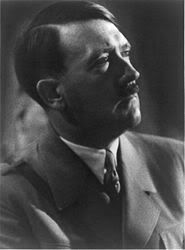
Well, for a little perspective consider this: eighty-six years ago today Adolph Hitler was introduced as the Fuhrer of Germany’s National Socialist German Workers Party known as the Nazis.

Here is the back-story of this seminal moment in history. Munich was a stronghold for the Nazi Party and a bastion of ultra right-wing German nationalists. Following World War One a cabal of disenchanted anti-Semites and anti-communists were looking for a home. Unlike today’s neocons, these zealots were not chicken hawks. Most were embittered veterans of World War One and included Army officers determined to destroy Marxism and replace the Weimar Republic centered in Berlin.

Adolph Hitler, a corporal in World War One was seen more as a front man for the party founded by Anton Drexler in 1919. He had the charisma the rest of the party hoped to exploit and let carry them to power. An executive committee governed the party and the original members considered Hitler overbearing and too dictatorial. Curiously, that’s what many of the original Bolsheviks thought of Stalin after Lenin made him General Secretary of the Communist Party in Soviet Russia.

Although many regarded Hitler and his party as a joke, he burned with homicidal ambition and hoped to promote the Nazi cause beyond Munich. In the summer of 1921, Hitler visited nationalist groups in Berlin. During his absence from Munich, the leadership of the Nazi Party revolted. To weaken Hitler's position, they formed an alliance with a group of socialists from Augsburg.

Hitler rushed back to Munich and countered them by announcing his resignation from the Party on July 11, 1921. Without Hitler the Nazi Party was finished and even his rebellious comrades knew it. Sensing an opportunity, Hitler went for the jugular and declared he would only return if he was made chairman and given dictatorial powers.

Members of the executive committee, led by Anton Drexler, initially resisted Hitler's power grab. An anonymous pamphlet appeared entitled: "Adolf Hitler: Is he a traitor?" Hitler's lust for power as well as the violent entourage that surrounded him was severely criticized. Hitler responded to the publication in a Munich newspaper by suing for libel and later won a small settlement. I suppose Hitler’s opponents could have have benefited from tort reform. Had the suit not taken place all of history might be different.

Instead, the executive committee of the Nazi Party backed down and Hitler's demands were put to a vote of the party members. He received 543 votes for, and only one against. At the next party gathering, July 29, 1921, Adolf Hitler was introduced as Führer of the Nazi Party, the first time he was addressed in that manner.

Twelve years later, with Hitler at the helm, the Nazi Party was able to exploit the rules of parliamentary democracy and take over the country. And we all know what happened next.

If you’re interested in reading about Hitler’s early years I highly recommend Charles Bracelen Flood’s classic, Hitler: The Path To Power.

Saturday, October 14, 2006

FDR and the Holocaust: A Podcast Interview With Author Robert N. Rosen

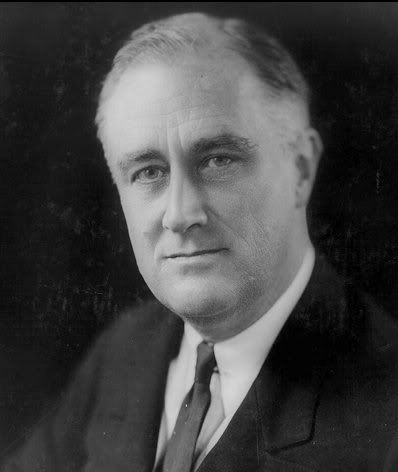
FDR was singularly responsible for defeating Nazi Germany’s brutal anti-Semitic regime. Yet sixty-one years after his death, FDR’s legacy is entwined with allegations he was anti-Semitic and not interested in the Holocaust.

As a liberal Jewish American I was always conditioned to regard FDR with an asterisk. Many times I’ve heard my predominantly liberal family say, “FDR was a great President, but …” And they proceed to indict him for being unsympathetic to European Jewry during the Holocaust. In particular, FDR’s critics cite the SS St. Louis, which arrived in Havana Harbor on May 27, 1939 with 936 European Jews seeking asylum, but were turned away. There was also FDR’s failure to fire Breckinridge Long. While serving in FDR’s State Department, Long obstructed and delayed visas, causing the deaths of Jews desperate to escape Europe.

Critics also note that anti-Semitism was common among wealthy Anglo-Saxons such as the Roosevelts during this era. Indeed, Roosevelt’s State Department was stocked with anti-Semites who opposed raising any immigration quotas to save European Jews. Roosevelt’s ambassador to England, Joe Kennedy was notoriously anti-Semitic.

Author Robert N. Rosen is challenging FDR’s critics with his book, Saving the Jews: Franklin D. Roosevelt and the Holocaust (Thunder’s Mouth Press). In the Afterward to Rosen’s book, Alan M. Dershowitz writes,
“If journalism is the first draft of history, then revisionism is the second. Typically third and fourth drafts are required to set the record straight.

The history of FDR’s role in the Holocaust is currently undergoing this process. Robert Rosen’s carefully researched and beautifully written book may well prove to be the final draft.”
But Rosen is not without his own critics. In his book, Rosen admonishes FDR’s accusers for “American bashing” when questioning the President’s motives. 55 historians from universities in the United States, Canada and Israel wrote Rosen’s publisher and protested that his,
"name-calling and invective" are "deplorable, false, and have no place in serious discussion of the Roosevelt administration's response to one of the greatest moral crises of the Twentieth Century."
Click here to read the text of their letter.

The David S. Wyman Institute has even accused him of plagiarizing 21 pages without proper attribution. For what it’s worth I believe Rosen’s book is scrupulously sourced. I don’t agree with everything he writes but Rosen has definitely challenged my preconceptions about FDR’s attitudes towards Jews and his motives during the Holocaust. The author makes a compelling case that FDR was sympathetic and engaged in saving European Jewry. According to Rosen, domestic politics and strategic imperatives handicapped FDR from doing more – not callous disinterest.

Rosen is 58, Jewish and he earns a living as a practicing lawyer in Charleston, South Carolina. He welcomes the controversy of his current book, telling the Washington Post,
“I'm glad it has generated some controversy. That was the point of it.”
Upon reading his book my immediate reaction was, “I want to talk to this guy.” The beauty of the blogosphere is not only do I get the chance to talk with him but also all of you can listen to the conversation. Please refer to the media player below.


This interview can also be accessed for free via the Itunes Store by searching for "Intrepid Liberal Journal."